Mechanical Measuring Instruments
Accurate dimensional control and condition monitoring still depend heavily on reliable contact-based tools. In workshops, machine maintenance, incoming inspection, and quality labs, Mechanical Measuring Instruments provide the practical foundation for checking size, alignment, displacement, and machine health without adding unnecessary complexity to the process.
This category brings together a broad range of instruments used for routine metrology and mechanical verification. From calipers and micrometers to test indicators and vibration tools, these products support everyday measurement tasks where repeatability, operator confidence, and fit-for-purpose selection matter most.
Where mechanical measuring instruments are used
These instruments are common in metalworking, maintenance, assembly, automotive service, production engineering, and general industrial inspection. They help operators confirm dimensions on machined parts, verify runout or displacement on moving components, and assess machine condition before a fault becomes a larger downtime issue.
In many environments, the right measuring tool is not simply about precision on paper. It also needs to match the workpiece geometry, the measuring range, the required resolution, the shop-floor conditions, and the frequency of use. That is why this category covers both classic dimensional tools and selected instruments for alignment and vibration-related diagnostics.
Core tool types in this category
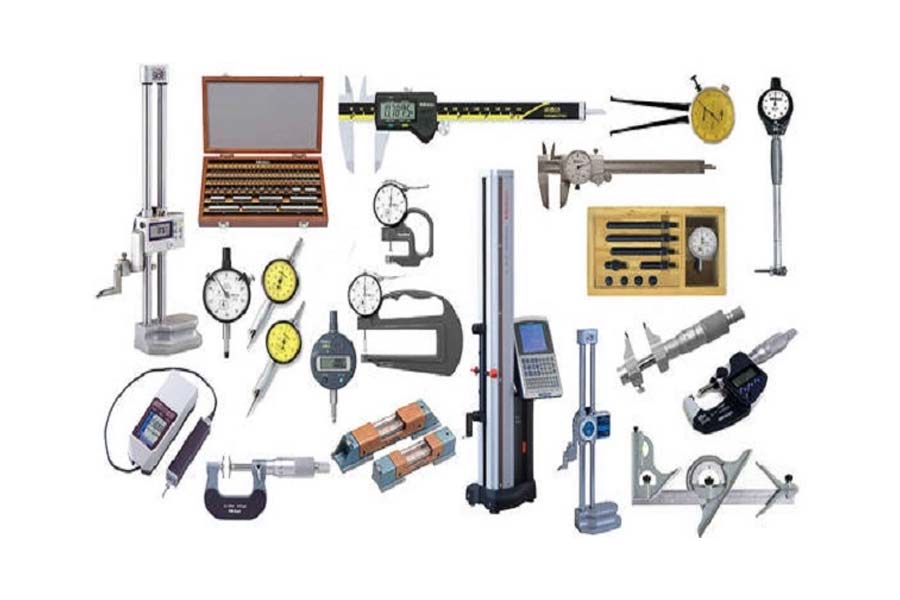
A large part of this category focuses on dimensional measurement. Calipers are often the first choice for fast checks of outside, inside, step, and depth dimensions. Micrometers are typically selected when tighter tolerances and finer resolution are required, especially for shafts, thickness, and finished components.
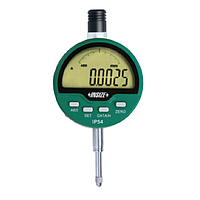
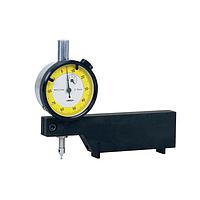
Indicators are used when users need to monitor small deviations, compare surfaces, or inspect concentricity and alignment. A product such as the Mahr 4305200 Test Indicator (800 S, ± 0.4mm) is a good example of a compact comparison instrument suited to precision checks on fixtures, machine setups, and fine positioning tasks.
This category also includes tools used for mechanical condition assessment. For example, vibration measurement devices and laser alignment tools support maintenance teams working on rotating equipment, belt-driven systems, and machine reliability programs.
Examples of instruments available
For dimensional checks, Mahr is strongly represented in this range, including analog and digital handheld tools. Typical examples include the Mahr 4100650 Caliper With Analog Display (16GN, 0-150mm), the Mahr 4100400 Caliper With Analog Display (16FN, 0-150mm/0-6"), and the Mahr 4157010 Digital Micrometer (40 ER, 0-25mm/0-1"). These types of instruments are widely used for quick shop-floor verification as well as more controlled bench inspection.
For users who need a digital caliper for broader measurement tasks, the Mahr 4103206 Digital Caliper (16 ER, 0 - 200mm, friction wheel) illustrates the kind of tool chosen when readability and fine adjustment are important in daily operation. If you want to browse more tools from this manufacturer, you can also explore the Mahr product range.
On the maintenance side, FLUKE products in this category highlight the overlap between mechanical measurement and machine reliability. The FLUKE-805 FC Vibration Meter is intended for vibration screening and condition checks, while the FLUKE-835 Laser Belt Alignment Tool supports belt alignment work. For a broader look at this brand’s industrial instruments, see FLUKE.
How to choose the right instrument
The first step is to define the measurement task clearly. Ask whether you need an absolute reading, a comparative reading, or a condition-based assessment. A caliper may be sufficient for general dimensional checks, but a micrometer is usually better when tolerance windows are tighter and repeatability is more critical. A test indicator is more suitable for checking variation, runout, or relative movement than for direct size measurement.
Measuring range, resolution, and access to the measuring point should be reviewed together. A 0-150 mm caliper may be practical for general-purpose work, but larger parts may require 200 mm or 300 mm capacity. In the same way, a digital micrometer with fine resolution is useful only if the workpiece and measuring setup support that level of control.
Environmental conditions also influence selection. Tools used near machines, oil, dust, or vibration sources need to remain readable and stable during use. For maintenance teams working with belts, shafts, or rotating assets, alignment and vibration tools can complement traditional dimensional instruments rather than replace them.
Analog vs digital: which is better?
There is no single answer, because each format has practical advantages. Analog instruments are often preferred for their simplicity, durability, and ease of use in basic inspection work. Many experienced operators also value the immediate visual movement of a dial or vernier scale when tracking change rather than reading a static number.
Digital instruments improve readability, reduce interpretation error, and can be useful where metric and inch conversion is needed. A product such as the Mahr 4157010 Digital Micrometer or Mahr 4103206 Digital Caliper can be a strong choice when operators need quick, clear readings in repetitive measurement routines.
In practice, many facilities use both. Analog tools remain common for routine manual inspection, while digital tools are introduced where documentation, reading speed, or finer display resolution can improve workflow.
Mechanical measurement and predictive maintenance
Although dimensional gauging and machine condition monitoring are often treated as separate topics, they are closely linked in real industrial work. Misalignment, looseness, wear, and excessive vibration can affect both machine health and product quality. That makes condition-check tools relevant within a broader mechanical measurement strategy.
The FLUKE FLUKE-802ES/APAC Vibration Tester Sensor and the FLUKE-805 FC Vibration Meter are examples of instruments used to detect abnormal machine behavior before failure develops further. Where belt-driven systems are involved, the FLUKE-835 Laser Belt Alignment Tool supports more accurate setup and can help reduce premature wear, energy loss, and maintenance rework.
For users specifically focused on surface and machine-finish inspection, related options may also be useful alongside these tools, such as a roughness meter for evaluating surface quality or a laser pulley and shaft alignment system for alignment-focused maintenance tasks.
Why brand and build quality matter
In this category, brand selection is often tied to application type. Mahr is widely associated with dimensional metrology tools such as calipers, micrometers, and indicators. FLUKE is more often selected for maintenance-oriented measurement tasks such as vibration screening and alignment support. Other well-known names available in the broader category context include MITUTOYO, Hexagon, BOSCH, HORIBA, and Brüel & Kjær.
For B2B buyers, the real value is not just the logo on the instrument. It is the consistency of measurement, the usability in daily work, the availability of accessories, and how well the tool fits the inspection method already used in the plant. A well-matched instrument can improve operator efficiency just as much as it improves measurement confidence.
Practical buying considerations for industrial users
When selecting from this category, it helps to standardize by task rather than buying instruments one by one without a plan. Consider which tools are needed for incoming inspection, machine setup, in-process checks, final inspection, and maintenance rounds. This approach reduces overlap and makes training easier across teams.
You should also think about accessories, carrying cases, batteries for digital models, and compatibility with existing stands or holders where relevant. In precision work, the surrounding setup often matters as much as the instrument itself. A good measuring tool performs best when the workpiece, operator technique, and inspection environment are equally controlled.
Finding the right fit for your measurement workflow
This category is designed for users who need dependable tools for everyday industrial measurement, from basic dimensional checks to machine condition evaluation. Whether the requirement is a vernier caliper, a digital micrometer, a test indicator, or a vibration screening device, the best choice depends on the measurement objective and the working environment.
By selecting instruments that match the task, range, and expected accuracy, buyers can build a more efficient inspection workflow and reduce avoidable errors on the shop floor. If you are comparing options across manual metrology and maintenance diagnostics, this category provides a practical starting point for choosing equipment that supports real production and service needs.
Get exclusive volume discounts, bulk pricing updates, and new product alerts delivered directly to your inbox.
By subscribing, you agree to our Terms of Service and Privacy Policy.
Direct access to our certified experts