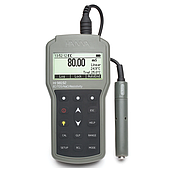
The protective relay test set generates controlled current, voltage, and phase-angle signals to evaluate the relay's response under defined conditions, helping improve the reliability of power system operation.

The protective relay test set generates controlled current, voltage, and phase-angle signals to evaluate the relay's response under defined conditions, helping improve the reliability of power system operation.

A megohmmeter must be used according to the proper procedure to ensure operator safety and reliable measurement results. This article covers its operating principle, testing procedure, influencing factors, and essential safety precautions.

DC resistance meters are commonly used to evaluate current paths, windings, and contact points characterized by low resistance. The results depend not only on the test object itself but also on the connection configuration, thermal state, inductive characteristics of the windings, and the current injection process.

DC resistance meter is commonly used in electrical equipment maintenance and system safety testing to evaluate the condition of windings, conductors, and electrical connections.

If you operate a workpiece cleaning system in your workshop or have recently invested in an ultrasonic cleaner, you have likely encountered situations where the machine runs for ten minutes or more, yet stubborn grease and rust remain completely unaffected. Many people mistakenly believe that simply filling the tank with plain water and turning the machine on is enough; in reality, this approach wastes up to 70% of the technology's ultrasonic cleaning power

Cable withstand voltage test equipment is used to evaluate insulation condition, identify potential risks at an early stage, and standardize testing procedures in electrical systems.

In non-destructive testing (NDT), ultrasonic thickness gauges allow users to determine material wear and corrosion without dismantling components or cutting samples. Dakota NDT has developed the CX and PCX8-DL series with a focus on fast measurements, simple operation, and a range of functions for on-site thickness inspection.

While both are classified as soldering stations designed to melt solder, a technician repairing wiring inside an electrical cabinet and one working under a microscope on a mobile phone circuit board require vastly different types of equipment. Check out the article below!

The soldering station had just been unboxed, plugged in, and switched on for the first time. A few seconds later, a thin wisp of smoke rose from the tip, accompanied by a faint acrid smell. Before any soldering could even begin, many users hastily turned the unit off, fearing the equipment was damaged

The soldering iron is hot, yet even after touching the resistor lead for ten seconds or more, the solder just clumps up instead of flowing smoothly. A novice's first instinct is often to crank up the temperature. While that sometimes works, temperature isn't always the root cause; in many cases, increasing the heat only burns the flux and pads, potentially ruining the component leads in the process
Get exclusive volume discounts, bulk pricing updates, and new product alerts delivered directly to your inbox.
By subscribing, you agree to our Terms of Service and Privacy Policy.
Direct access to our certified experts