Thermal imaging for petrochemical valves and flanges helps maintenance teams inspect thermal conditions without relying solely on close-up checks. Because heated gases can affect the temperature patterns around components, thermal anomalies may provide useful indications of mechanical conditions.
In oil refining environments, vessels and pipelines commonly operate at higher temperatures. This can make valves and flanges more susceptible to aging and degradation, so a practical method for identifying unusual thermal conditions is valuable.
Summary: Thermal imaging can reveal abnormal heat patterns around valves and flanges. It supports inspection from a distance where close-up checks are inefficient. Reported findings include loose flanges, faulty valves, and missing pipeline insulation.
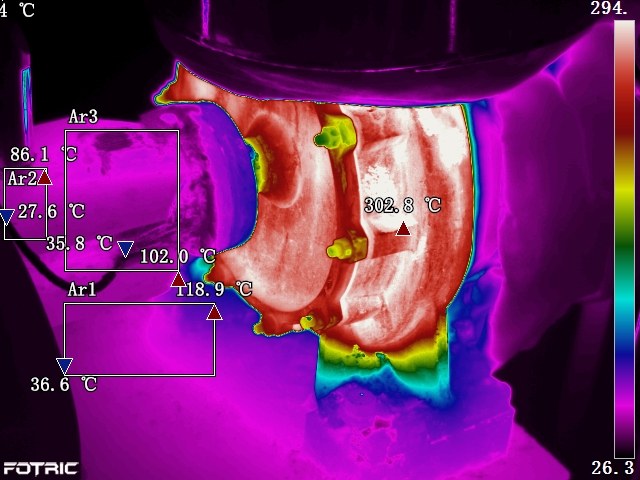
Why are petrochemical valves and flanges difficult to inspect?
Petrochemical valves and flanges can be difficult to inspect because refining processes require vessels and pipelines to withstand higher temperatures. These operating conditions can contribute to aging and degradation in the components.
Maintenance is also complicated when gases moving through pipelines are odorless and colorless. Inspecting every individual component at close range can be inefficient, particularly across extensive pipeline systems.
The consequences of degradation require attention because petrochemical products may be volatile and hazardous. Inspection methods that help teams observe conditions without approaching each component closely can therefore support maintenance planning.
How does thermal imaging help assess valves and flanges?
Thermal imaging helps by showing the thermal condition of valves and flanges. With heated gases present, the observed thermal condition can be associated with the mechanical condition of these components.
An image of temperature distribution can help inspectors look for thermal anomalies rather than depending on visual signs alone. This is relevant when the gases in a pipeline cannot be readily identified by odor or color.
Thermal imaging is a non-contact inspection approach in this context. It enables examination of thermal patterns around components from a distance, rather than requiring a close-up inspection of every valve and flange.
What conditions can thermal imaging help identify in pipelines?
Thermal imaging can help users detect loose flanges, faulty valves, and missing insulation in pipelines when these conditions are associated with observable thermal anomalies. The inspection result should be treated as an indication for maintenance assessment, not as a replacement for evaluating the component itself.
- Loose flanges: may be identified through abnormal thermal conditions around the flange area.
- Faulty valves: may show thermal anomalies that warrant further inspection.
- Missing insulation: may be identified where expected thermal containment is absent along a pipeline.
Note: Thermal imaging examines temperature patterns. The source information links these patterns to mechanical condition in the presence of heated gases, so findings should be evaluated in the operating context of the pipeline.
How can thermal inspection findings support pipeline maintenance?
Thermal inspection findings can help users focus attention on components with unusual heat patterns. This can make maintenance activity more targeted than performing close-up checks on every valve, flange, and insulated pipeline section.
The analytical capability described for handheld thermal cameras can also support iterative improvements in design and component selection. The intended outcome is to improve the overall integrity of pipelines through better-informed inspection and maintenance decisions.
When is thermal imaging especially relevant for petrochemical pipelines?
Thermal camera is especially relevant where high-temperature refining operations affect vessels and pipelines, and where valves and flanges may experience aging or degradation. It is also useful when transmitted gases are odorless and colorless, making conventional close-up observation less efficient.
For these situations, the main value is the ability to inspect thermal conditions from a distance and identify anomalies that may justify further investigation.