Thermal cameras for Li-ion battery provide non-contact, continuous visibility of battery surface temperatures. They can help operators identify abnormal heat patterns and hotspots before temperature escalation develops into a wider event.
For storage and charge-discharge areas, a fixed-mount thermal camera can supply real-time thermal data to a battery management workflow or control room. The purpose is early awareness and time to activate appropriate countermeasures when an abnormal condition is detected.
Summary: Thermal runaway can follow overheating caused by conditions such as overcharging or short circuits. Fixed thermal cameras reveal surface-temperature non-uniformity and hotspots. User-defined thresholds can trigger alerts, while recorded alarm events support later review.
What is thermal runaway in a Li-ion battery system?
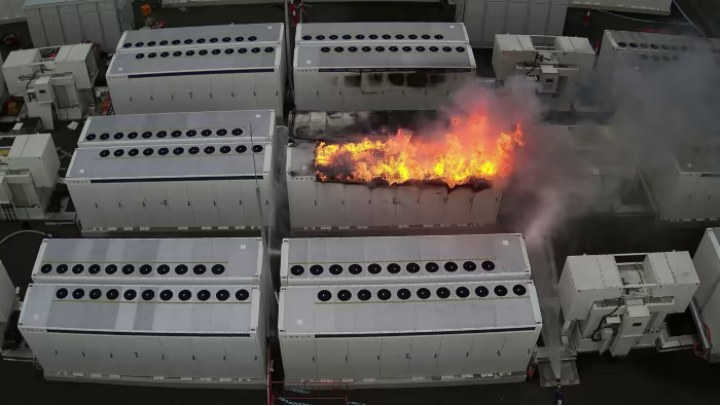
Thermal runaway is a chain of chemical reactions that can begin when a battery failure causes temperature to rise, including failures associated with overcharging or a short circuit. In a battery system, the event may propagate from one cell to another and lead to a major fire.
Li-ion cells contain concentrated chemical energy and use a narrow separator between electrodes. The source material notes that a failure can produce a white vapor cloud of toxic, flammable gases, including hydrogen fluoride, and that suppression can be difficult because cells are enclosed in multiple aluminum casing layers.
Why monitor Li-ion battery temperature with a thermal camera?
Temperature excursions and non-uniform temperature distribution are key conditions to observe in Li-ion batteries. A fixed-mount thermal camera is a non-invasive tool that captures real-time surface-temperature data and a thermal image of the battery surface.
Small thermal differences can be detected to assess temperature uniformity and distribution. During charging and discharging, this view can help follow heat evolution and flag abnormalities that may precede thermal runaway.
| Monitoring need | How thermal imaging supports it |
|---|---|
| Surface-temperature visibility | Provides real-time thermal data from the battery surface. |
| Temperature uniformity review | Helps reveal small thermal inhomogeneity and distribution differences. |
| Abnormal heat identification | Can identify a hotspot when measured temperature exceeds a user-defined threshold. |
| Alarm investigation | Documents alarm situations for analysis of potential fire causes. |
How does hotspot detection work for battery storage?
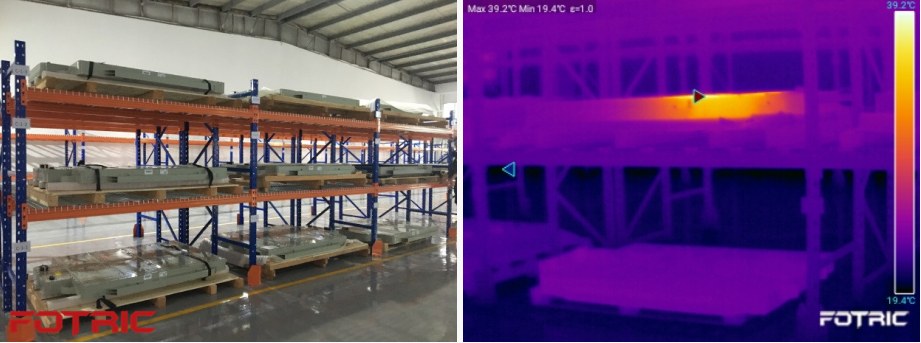
A potential hotspot can be defined by a user-selected temperature threshold. When the measured temperature exceeds that threshold, the monitoring view can highlight the relevant area in a brighter color and issue an audible alert.
This approach focuses attention on a specific image area rather than treating the entire scene as one measurement point. It can therefore support localization of heat sources, including in dusty or smoke-polluted environments, according to the source material.
What functions can a fixed thermal monitoring system provide?
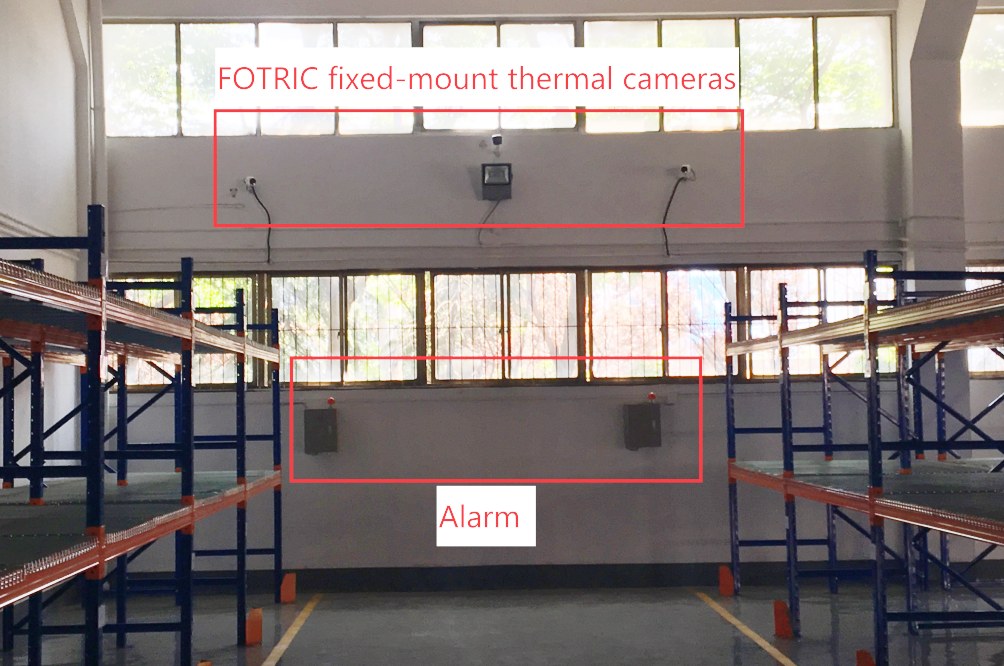
A thermal monitoring system can operate continuously, route camera feeds to a control room or other locations, and be configured with one camera or multiple cameras. It can also segment image areas for alerting and automatically trigger an alarm when a critical temperature threshold is exceeded.
- Continuous 24/7 monitoring without supervision
- Automatic alarms based on critical temperature thresholds
- Image-area segmentation for targeted alerts
- Alarm documentation for later cause analysis
- Heat-source localization in dusty or smoke-polluted areas
- Camera-feed routing to a control room or another location
When is thermal monitoring relevant during battery storage and cycling?
Thermal imager is relevant both for stored batteries and for charging and discharging processes because battery temperature increases during charge-discharge cycles. The source also identifies overcharging and short circuits as conditions that may appear as detectable hotspots.
For batteries stored long term without use, the source recommends maintaining a 50–60% state of charge, recharging every three months, and charging-discharging once every six months. These storage practices do not replace temperature monitoring; thermal imaging provides a separate visual check for abnormal heat.
Note: A thermal camera identifies surface-temperature patterns and threshold exceedances. Alarm thresholds should be defined by the user for the specific battery storage environment and operating procedure.
How can thermal camera records support incident review?
Documented alarm situations can help teams analyze potential causes after an abnormal heat event. Combined with localization of the affected region and the camera feed, these records provide context for reviewing where a temperature threshold was exceeded.
In this role, IR thermometer supports condition observation and response planning rather than replacing battery-management procedures or site safety measures.