Water quality directly affects the accuracy of analyses, the stability of chemicals, and the lifespan of equipment. Many laboratories invest in modern analyzers, but still experience inexplicable errors in results, often stemming from the water source used daily.
The concept of "distilled water" is frequently mentioned; however, researchers and testing professionals are more concerned with the purity level of water. ASTM D1193 was developed to classify reagent water into different grades based on specific technical criteria. The three most commonly used grades today are ASTM Type I, ASTM Type II, and ASTM Type III.
Each type of water serves a specific purpose. Choosing the correct water grade ensures the reliability of test results and avoids wasting investment and operating costs on water treatment systems.
What are ASTM Type I, Type II, Type III?
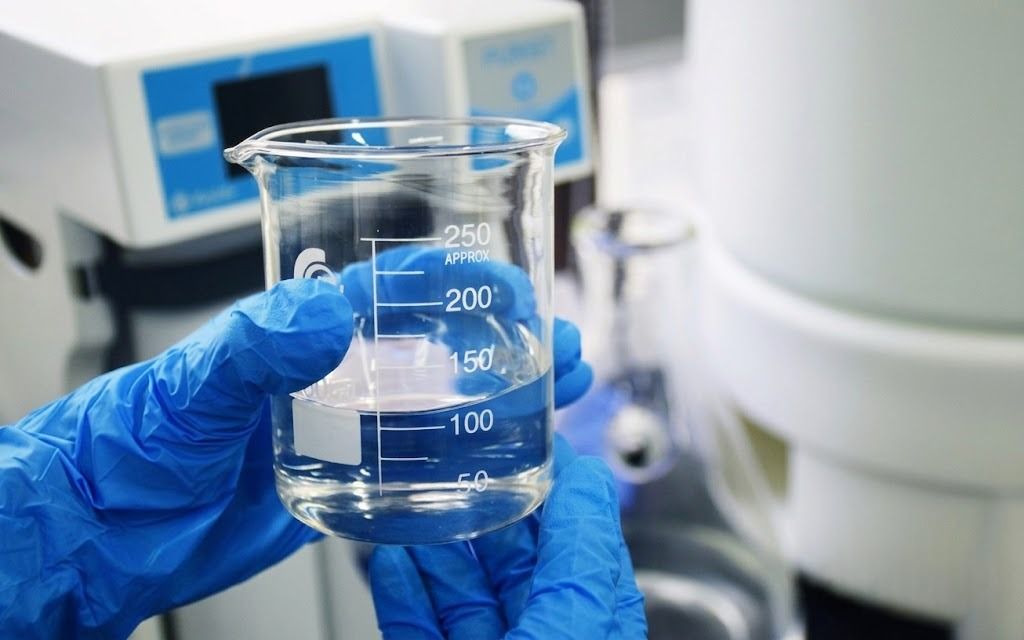
ASTM D1193 is an international standard issued by ASTM International for classifying laboratory reagent water.
This standard evaluates water based on electrical conductivity, resistivity, total organic carbon (TOC) content, and many other quality indicators. Purity levels decrease in the following order:
- ASTM Type I: Ultrapure Water
- ASTM Type II: Pure water for general analytical use
- ASTM Type III: Basic pure water for general use
The quality difference between the three water grades is quite large. Some micro-level analyses may require only extremely small amounts of impurities to produce significant errors; therefore, a thorough understanding of each water grade is essential for technicians and laboratory managers.
What applications are ASTM Type I used for?
ASTM Type I is the highest purity level of water according to ASTM D1193.
At this level, the content of dissolved ions, organic matter, and impurities is almost completely eliminated. This extremely high purity minimizes the risk of contaminating the test sample or skewing analytical results.
Applications of Type I water include:
- High-performance liquid chromatography (HPLC)
- Ion chromatography
- Trace analysis
- Molecular biology
- PCR
- DNA and RNA research
- Cell culture
- Pharmaceutical research
Characteristic parameters:
+ Resistivity ≥ 18.0 MΩ·cm at 25°C
+ Conductivity ≤ 0.056 μS/cm at 25°C
+ TOC ≤ 50 ppb
A particularly notable characteristic of Type I water is its ability to rapidly absorb CO₂ and impurities from the environment. Water quality can change after only a short period of exposure to air. Therefore, ultrapure water systems are often designed with the water intake point located at the point of use to maintain the highest possible purity.
Is ASTM Type II the most commonly used type of water?
For most laboratories, QC departments, applied research laboratories, and testing facilities, ASTM Type II is the most frequently used water source.
Type II purity is sufficient for most common analytical needs, but the investment and maintenance costs are significantly lower than Type I ultrapure water.
Common applications include:
+ Chemical dilution
+ Standard solution preparation
+ Spectrophotometers
+ Biochemical analyzers
+ Clinical testing equipment
+ Sample preparation
+ Water supply for Type I water production systems
Characteristic parameters:
- Resistivity ≥ 1.0 MΩ·cm
- Conductivity ≤ 1.0 μS/cm
- TOC ≤ 50 ppb
Many modern water systems are designed using a two-stage model. Type II water is produced first, then further processed through advanced purification modules to create Type I water at the sampling point. This approach optimizes costs while ensuring water quality for demanding applications.
What purposes is ASTM Type III suitable for?
ASTM Type III typically serves as the input water for more advanced purification systems.
Current reverse osmosis (RO) technology can produce water that approaches or meets Type III requirements if designed and operated correctly.
This type of water is suitable for:
- Washing glassware
- Supplying water to Type I or Type II systems
- Cleaning equipment
- Preparing water for preliminary processes
- Daily laboratory work
Characteristic parameters:
+ Resistivity ≥ 4.0 MΩ·cm
+ Conductivity ≤ 0.25 μS/cm
+ TOC ≤ 200 ppb
Many laboratories choose a multi-stage treatment model, starting with RO water that meets Type III standards and then upgrading to Type II or Type I depending on analytical requirements.
Which ASTM Type corresponds to single-distilled water and double-distilled water?
This is a frequently asked question when choosing pure water production equipment.
Single-distillation water typically meets basic requirements and can approach ASTM Type III if the input water source is stable. For double-distillation systems or those incorporating additional technologies such as ion exchange, activated carbon, and fine membrane filtration, water quality can reach ASTM Type II levels in many practical applications.
However, the number of distillation cycles alone is not enough to determine the ASTM Type of water achieved. Resistivity, conductivity, TOC, and other analytical parameters are the most accurate indicators for evaluation.
This is why many laboratories now use specialized systems such as the Pobel water distillation machines distributed by EMIN. Models like the Pobel 10DESA0081 and Pobel 10DETA0040 are popular choices for producing high-quality water for analysis, research, and teaching.
Read more: What is a water distiller? Classification and usage
How can you determine if water meets ASTM Type I, II, or III standards?
The color, smell, or clarity of water barely reflects its purity level.
Two identical-looking water samples can still differ significantly in quality. Therefore, laboratories often use specialized measuring equipment to continuously monitor important parameters.
The most commonly tested parameters include:
+ Conductivity
+ Resistivity
+ TOC
+ Silica
+ Microbial content
+ Ultrafine particulate matter
Among these, conductivity and resistivity are the most frequently used due to their ability to quickly reflect the level of dissolved ions. A water system that once met ASTM Type I standards can still degrade over time due to membrane aging, saturation of ion exchange materials, or changes in the input water source. Regular monitoring helps detect abnormalities early before they affect analysis results.