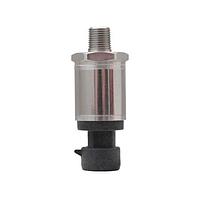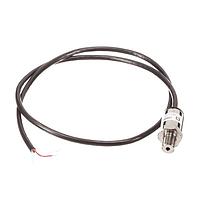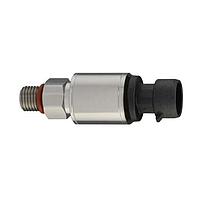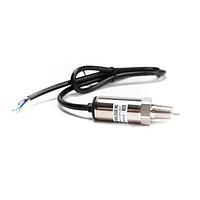
Pressure sensor
Accurate pressure measurement is essential in pneumatic control, hydraulic circuits, gas handling, liquid systems, and machine monitoring. When engineers select the right pressure sensor, they are not only measuring process conditions but also improving control stability, equipment protection, and diagnostic visibility across the system.
This category brings together pressure sensing solutions used in industrial automation and general sensing applications. Whether the requirement is gauge pressure monitoring, compact installation, digital indication, or integration with control outputs, the available range supports practical use in machines, process lines, and utility systems.
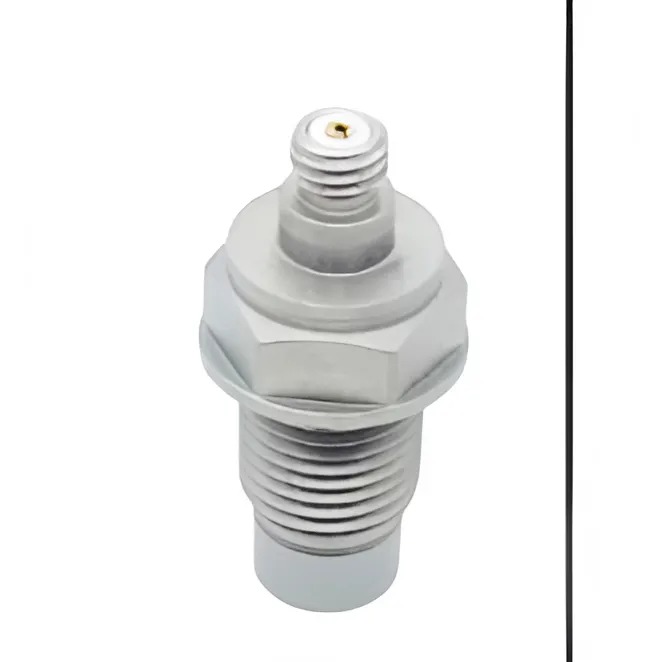
Where pressure sensors are commonly used
Pressure sensors are widely applied wherever gases, liquids, or oil must be monitored reliably. Typical use cases include compressed air systems, vacuum lines, lubrication circuits, coolant management, hydraulic units, and process equipment where pressure is linked to product quality or machine safety.
In many automation environments, the sensor is part of a larger sensing network. A production line may combine pressure monitoring with flow sensors & pitot tubes to observe media movement, or use pressure values alongside switching logic in PLC-based control. This makes pressure feedback valuable not just for measurement, but for alarms, interlocks, and preventive maintenance.
What to consider when choosing a pressure sensor
The first selection factor is the pressure type. Depending on the application, users may need gauge pressure measurement rather than absolute or differential references. The process media also matters: gas, liquid, and oil applications can place different demands on wetted parts, port connection style, and long-term durability.
Another important point is the measuring range. A sensor should match the operating window closely enough to provide useful resolution without being too near its limits during normal operation. Electrical requirements such as supply voltage, output format, and controller compatibility should also be checked early, especially for systems that use transistor outputs, switching functions, or external input features.
Mechanical fit is equally important. Port standards such as R1/8, Rc1/8, or 7/16-18UNF can affect installation time and adaptation costs. In compact machinery, body shape, connector type, and mounting accessories often influence the final decision just as much as the sensing range itself.
Representative Autonics solutions in this category
Among the highlighted options, Autonics stands out with multiple PSAN series models designed for practical industrial integration. These devices are suited to applications that need clear local indication, compact form factors, and straightforward electrical connection in machine panels or distributed sensing points.
Examples in this category include the Autonics PSAN-B1H-R1/8, as well as PSAN-C1CPA and PSAN-L01 series variants with different pressure ports such as R1/8, Rc1/8, NCPT1/8, and 7/16-18UNF. This variety is useful for engineers who need to match existing piping standards or retrofit into equipment without major mechanical changes.
One listed model, the Autonics PSAN-B1H-R1/8, is presented as a digital square-type unit for gauge pressure measurement with a 12-24VDC supply, plug connection, and suitability for gas, liquid, and oil media. It also references optional accessories such as a connector cable, mounting bracket, and front protective cover, showing how some pressure sensors are part of a broader installation ecosystem rather than standalone components.
Signal handling and control integration
In automation systems, pressure sensors are often expected to do more than provide a raw reading. Many applications require switching outputs for threshold-based control, alarm signaling, or machine protection. This is particularly useful in compressor management, pneumatic grippers, vacuum verification, and pressure-dependent sequence control.
Features such as control inputs for hold or auto-shift can also support more flexible operation in dynamic processes. When selecting a device, it is worth considering how the sensor will interact with PLC inputs, local indicators, HMI logic, and maintenance procedures. A well-matched output structure can simplify wiring and reduce the need for additional signal conditioning.
How pressure sensors fit into a broader sensing system
Pressure data rarely exists in isolation. In many machines, it is interpreted together with level, load, temperature, or environmental conditions to provide a fuller picture of operating status. For example, pressure monitoring may complement a level sensor in tanks or fluid handling units, helping operators verify both stored volume and line condition.
In process diagnostics, pressure trends can also support fault detection when used together with environmental sensors or other transducers. A drop in pressure may indicate leakage, clogging, pump issues, or regulator instability. Looking at the sensing architecture as a whole often leads to better device selection than evaluating pressure range alone.
Practical selection points for industrial buyers
For B2B purchasing teams and maintenance engineers, the most effective way to narrow options is to review five practical points: media compatibility, pressure range, process connection, electrical interface, and installation constraints. These factors usually determine whether a sensor can be integrated quickly and operate consistently in the target environment.
It is also helpful to check whether accessories are required for commissioning or long-term protection. Connector cables, mounting brackets, and protective covers may seem secondary, but they can influence reliability, replacement time, and ease of service. Where applications involve multiple process variables, categories such as load cell solutions may also be relevant for system-level measurement planning.
Choosing the right pressure sensing option for your application
This pressure sensor category is intended for users who need dependable sensing options for industrial monitoring and control. With representative models from Autonics and a range of connection styles reflected in the listed products, the selection supports both new designs and replacement requirements across gas, liquid, and oil applications.
When comparing options, focus on the actual operating conditions of the machine: pressure type, connection standard, output needs, and integration method. A suitable sensor should fit the process mechanically and electrically while providing the visibility and control response the application demands.
Get exclusive volume discounts, bulk pricing updates, and new product alerts delivered directly to your inbox.
By subscribing, you agree to our Terms of Service and Privacy Policy.
Direct access to our certified experts