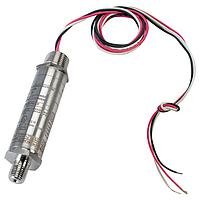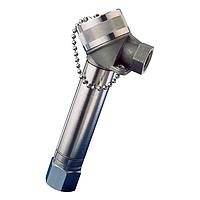
Pressure Sensors & Transmitters, Tranducers
Reliable pressure measurement supports far more than a single reading on a display. In HVAC systems, pneumatic control loops, clean gas monitoring, and process automation, the right sensing device helps maintain stability, improve repeatability, and provide usable signals for controllers, PLCs, and building management systems. This is where Pressure Sensors & Transmitters, Tranducers become essential.
This category brings together instruments designed to convert pressure into an electrical or pneumatic output that can be monitored, transmitted, or used for control. Depending on the application, that may mean tracking very low differential pressure across filters, measuring clean dry air in a control loop, or integrating a compact transmitter into a broader automation system.
Where these devices are used
Pressure sensing products in this category are commonly selected for air handling units, filter monitoring, duct static pressure measurement, laboratory and clean area airflow verification, and industrial pneumatic control. In these environments, stable output and range matching are often more important than simply choosing the highest specification.
They are also relevant where a pressure value needs to be converted into a standard control signal such as 4 to 20 mA, or in the opposite direction when a current signal must drive a pneumatic output. For broader pressure measurement needs, users may also compare options in industrial pressure sensors when the application involves harsher process conditions or more general plant instrumentation.
Understanding the main device roles
Although these products are often grouped together, they serve different functions. A pressure sensor detects pressure at the sensing element level, while a transmitter typically conditions that measurement into a standardized output suitable for remote monitoring or control systems. A transducer may refer more broadly to a device that converts pressure into another usable signal form.
In practical selection, the distinction matters because the output type must match the rest of the system. Some applications call for a low-pressure differential transmitter for HVAC airflow and filter status, while others require a current-to-pressure device that translates an electrical command signal into regulated pneumatic pressure.
Typical configurations in this category
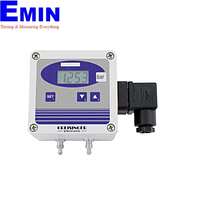
The product examples in this category show two common application groups. One is differential pressure transmitters for low-pressure air and non-corrosive dry gas measurement. These are useful for monitoring pressure drop across filters, room pressurization, and duct pressure in HVAC systems.
The other group includes current-to-pressure transducers for pneumatic control. Models such as the Dwyer 2913-E and Dwyer 2916-E illustrate how a 4 to 20 mA input can be converted into a pneumatic output range for control applications, with enclosure protection and approvals that may be important in industrial environments. If your measurement reference needs to be tied to atmospheric conditions instead, it may be worth reviewing a barometric pressure transducer category for that type of use case.
Examples from Dwyer for low-pressure and control applications
Dwyer is one of the key manufacturers represented in this category, with examples that cover both low differential pressure measurement and electro-pneumatic conversion. The Dwyer 668C series demonstrates a compact approach for HVAC pressure monitoring, with variants spanning very low ranges such as 0.1 inH₂O and 0.25 inH₂O up to higher ranges including 50 inH₂O and 100 inH₂O.
That wide span is useful because low-pressure applications are highly range-sensitive. For example, room pressurization or filter status checks often need a narrow measurement range to preserve resolution, while duct or system pressure monitoring may need a broader scale. The Dwyer 2913-E and 2916-E, by contrast, fit applications that need a loop-powered 4 to 20 mA input converted into a pneumatic output such as 3 to 15 psi or 6 to 30 psi.
How to choose the right pressure transmitter or transducer
Start with the pressure type: differential, gauge, absolute, vacuum, or barometric. The wrong reference type can lead to misleading readings even if the range looks correct. In this category, many featured examples focus on differential and gauge-based control tasks, so it is important to confirm what your system actually requires.
Next, look at the operating range, output signal, media compatibility, electrical connection, and installation environment. Low-pressure HVAC points often benefit from compact differential transmitters with 4 to 20 mA output, while pneumatic control systems may need current-to-pressure transducers compatible with clean dry air. If the application depends on a sealed reference rather than gauge or differential measurement, an absolute pressure sensor or transducer may be a better fit.
Why range and signal matching matter
One of the most common specification mistakes is selecting a range that is far too wide. When measuring very low differential pressure, oversized ranges can reduce useful resolution and make small changes harder to interpret. Devices in the Dwyer 668C family show why multiple low-end ranges are valuable, especially in airflow verification and filter monitoring.
Signal compatibility is equally important. A transmitter with 4 to 20 mA output is often preferred for industrial and building automation because it is widely accepted, resistant to noise in many installations, and easy to integrate into controllers. In contrast, a current-to-pressure transducer is selected when the receiving device is pneumatic rather than purely electronic.
Application environment and installation considerations
Real-world installation conditions can influence product choice just as much as the pressure range. Enclosure rating, conduit connection style, resistance to vibration, and suitability for clean dry air or non-corrosive gases all affect long-term performance. For industrial sites, these details help determine whether a device is appropriate for exposed mechanical spaces, protected control panels, or more demanding operating areas.
Connection style also matters in serviceability. Compact barbed fittings may suit low-pressure tubing runs in HVAC systems, while threaded ports are more typical in process or pneumatic control arrangements. Where negative pressure or evacuation-related monitoring is the main requirement, users can also explore vacuum pressure sensor and transducer options for a closer functional match.
Choosing within a broader instrumentation strategy
Pressure measurement is rarely an isolated purchase in B2B environments. The device selected must fit the control architecture, maintenance approach, calibration expectations, and mechanical layout already in place. That is why categories like this are often used not just to find a model, but to narrow down the correct sensing principle and signal format before final selection.
Whether the goal is monitoring low differential pressure in HVAC, converting a 4 to 20 mA signal into pneumatic output, or finding a compact transmitter for non-corrosive gases, this category provides a practical starting point. Reviewing the pressure type, range, output, and installation environment together will usually lead to a more reliable choice than comparing headline specifications alone.
For buyers, engineers, and maintenance teams, the best approach is to match the instrument to the application context first, then compare product details. That makes it easier to select a pressure sensor, transmitter, or transducer that integrates cleanly into the system and delivers readings or control signals that are actually useful in operation.
Get exclusive volume discounts, bulk pricing updates, and new product alerts delivered directly to your inbox.
By subscribing, you agree to our Terms of Service and Privacy Policy.
Direct access to our certified experts