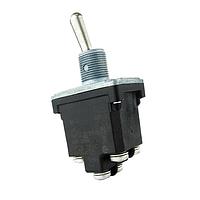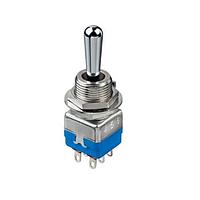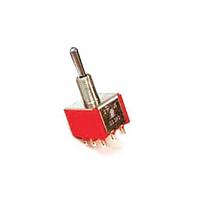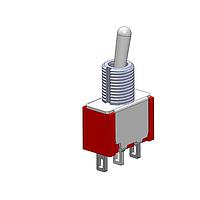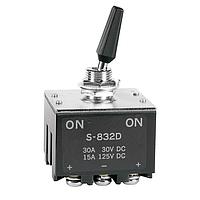
Toggle Switches
When a machine, panel, or field device needs a simple and dependable manual switching method, a toggle switch is often the most practical choice. Its lever-style operation is easy to understand, quick to actuate, and well suited to equipment that requires clear on/off or changeover control in industrial and electronic environments.
On this page, you can explore Toggle Switches used across automation, control cabinets, instrumentation, and equipment building. The category is relevant for buyers who need compact switching components for operator interfaces, maintenance panels, prototype assemblies, or OEM system integration where mechanical reliability and straightforward control logic matter.
Where toggle switches are commonly used
Toggle switches appear in a wide range of B2B applications because they provide direct manual input without unnecessary complexity. In industrial settings, they are often selected for control panels, portable equipment, test rigs, service boxes, and auxiliary machine functions where the switching state should be obvious at a glance.
They are also useful in systems that require a positive tactile response from the operator. Compared with some enclosed or application-specific devices, toggle designs can be a flexible option for low-level control functions, signal routing, or simple power switching, depending on the circuit requirements and installation environment.
Why this switch type remains relevant in industrial design
The main advantage of a toggle mechanism is its combination of simple operation and clear mechanical feedback. The actuator position makes it easier for technicians and operators to identify switch status during setup, troubleshooting, or routine operation. This can be valuable in panels where speed and clarity reduce handling errors.
Another reason toggle switches remain widely specified is design flexibility. Engineers may use them in compact assemblies, retrofits, or custom equipment where a hand-operated switch is needed without moving to larger rotary or safety-oriented devices. For applications that need different operator functions, related product groups such as control switches may also be worth reviewing.
Key considerations when selecting toggle switches
Choosing the right device starts with the application rather than the part style alone. Buyers typically look at electrical load, mounting format, operating environment, number of positions, and whether the switch is intended for maintained or momentary action. These factors affect usability, panel layout, and long-term service performance.
It is also important to check compatibility with the overall system architecture. In some equipment, a toggle switch may serve as a local command input, while higher-risk functions should be handled by purpose-built devices. For example, emergency shutdown points are better addressed through dedicated emergency stop switches rather than standard manual toggles.
- Electrical function: confirm the switch fits the intended circuit and switching duty.
- Mechanical layout: review actuator style, mounting constraints, and available panel space.
- Environmental suitability: consider dust, vibration, moisture, and operator access.
- Control logic: match the switch behavior to the required machine or device response.
How toggle switches fit into a broader switching ecosystem
In many industrial projects, toggle switches are not selected in isolation. They are part of a broader switching strategy that may include disconnect devices, safety components, and specialized switching technologies for different parts of the system. Understanding this context helps procurement teams and engineers avoid using one device type for every task.
For example, when the goal is circuit isolation for maintenance or lockout procedures, disconnect switches are typically more appropriate. In communication or RF-related assemblies, a more specialized category such as coaxial switches may be relevant. This distinction supports safer designs and better long-term maintainability.
Manufacturer options for industrial buyers
This category may be relevant for sourcing programs that work with established component brands used in automation and industrial electronics. Depending on the project requirements, buyers may review options from manufacturers such as C&K, Eaton, Honeywell, OMRON, and Alcoswitch - TE Connectivity, all of which are recognized names in switching and control component sourcing.
Brand selection in this type of category is usually driven by specification standards, project continuity, approval preferences, panel design practices, and supply chain considerations. Rather than choosing only by brand familiarity, it is better to compare switching role, integration needs, and maintenance expectations across the application lifecycle.
Typical procurement and engineering scenarios
Toggle switches are often sourced for OEM production, MRO replacement, panel retrofits, and custom-built control assemblies. In OEM environments, consistency of interface and mechanical fit can be just as important as the switching function itself. In maintenance scenarios, buyers usually focus on restoring reliable manual operation while keeping the replacement aligned with the existing panel design.
For engineering teams, this category can also support prototyping and low-volume builds where straightforward manual switching is needed during development, testing, or commissioning. Because these switches are frequently operator-facing, usability, labeling, and mounting accessibility should be considered early in the design process.
Choosing the right category page for your application
If your requirement is a lever-operated manual switch for direct user interaction, this category is the right place to begin. It is especially useful when you need a familiar mechanical interface for panel control, equipment operation, or auxiliary functions within a larger automation system.
At the same time, product selection becomes easier when the application intent is clearly defined. Toggle switches work well for many manual switching tasks, but specialized requirements such as safety shutdown, circuit isolation, or other operator control functions may be better served by adjacent switch categories. Reviewing the switching function first will usually lead to a more accurate shortlist and a better fit for the final installation.
Get exclusive volume discounts, bulk pricing updates, and new product alerts delivered directly to your inbox.
By subscribing, you agree to our Terms of Service and Privacy Policy.
Direct access to our certified experts