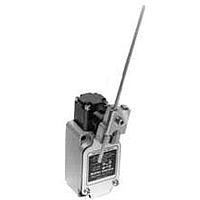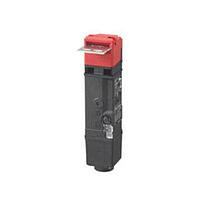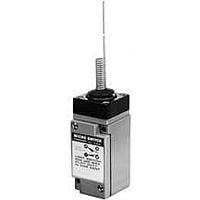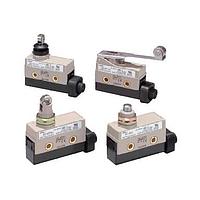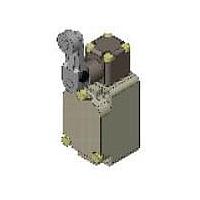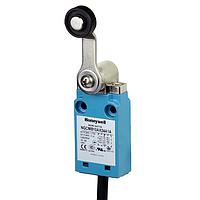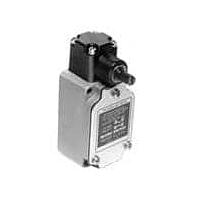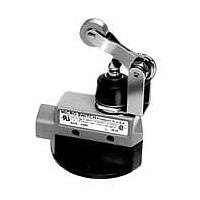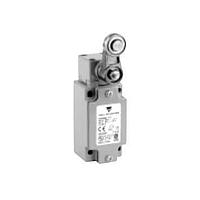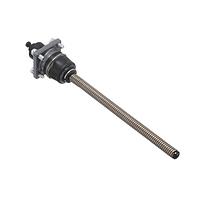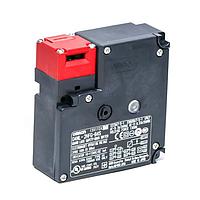
Limit Switches
In automated machinery and production lines, reliable position feedback is essential for safe movement, repeatable cycles, and accurate control. When equipment needs a simple and durable way to detect the presence, travel limit, or end position of a moving part, Limit Switches remain a practical choice across many industrial environments.
These devices are widely used in conveyors, packaging equipment, machine tools, material handling systems, doors, lifts, and guard mechanisms. For maintenance teams, panel builders, and OEM buyers, the right switch helps improve operational visibility while supporting interlocks, sequencing, and shutdown logic in a straightforward way.
Where limit switches fit in industrial systems
A limit switch is typically used to detect mechanical motion or the arrival of a component at a defined point. Once actuated, it changes electrical contacts and sends a signal to the control system, allowing the machine to stop, start, reverse, alarm, or confirm a step in the process. This makes it useful in applications where physical interaction with the target is acceptable or preferred.
Within the broader family of industrial switching devices, limit switches often work alongside operator and safety components. For example, systems that also require manual machine control may use control switches, while safety circuits in hazardous stop conditions may incorporate emergency stop switches. Choosing the right combination depends on the machine function and control architecture.
Why limit switches are still widely specified
Although non-contact sensing technologies are common in modern automation, mechanical position detection still offers clear advantages in many installations. Limit switches are valued for their direct actuation principle, clear switching point, and suitability for applications where movement is already guided by cams, levers, doors, slides, or actuators.
They are often selected when users need a robust field device that can interface with relays, PLC inputs, or machine control circuits without unnecessary complexity. In practical terms, that means they can support end-of-travel confirmation, travel limitation, guard monitoring, and machine status detection in a way that is easy to understand during design, commissioning, and maintenance.
Typical application scenarios
In industrial environments, limit switches are commonly used to confirm that a moving axis has reached its end position, detect the open or closed state of a machine guard, or verify that a workpiece carrier has arrived at the correct station. They are also useful for lift mechanisms, transfer units, and conveyor sections where repeatable mechanical contact is built into the process.
Another frequent use case is as part of machine interlock logic. A switch can help prevent a sequence from continuing unless a door is shut, a table is in place, or a mechanism has returned to its home position. In systems where emergency access or shutdown must also be considered, engineers may review related switching solutions such as cable pull switches for extended machine access zones or long conveyor runs.
Key factors when selecting a limit switch
The most important selection point is the actuation method. Buyers typically start by considering how the switch will be triggered in the real machine: by direct plunger movement, a lever, a rotating cam, a door, or another moving mechanical part. The motion path, approach angle, available mounting space, and repeatability of the contact point all influence which design is most suitable.
Electrical compatibility is the next major factor. The switch must match the control circuit requirements, including contact arrangement and the intended signaling logic. Environmental conditions also matter: vibration, dust, moisture, washdown exposure, and temperature variation can all affect product choice. In addition, users should evaluate mechanical life, enclosure style, mounting method, and how easy the switch will be to inspect or replace during service.
Brand options for industrial buyers
This category may include products from established industrial manufacturers such as Honeywell, Eaton, Fuji Electric, Banner Engineering, C&K, Littelfuse, and Alcoswitch - TE Connectivity. Brand selection often depends on project standards, panel or machine design preferences, stock continuity, and the level of environmental durability required by the application.
For OEMs and maintenance teams, consistency across installed equipment can be just as important as the initial specification. Standardizing around known suppliers can simplify replacement, documentation, and service procedures across multiple machine types. At the same time, users should compare switching style, housing construction, and system compatibility rather than choosing solely by brand name.
How limit switches compare with related switch categories
Limit switches are best suited to situations where physical movement can intentionally actuate the device. If the requirement is manual operator input from a panel or machine interface, a different product group is usually more appropriate. If the objective is circuit isolation during maintenance, disconnect switches serve a different role entirely.
Likewise, not every industrial switch category overlaps in function. Some are designed for RF or signal routing, while others support personnel safety or machine control. Understanding this distinction helps specifiers avoid overengineering and choose a switch based on operating purpose rather than broad category similarity.
Buying considerations for maintenance, OEM, and retrofit projects
For new machine builds, the right choice usually starts with a clear review of motion points, cycle frequency, installation space, and control logic. OEM buyers often look for repeatable parts that fit standardized mounting practices and can be sourced consistently over time. A well-matched switch can reduce redesign effort later in the project.
For maintenance and retrofit work, replacement fit is often critical. Users may need to match the existing mounting footprint, actuator orientation, and wiring approach while also reviewing whether the original switching concept still meets current operating conditions. In older systems, replacing worn switches can help restore dependable feedback without requiring major control changes.
Choosing with confidence
A well-selected limit switch supports dependable machine feedback, clearer control logic, and more predictable equipment behavior. Whether the goal is to monitor position, confirm travel limits, or support an interlock sequence, the most effective option is usually the one that fits the actual motion, environment, and maintenance needs of the application.
Explore the available range in this category to compare solutions for industrial automation projects, replacement needs, and machine design requirements. If your application involves related switching functions, reviewing adjacent categories can also help you build a more complete and reliable switching setup.
Get exclusive volume discounts, bulk pricing updates, and new product alerts delivered directly to your inbox.
By subscribing, you agree to our Terms of Service and Privacy Policy.
Direct access to our certified experts