Cartridge Fuses
Protecting power supplies, control panels, test instruments, and small industrial devices often starts with choosing the right overcurrent protection. Cartridge fuses remain a widely used solution because they are simple, reliable, and easy to integrate into equipment ranging from compact electronics to industrial control assemblies.
On this page, you can explore cartridge fuse options used for circuit protection where fast replacement, clear current ratings, and predictable interruption behavior matter. The range includes miniature and subminiature formats, with examples from established manufacturers such as Eaton and Littelfuse, covering different response characteristics, body materials, and mounting styles.
Where cartridge fuses are commonly used
Cartridge fuses are selected in circuits where designers need a defined sacrificial protection element that opens when current exceeds a safe limit. In practice, they are commonly found in power distribution sections, instrumentation, industrial automation panels, transformers, battery-backed subsystems, and sensitive electronic equipment.
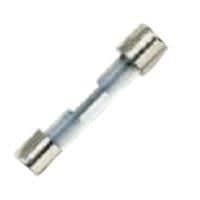
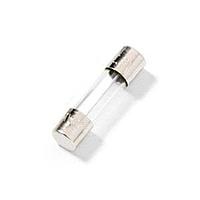
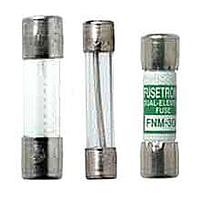
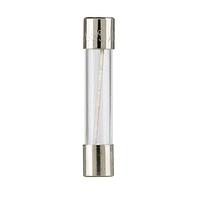
They are also useful when maintenance teams want a protection device that can be inspected and replaced quickly. Glass cartridge types can make visual inspection easier in some applications, while ceramic or coated constructions may be preferred where mechanical strength, arc handling, or environmental resistance is more important.
Typical formats and construction in this category
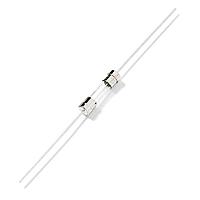
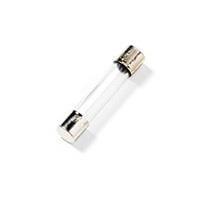
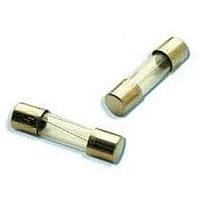
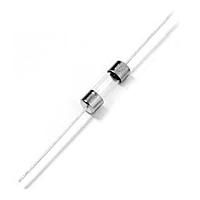
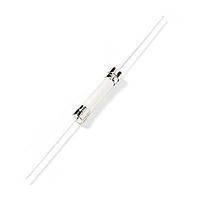
This category includes several compact fuse styles used across electronic and industrial assemblies. Many buyers look for familiar sizes such as 5 x 20 mm and 6.3 x 32 mm, both of which are widely used in holders or axial configurations depending on the equipment design. Subminiature variants are also relevant where board space is limited or where the fuse needs to be installed directly into compact circuitry.
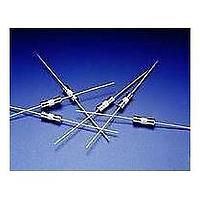
Material and package style affect both application fit and maintenance approach. For example, glass-body cartridge fuses are often chosen for conventional holder-based replacement, while epoxy-coated or thermoplastic subminiature designs can suit denser assemblies. Choosing the right physical format is just as important as choosing the current rating.
Fast-acting vs time-delay selection
One of the most important selection points is the fuse response profile. Fast-acting fuses are typically used to protect sensitive circuits that cannot tolerate even brief overcurrent events, while time-delay fuses are often better suited to loads with temporary inrush current, such as transformers, motors, or capacitive power input stages.
Examples in this category illustrate both approaches. The Eaton BK/AGC-V-1-R is a miniature fast-acting axial fuse suited to applications where quick interruption is important, while parts such as the Eaton BK/GMC-750-R and BK/GMC-4-R represent medium time-delay behavior for circuits that may experience startup surges. Matching the trip behavior to the real electrical profile helps avoid nuisance opening without reducing protection quality.
If your design needs a different protection concept, it may also be worth reviewing resettable fuse options for applications where automatic recovery is preferred over fuse replacement.
Examples of products in the range
The products shown in this category cover a practical spread of current ratings and package styles. On the miniature side, options such as Eaton F09A250V5AS, Eaton F15A250V20AS, and Littelfuse 0322006.H or 0322012.H support applications that need conventional compact fuse formats for equipment protection.
For subminiature requirements, the Littelfuse 047302.5MRT1 and 0251007.MRT1, as well as the Eaton MCR-1/4, illustrate how smaller fuse bodies can still provide focused protection in board-level or compact assemblies. These parts are not interchangeable by default, so current rating, voltage rating, interrupting capacity, body style, and mounting method should always be checked against the circuit design.
How to choose the right cartridge fuse
A good starting point is the rated current under normal operating conditions. The fuse must carry expected load current without opening during normal use, but still react quickly enough under fault conditions. This means designers should consider not only steady-state current, but also startup surges, ambient temperature, and the way the fuse is mounted.
Next, review the voltage rating and breaking capacity. A fuse may have the right ampere value but still be unsuitable if the fault level in the circuit exceeds its interruption capability. Physical size also matters: a 5 x 20 mm holder-based fuse is not a drop-in replacement for a 6.3 x 32 mm style or an axial subminiature part.
Response speed, body material, and installation method complete the selection logic. Holder-mounted cartridge fuses are often convenient for service access, while through-hole and axial styles may fit embedded assemblies better. For compact electronic designs, buyers sometimes compare this category with SMD fuse solutions when surface-mount installation is required.
Manufacturer coverage and sourcing considerations
This category is especially relevant for buyers looking for proven industrial and electronic protection components from recognized suppliers. Eaton and Littelfuse appear prominently in the available range, covering both miniature and subminiature fuse families with different response curves and construction styles.
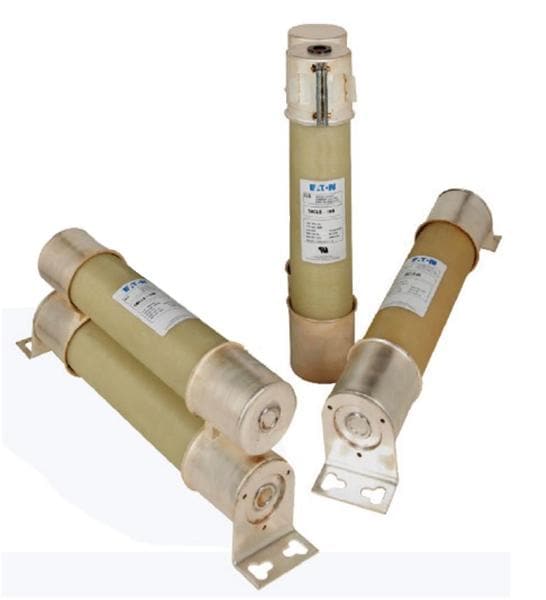
For procurement teams, consistency in dimensions, approvals, and replacement workflow can be just as important as electrical performance. Standard cartridge formats are often preferred because they simplify maintenance planning, spare stocking, and cross-checking within existing equipment documentation. Where higher fault interruption requirements apply in power circuits, related HRC fuse categories may also be relevant.
Application fit in industrial and electronic systems
In real-world use, cartridge fuses support a broad range of protection tasks. They can be installed to protect input power stages, low-voltage control circuits, instrument power rails, communication devices, and auxiliary branches inside control cabinets. Their role is straightforward but critical: isolate the faulted path before conductors, boards, or connected components are exposed to unsafe thermal stress.
Selection becomes more application-specific when the load has unusual characteristics. Circuits with repetitive inrush may need time-delay behavior, while semiconductor-heavy designs may demand a faster cutoff profile. In some maintenance-focused systems, users may also look at alarm indicating fuses if visual fault identification is a priority.
Choosing with confidence
The right cartridge fuse is not just a matter of matching amperage. It should fit the electrical conditions, mechanical space, service method, and fault behavior of the application. Reviewing body size, fuse type, response characteristic, and installation style together usually leads to a better and safer choice than selecting on current rating alone.
Whether you are replacing an existing part or specifying protection for a new build, this category provides a practical starting point for compact and dependable overcurrent protection. By comparing miniature and subminiature options from established manufacturers, buyers can narrow the shortlist to the fuse format that best suits their equipment and maintenance requirements.
Get exclusive volume discounts, bulk pricing updates, and new product alerts delivered directly to your inbox.
By subscribing, you agree to our Terms of Service and Privacy Policy.
Direct access to our certified experts