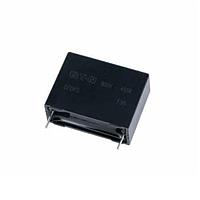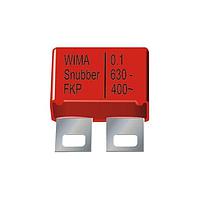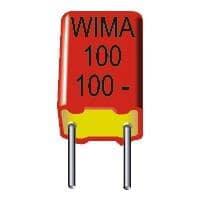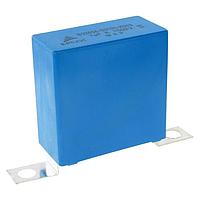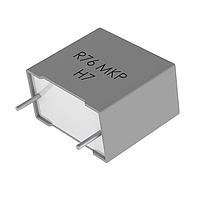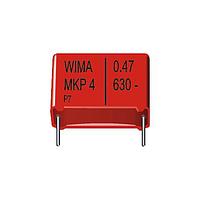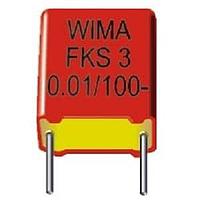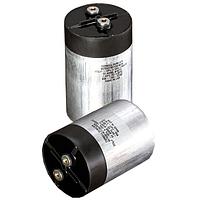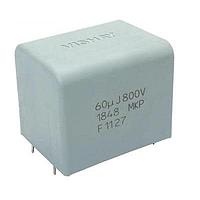
Film Capacitors
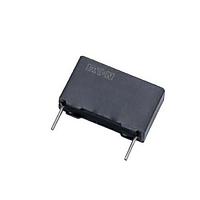
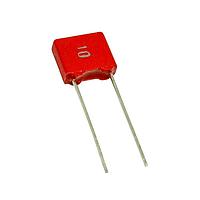
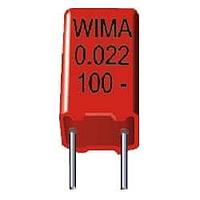
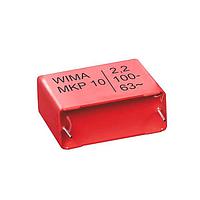
Stable capacitance, predictable electrical behavior, and good long-term reliability are key reasons engineers continue to specify Film Capacitors across power electronics, industrial controls, filtering, and general-purpose circuit design. When low loss, pulse capability, or dependable operation over a wide temperature range matters, this category is often a practical choice for both new designs and maintenance sourcing.
On this page, buyers and design teams can review a focused range of film capacitors suited to different voltage, capacitance, tolerance, and mounting requirements. The selection also fits naturally alongside related technologies such as ceramic capacitors and aluminum electrolytic capacitors, which are often considered during component comparison and BOM optimization.
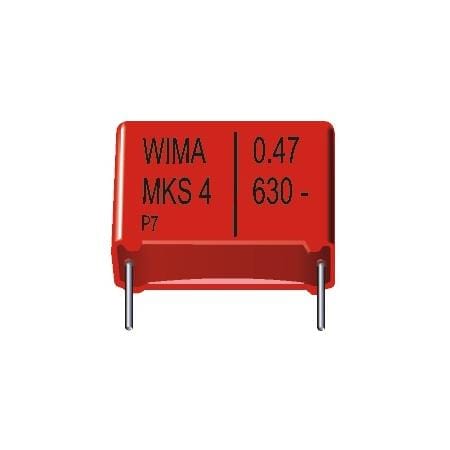
Where film capacitors fit in electronic and industrial designs
Film capacitors are commonly selected where designers need a balance of electrical stability, insulation performance, and service life. In many circuits, they are used for coupling, filtering, timing, snubber networks, suppression, and DC link or pulse-related tasks, depending on the construction and required electrical characteristics.
Compared with some other capacitor technologies, film types are often valued for low dielectric loss, consistent capacitance behavior, and suitability for demanding environments. That makes them relevant in automation equipment, power supplies, motor-related electronics, control boards, converters, and industrial assemblies where component consistency matters over time.
Key selection criteria when comparing parts
Choosing the right part starts with the electrical requirement, not just the package size. Buyers typically evaluate capacitance value, rated DC voltage, tolerance, operating temperature range, lead spacing, and available board space. In practical sourcing, these parameters help narrow down whether a part is suitable for precision signal work, general filtering, or higher-voltage industrial use.
It is also important to consider the circuit’s real operating conditions. Temperature exposure, surge or pulse stress, and lifetime expectations can all affect the final choice. For example, a design that prioritizes tighter control may lean toward lower tolerance values, while a power-oriented application may place greater weight on voltage margin and thermal robustness.
Examples from the available range
The products in this category illustrate a useful spread of specification profiles. The PANASONIC ECWH16822HTB and PANASONIC ECW-H8272JVB are examples of film capacitors listed with 5% tolerance and an operating range from -40 to 105C, making them relevant for designs that need balanced accuracy and environmental durability.
For tighter tolerance requirements, the PANASONIC ECQP1164FZW offers 0.16uF at 100V with 1% tolerance in a radial format. Within the PANASONIC range, this kind of option may be considered where control over capacitance variation is more important than simply meeting a nominal value.
Several KEMET models also show how film capacitors can serve different design priorities. The KEMET F462FB104M1L2Z is listed at 0.1uF and 1250V DC, while the KEMET F611DO185K400L and F611DO185J400Z represent 1.8uF, 400V options with different tolerance grades. This range is useful for engineers comparing high-voltage capability, capacitance level, and acceptable variation in one sourcing workflow.
Understanding application-driven differences
Not every film capacitor is intended for the same task. Some parts are better aligned with precision-oriented circuits, while others are more suitable for energy handling, suppression, or higher-voltage sections of a design. Looking only at capacitance can lead to poor selection if voltage stress, thermal conditions, or dimensional constraints are overlooked.
For instance, a part such as the KEMET F611DO156M063R, listed at 15uF and 63V, fits a different design space than a 1250V 0.1uF device. Likewise, radial dimensions and lead interval can be important in retrofit and service scenarios where PCB layout is fixed. In B2B purchasing, these details often determine whether a component is a straightforward replacement or requires redesign review.
How film capacitors compare with other capacitor technologies
Film capacitors are rarely chosen in isolation from the rest of the capacitor ecosystem. In many assemblies, they are used together with aluminum polymer capacitors or electrolytic and ceramic types to achieve the right combination of capacitance density, frequency behavior, voltage handling, and lifetime performance.
As a general rule, engineers may prefer film types when stability and low loss are more important than maximizing capacitance in the smallest possible footprint. By contrast, ceramic capacitors may be selected for high-frequency decoupling, while electrolytic families can be attractive when larger capacitance values are needed in compact space. The right comparison depends on the circuit objective, not on a single component attribute.
What B2B buyers should review before ordering
For OEM, MRO, and contract manufacturing teams, component selection usually goes beyond the headline part number. It is worth checking tolerance class, temperature range, voltage rating, package dimensions, lead pitch, and fit with existing procurement standards. These factors affect not only design performance but also assembly compatibility and replacement efficiency.
When sourcing for ongoing production, consistency across approved manufacturers can also matter. This category includes recognized options from suppliers such as KEMET and PANASONIC, giving purchasing teams a useful base for evaluating approved alternatives, stock strategy, and application suitability without overgeneralizing across different film capacitor constructions.
Finding the right fit for your project
A good film capacitor choice should match the electrical duty, installation constraints, and reliability expectations of the final application. Whether the priority is tighter tolerance, broader temperature operation, compact radial mounting, or higher DC voltage capability, reviewing the combination of specifications is the most reliable way to shortlist parts effectively.
This category is designed to support that process with a practical selection of film capacitors for industrial and electronic use. If your design also involves adjacent capacitor types or mixed-technology boards, comparing options across related categories can help refine the final BOM and reduce sourcing friction during production or maintenance.
Get exclusive volume discounts, bulk pricing updates, and new product alerts delivered directly to your inbox.
By subscribing, you agree to our Terms of Service and Privacy Policy.
Direct access to our certified experts