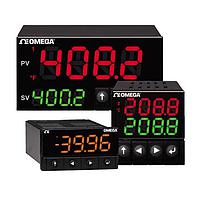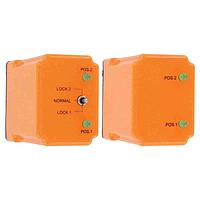
Process Control and Monitoring Devices
Stable production depends on more than simply measuring a process variable. In many industrial systems, operators also need a reliable way to compare a live signal against a defined limit and trigger action when temperature or another condition moves outside the acceptable range. That is where Process Control and Monitoring Devices become essential across equipment, utilities, and OEM machine design.
This category brings together devices used to supervise process conditions, support automatic response, and improve operating consistency. Whether the application involves ovens, thermal equipment, packaging lines, or general industrial control panels, these products help connect measurement, display, alarm, and switching functions in a practical control strategy.
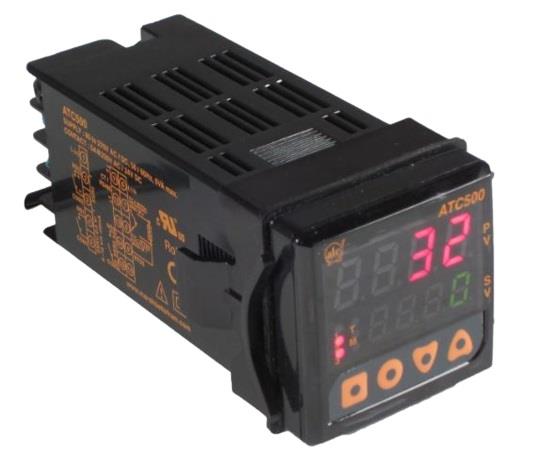
Where process control and monitoring devices fit in industrial systems
In a typical control architecture, these devices sit between the sensor and the final control action. They receive an input from a sensing element, interpret that signal, display operating status, and then activate an output such as a relay when programmed conditions are met. This makes them useful for both continuous monitoring and discrete protective functions.
Many buyers search this category when they need more than a basic readout but less than a fully networked control platform. Depending on the application, the goal may be temperature supervision, over-limit protection, equipment interlocking, or local control at the machine level. For broader product types used in related panel applications, readers may also explore industrial controllers and other devices in the wider control ecosystem.
Typical applications for temperature limit and alarm control
A strong example within this category is the thermocouple-based limit alarm used in gas oven control and similar heating processes. In these applications, maintaining a defined threshold is not just about process quality; it can also support safer equipment operation and reduce the risk of overheating or nuisance shutdowns caused by unstable sensing.
Products such as the Dwyer TSF series are suited to panel-mounted temperature supervision where a thermocouple input, local LED indication, and relay output are required in a compact format. This approach is commonly used in industrial ovens, heat treatment equipment, food processing systems, and machinery where an operator needs a visible status point together with a dependable switching output.
Representative solutions in this category
Among the featured options, Dwyer appears prominently with compact thermocouple limit alarms designed for gas oven control. Models such as the Dwyer TSF-4041-MDF, TSF-4011-MDF, and TSF-4040-DF illustrate the kind of product many users need when working with J or K thermocouple inputs, relay-based alarm output, and straightforward panel visibility through a 3-digit LED display.
These examples also show that selection often depends on practical differences rather than entirely different operating principles. Buyers may need Celsius or Fahrenheit display, AC or AC/DC supply compatibility, and a voltage option that matches the existing panel design, such as 12 Vac/Vdc, 24 Vac/Vdc, 115 Vac, or 230 Vac. That makes it easier to standardize controls across multiple machines or retrofit a device into an existing enclosure without unnecessary redesign.
What to consider when choosing the right device
The first checkpoint is the sensor and input type. In the listed examples, the devices are designed for thermocouple measurement, specifically J and K types. That matters because the controller or limit alarm must match the installed sensor technology and the expected operating temperature range of the process.
The second checkpoint is the required output action. Many applications need a simple relay for alarm signaling, burner interlock, or shutdown logic. The featured units use relay outputs with SPST NO switching, which can be appropriate for straightforward control tasks where the device needs to energize an external circuit when the limit condition is reached.
Power supply is another key specification. A machine builder may prefer low-voltage AC/DC power for modern panels, while a facility maintenance team may be replacing a unit already wired for 115 Vac or 230 Vac. Environmental fit also matters, and enclosure ratings such as IP64 can be useful in areas where dust and incidental exposure are part of everyday operation.
Why display, alarm, and relay functions matter together
In real plant conditions, the value of these products comes from combining several functions into one compact device. A local display gives operators immediate feedback without requiring access to a PLC or HMI. A programmable or dedicated limit function provides a clear operating threshold. The relay output then makes it possible to link that status to an alarm lamp, buzzer, shutdown chain, or control circuit.
This combination is especially helpful in standalone thermal equipment and distributed control points. Users who also need simple local readout devices for adjacent measurements may find related options in meters and indicators, while more application-specific assemblies may involve accessories, panel hardware, and supporting interface parts.
Brand landscape and selection context
Although the current featured products focus on Dwyer, this category also sits within a broader industrial control market that includes names such as OMEGA, IDEC, Pulsar measurement, and ATC Automatic Timing & Controls. Different manufacturers may be preferred depending on whether the priority is thermal process control, panel integration, level monitoring, timing functions, or compact automation components.
For that reason, buyers often compare not only the brand but the intended control role. Some projects call for a dedicated limit alarm, while others require a more advanced platform with configurable logic or tighter process regulation. If your application extends beyond local limit functions, it can also be useful to review related process control and monitoring solutions across the wider category.
How these devices support maintenance, retrofit, and OEM design
For maintenance teams, replacement speed is often the priority. Compact units with familiar panel dimensions, simple wiring, non-volatile memory, and direct relay output can reduce downtime during service work. Matching the original sensor type, display units, and supply voltage usually helps keep the replacement process straightforward.
For OEMs and panel builders, the priority may be repeatability across machine platforms. Standardized alarm devices simplify BOM control, panel layout, and service documentation. In applications where process reliability depends on responsive control components working together, related categories such as control and monitoring accessories can also support cleaner installation and long-term maintainability.
Finding the right fit for your process
The best choice in this category depends on how the device will be used in the actual control loop: the sensor connected to it, the temperature scale operators expect to read, the available supply voltage in the panel, and the type of switching action required by the system. Even small differences in these details can affect installation time and operating compatibility.
If you are selecting for thermal equipment, oven control, or another temperature-driven process, focus first on input compatibility, display preference, supply requirements, and relay behavior. With that approach, process monitoring becomes easier to standardize, easier to service, and better aligned with the practical needs of industrial operation.
Get exclusive volume discounts, bulk pricing updates, and new product alerts delivered directly to your inbox.
By subscribing, you agree to our Terms of Service and Privacy Policy.
Direct access to our certified experts