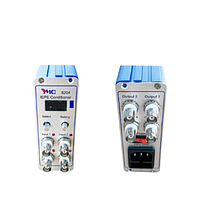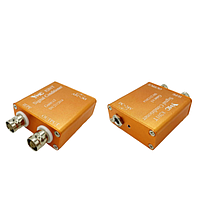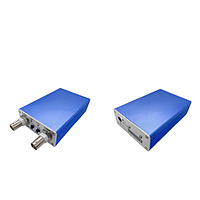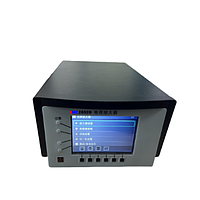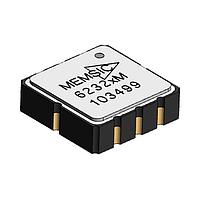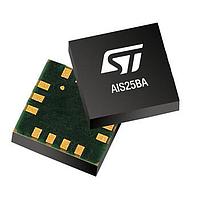
Motion & Position Sensors
Precise motion feedback is essential in modern equipment, whether the goal is vibration monitoring, orientation detection, impact sensing, or closed-loop control. This category brings together Motion & Position Sensors used across industrial systems, embedded electronics, automation projects, and machine health applications where reliable movement data supports better decisions and more stable performance.
From compact board-level components to more robust sensing solutions for demanding environments, these devices help engineers measure acceleration, tilt, motion state, and related position behavior. They are commonly selected for control systems, monitoring platforms, data acquisition designs, and integration into broader motion and position monitoring architectures.
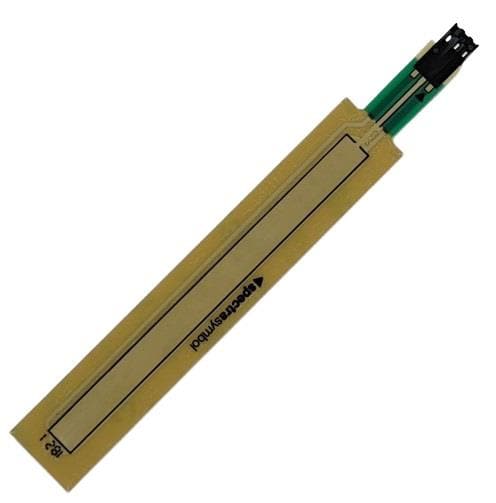
Where motion and position sensing fits in real systems
Motion and position sensing is not limited to one device type or one industry. In practice, it can support equipment diagnostics, movement detection, orientation awareness, shock monitoring, and feedback for dynamic systems. That makes this category relevant to machine builders, electronics designers, maintenance teams, and integrators working on both industrial and embedded projects.
These sensors are often used alongside related technologies such as displacement transducers when an application needs a fuller picture of movement, position change, or mechanical behavior. In some systems, accelerometers and inertial devices are also part of broader control loops that connect with drives, mechanics, and actuators and positioners.
Typical device types within this category
This category can cover several sensing approaches depending on the required output and environment. Common examples include accelerometers for detecting vibration, shock, or dynamic motion; inertial sensors for capturing multi-axis movement; and tilt-related devices for orientation or angle detection. Selection usually depends on whether the priority is fast response, compact integration, rugged construction, or multi-axis measurement.
For embedded designs, board-mount components are often chosen where size, power supply compatibility, and digital interfacing matter. For more demanding machinery and field installations, engineers may look toward more robust industrial-grade sensing options that are better suited to continuous monitoring and mechanically active environments.
Examples from leading manufacturers
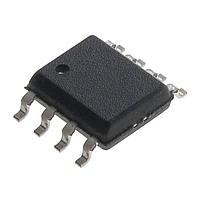
Among the featured options in this range, Analog Devices provides several well-known solutions for motion sensing and inertial measurement. Devices such as the ADXL345X-C-RL and ADXL345X-C are examples of 3-axis digital accelerometers often considered for compact electronic designs where multi-axis detection and digital output are important. The ADXL321 and ADXL213B represent other accelerometer options that may suit applications with different sensing ranges or interface preferences.
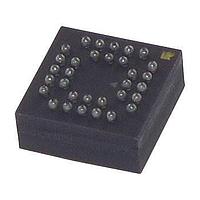
For higher-level inertial sensing, the ADIS16445AMLZ is a representative example of an inertial sensor used where broader motion data is required. Development and validation can also be supported by tools such as the ADIS16228/PCBZ evaluation board, which helps engineers assess sensor behavior before final integration.
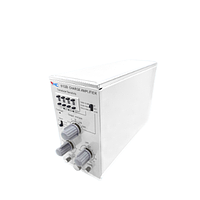
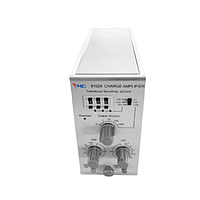
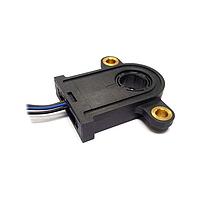
Amphenol is also represented here with accelerometer families such as the 797V, 793VE, 793L, and 793-10. These products help illustrate the industrial side of the category, where acceleration sensing is often tied to vibration analysis, equipment monitoring, and condition-based maintenance strategies.
How to choose the right sensor
A practical selection process starts with the measurement objective. If the application needs to detect vibration or impact, an accelerometer may be the right fit. If it needs combined movement and orientation data, an inertial sensor may be more appropriate. The number of sensing axes also matters, especially when movement does not occur in a single plane.
Next, consider the operating environment and system architecture. Key factors often include supply voltage, output type, installation space, expected motion range, and the level of signal processing available in the host system. In industrial settings, designers also look closely at mounting method, long-term stability, and how the sensor will behave under continuous mechanical stress.
It is also useful to think about whether the sensor is being used for monitoring, control, or event detection. A condition-monitoring system may prioritize repeatability and trend quality, while a portable device may focus more on low power and compact footprint. Matching the sensor to the real use case usually leads to better results than choosing by specification alone.
Applications across industrial and embedded environments
Motion & Position Sensors are used in a wide range of equipment. In industrial maintenance, accelerometers can help identify abnormal vibration patterns in rotating assets and mechanical assemblies. In embedded electronics, compact digital sensors are often integrated into products that need orientation awareness, movement recognition, or user-motion tracking.
They also support automation and mechatronic designs where motion state must be monitored as part of a larger system. In these cases, sensor data may complement information from AC and DC motors, feedback devices, and control hardware to improve accuracy and responsiveness. The result is better visibility into how a system moves, reacts, and performs over time.
Why category-level comparison matters
Because this category includes both component-level and more application-oriented sensing options, comparison at the category level is often more useful than jumping straight to one part number. Engineers may begin by narrowing the problem: vibration measurement, tilt detection, multi-axis motion tracking, or inertial sensing. From there, it becomes easier to evaluate suitable device families, packaging styles, and integration paths.
This approach is especially helpful when a project is still in development or when replacing an existing sensor in a legacy system. Reviewing the broader range can reveal whether a simpler accelerometer is sufficient or whether a more integrated inertial solution would reduce system complexity.
Support for design, testing, and long-term integration
Sensor selection is only one part of a successful implementation. Teams also need to think about signal interpretation, mounting conditions, calibration strategy, and how the measured data will be used by software or control logic. Evaluation hardware, reference designs, and known device families can speed up prototyping and reduce integration risk.
For B2B buyers, this category is most valuable when viewed as part of a wider sensing ecosystem rather than a standalone product list. Whether the requirement is compact board-level sensing or more robust acceleration monitoring, the available range supports projects that need dependable motion insight from prototype through deployment.
Conclusion
Choosing the right motion sensing solution starts with understanding what kind of movement needs to be measured and how that data will be used. This category brings together options for acceleration sensing, inertial measurement, and broader position-related monitoring, making it easier to compare technologies for both industrial and embedded applications.
By reviewing application needs, interface requirements, and environmental demands, buyers can identify a more suitable sensor path without overcomplicating the design. If your system depends on accurate movement awareness, this category provides a practical starting point for finding the right fit.
Get exclusive volume discounts, bulk pricing updates, and new product alerts delivered directly to your inbox.
By subscribing, you agree to our Terms of Service and Privacy Policy.
Direct access to our certified experts