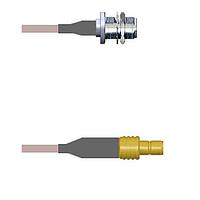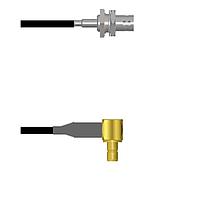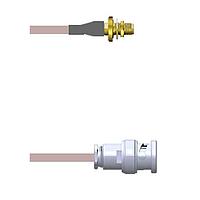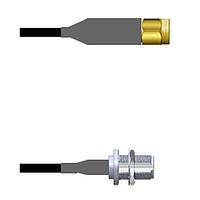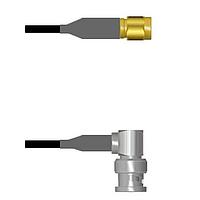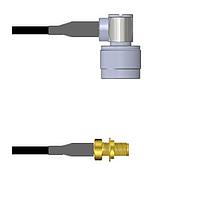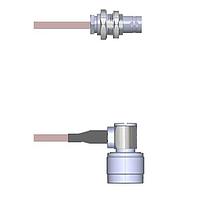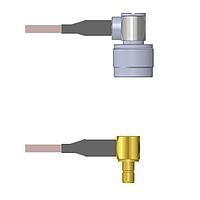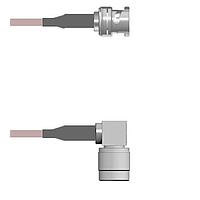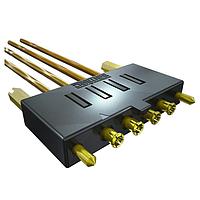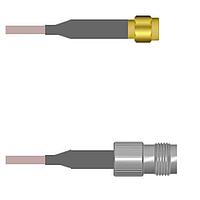
RF Cable Assemblies
Reliable signal transmission often depends on more than the connector alone. In RF systems, the cable assembly plays a critical role in preserving signal integrity between instruments, antennas, modules, and panel interfaces. For engineers, buyers, and integrators, choosing the right RF cable assemblies means balancing connector style, cable construction, mechanical routing, and the frequency demands of the application.
This category is intended for projects where ready-to-use coaxial cable solutions help reduce assembly time, improve repeatability, and simplify installation. Whether the need is for lab setups, embedded communications equipment, test benches, or industrial electronics, selecting the proper assembly helps minimize mismatch, unwanted loss, and connection issues across the full signal path.
Where RF cable assemblies are used
RF cable assemblies are commonly used wherever a high-frequency signal must travel between two connection points without building a cable from separate parts. Typical use cases include test and measurement racks, wireless devices, communication equipment, development platforms, antenna routing, and system integration work where consistent connector termination is important.
In many environments, a pre-terminated assembly is preferred because it helps avoid variability introduced during manual cable preparation and connector installation. This can be especially useful when systems need predictable electrical performance, fast field replacement, or cleaner panel-to-board and instrument-to-instrument interconnection.
What to consider when selecting an assembly
The right choice usually starts with the connection interface at each end. Connector compatibility, cable length, mounting path, bend requirements, and expected signal frequency all affect suitability. In practice, engineers also look at shielding effectiveness, flexibility, and how often the cable will be connected and disconnected.
Mechanical fit matters just as much as electrical performance. A compact enclosure may require tighter routing, while a bench setup may prioritize reach and repeated handling. If the assembly is part of a broader RF signal chain, it is also useful to review related components such as coaxial connectors and RF adapters to ensure interface consistency across the design.
Electrical performance and signal integrity
At RF frequencies, small differences in cable and connector construction can have a noticeable effect on system behavior. Assembly selection can influence insertion loss, impedance continuity, shielding, and reflection performance. For that reason, cable assemblies should be chosen with the actual operating range and system sensitivity in mind rather than by connector appearance alone.
For lower-loss transmission paths or more demanding measurement tasks, the quality of the coaxial structure becomes increasingly important. A well-matched coaxial cable assembly helps maintain cleaner signal transfer between devices, which is valuable in both production and laboratory environments where repeatable readings and stable communication links are needed.
Role within a complete RF interconnect solution
RF cable assemblies are one part of a broader interconnect ecosystem. In real installations, they often work together with fixed connectors, interface transitions, accessories, and passive signal-conditioning components. Understanding the cable assembly in this wider context helps buyers choose parts that support easier integration and future maintenance.
For example, some builds may require companion items such as RF connector accessories for strain relief, protection, or installation support. Other designs may benefit from interconnect attenuators when signal level management is part of the same RF path. Looking at the full interconnect chain often leads to better long-term compatibility than selecting each part in isolation.
Manufacturer options and sourcing context
This category may include solutions from recognized suppliers involved in connectivity and electronics, including Amphenol RF, Amphenol, 3M, and AMP Connectors - TE Connectivity. Manufacturer choice can matter when a project needs continuity with existing platforms, preferred connector families, or established sourcing standards.
That said, the best fit still depends on the application rather than the brand name alone. Buyers typically compare interface type, cable form factor, installation constraints, and the broader compatibility of the RF path before standardizing on a given option. This is particularly relevant in B2B environments where maintenance, replacement planning, and multi-site deployment all influence procurement decisions.
Choosing for lab use, industrial integration, or field deployment
Different environments place different demands on cable assemblies. In lab and test setups, flexibility, quick reconfiguration, and repeatable connection quality are often priorities. In embedded or industrial equipment, routing constraints, vibration exposure, and long-term mechanical stability may become more important than convenience alone.
Field deployment introduces another layer of consideration, especially where access is limited or service intervals are long. In those cases, selecting an assembly with the appropriate connector pairing, cable durability, and installation profile can help reduce downtime and simplify replacement. A careful match between electrical needs and physical operating conditions usually delivers better results than focusing on a single parameter.
How to evaluate the category efficiently
When browsing this category, it helps to narrow options by a few practical criteria first: connector ends, cable length, intended frequency range, and the physical conditions of the installation. From there, buyers can compare assemblies based on routing flexibility, application fit, and compatibility with neighboring RF components already used in the system.
For organizations managing repeat purchases, standardizing around a smaller set of assembly types can also simplify maintenance and procurement. This approach is useful for OEM production, lab inventory control, and system integration teams that need dependable replacement paths without re-evaluating every cable from the beginning.
Final considerations
A suitable RF cable assembly supports more than a simple point-to-point connection. It helps maintain signal integrity, reduces installation variability, and fits more smoothly into the overall RF interconnect architecture of the project. By evaluating both electrical and mechanical requirements, teams can shortlist options that are practical for design, purchasing, and long-term support.
If your application involves antennas, instruments, embedded radios, or high-frequency interface routing, this category provides a useful starting point for selecting assemblies that align with real system needs. A structured review of connector compatibility, cable behavior, and adjacent interconnect components will usually lead to a more reliable final implementation.
Get exclusive volume discounts, bulk pricing updates, and new product alerts delivered directly to your inbox.
By subscribing, you agree to our Terms of Service and Privacy Policy.
Direct access to our certified experts