
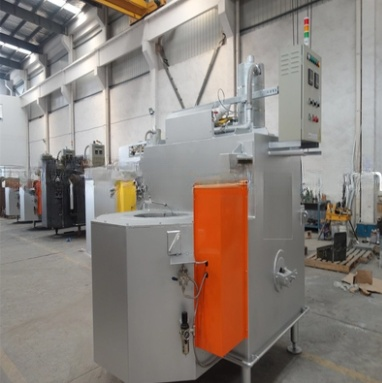
Wondery WDL-BCQ-8000 Gas Fired Aluminum Alloy Holding Furnace For Gravity Casting (850℃; 8000Kg)
Appication: Gravity Casting
Melting pool capacity: 8000Kg (liquid density: 2.4g/cm3)
Fuel type: natural gas heat value: 8600Kcal/m3;
Gas supply pressure: 5Kpa;
Rated working temperature: 850℃ (atmosphere)
Temperature control accuracy: ±3℃
Energy consumption: 8m3/h (equipped with a gas flow meter, working continuously);
Power supply: 415V, 60HZ, 3P 5 wire
1. General Introduction
The gas fired pool type holding furnace is an aluminum alloy liquid
holding furnace which could recycle the heat of the fume and saves
energy consumption greatly.
The furnace adopts the high quality burner with a large flame radiation size
and a high heat efficiency. The aluminum liquid temperature is kept at an accuracy of ±5℃. The furnace inside oxygen content is less than 5% which effective prevents generation of oxides.
The holding furnace for die casting is designed with the special heat insulation structure which could effectively reduce surface heat loss, reduce environment temperature rise, and improve heat efficiency.
The pool type aluminum furnace wall is lined with high alumina refractory
bricks which have a service life of more than 3 years.
3. Furnace Structure
3.1 Furnace shell
The furnace shell is made of steel plate and sectional steel. The door edge is made of cast iron material.
3.2 Furnace lining
The melting pool is built with high alumina bricks which have the features of high strength, free aluminum-sticking, and long life. (compression strength: 140Mpa when temperature is above 110℃; linear rate: only 0.1%). The heat insulation layer used is of Grade One silicate aluminum fiber board.
3.3 Burning system:
The burning system is easy in operation, and has a long service life. The furnace has the functions of automatic temperature control, automatic ignition, and flame detection. When the furnace reaches the set temperature, the burner stops working.
When the furnace temperature is lower than the set lower temperature limit, the
burner enters the burner port and works automatically. The burner ignites
automatically with a flame detection device. When the furnace is ready to work, the user should first turn on the air blower to purge the hearth. The burner ignites automatically after purging finished and works with a small flame. The flame detection rod detects the flame, and the burner will work with a big flame. The flame detection rod monitors the burning status of the burner all the time.
The furnace burning system is also set with safety measures. If there are situations such as incomplete burning or flame-out, the control system cuts off main burner and ignition burner to stop the fuel supply. There is also the interlock device between the gas pipeline and air pipeline. If there is any abnormal burning situation, the interlock device cuts off the fuel supply. The liquid aluminum temperature is controlled through PID regulation. The fan inverter automatically adjusts the fan rotation speed so as to regulate the gas flow.
The furnace has set the atmosphere temperature upper limit value.
3.4 discharging hole
The aluminum liquid is discharged with the help of manual operation.
During the liquid discharging process, there should be no leak problem.
3.5 Temperature control
The furnace is set with control functions such as the automatic flame switches, the over temperature alarm, the flame-out protection, etc.
Aluminum liquid temperature control
Hearth temperature control
Safety device and automatic control system
When the furnace starts to work, the user should first switch on the power supply and turn on the blower to purge the furnace. Set the furnace temperature and open the solenoid valve of the gas pipeline. The burner ignites when the natural gas enters the hearth.
Get exclusive volume discounts, bulk pricing updates, and new product alerts delivered directly to your inbox.
By subscribing, you agree to our Terms of Service and Privacy Policy.
Direct access to our certified experts