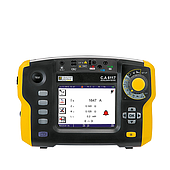
Temperature & Humidity Chamber may integrate inside cameras for surface inspection, insulation resistance monitoring, leakage current logging, and real-time voltage tracking. The goal is no longer simply determining whether a fail sample, but understanding when degradation begin and how it develops over time.
Humidity Damages Electronics More Quietly Than Heat
High temperature usually produce visible signs of stress. Plastics may discolor, adhesives soften, displays warp slightly, or housings begin to shrink after prolonged heating.
Humidity behave differently. Most damage progresses slowly and remain almost invisible during the early stages.
In modern electronic assemblies, moisture can gradually penetrate protective coatings, migrate into gaps around IC leads, or diffuse into the fiberglass layers inside the PCB. At first, the device appears completely normal. Electrical parameters remain stable, and no obvious symptoms are visible.
However, after repeated temperature-humidity cycles, subtle discoloration may begin forming around component leads. Copper pads slowly lose their metallic shine and turn dark yellow or dull brown. In high-power circuits, thin white oxidation residues may appear around solder joints or connector edges.
As degradation becomes more severe, moisture combined with electrical bias can trigger electrochemical corrosion. Under a microscope, extremely small metallic dendrites may form between IC pins, resembling tiny spiderweb-like structures. Over time, these conductive paths grow until they cause leakage current, intermittent short circuits, or unstable signal behavior.
One important detail is that many failures do not appear during the actual test itself.
A sample may continue operating normally at 85°C and 85%RH. But after several hours removal from the chamber, random resets, abnormal standby current, or RF instability may suddenly appear. This often occurs when condensed moisture accumulates at regions with temperature gradients and activates weaknesses that had already developed during testing.
For this reason, many reliability laboratories now monitor not only the high-temperature dwell period but also the recovery phase after testing.
The Chamber May Be Stable While the Material Is Still Absorbing Moisture
A common misconception is assuming that once the chamber reaches 85°C and 85%RH, the test sample has also reached equilibrium.
In reality, multilayer materials such as coated PCBs, lithium battery modules, molded epoxy structures, or engineering plastics may require much longer for moisture to diffuse deeply into their internal structure.
For example, with acrylic-coated PCBs, moisture during the first few hours mainly remains on the surface. Over extended exposure, the coating gradually absorbs water vapor, becoming slightly softer and losing adhesion strength around component edges.
Under magnification, the coating surface may change from transparent to slightly cloudy. Faint halo-like patterns can appear around IC leads, while coating edges may swell slightly, similar to moisture absorption in paint layers. In some areas, microscopic air bubbles begin forming beneath the coating.
In lithium battery modules or EV battery packs, prolonged humidity exposure may also reduce the elasticity of sealing materials around battery cells. At first, only slight discoloration appears along the seal edges. Later, fine hairline cracks may develop in corners exposed to thermal stress.
If the test duration is too short, many of these aging mechanisms may not yet become visible.
That is why even with the same temperature-humidity profile on the Heating and cooling chamber, simply changing the dwell time can produce dramatically different reliability results.
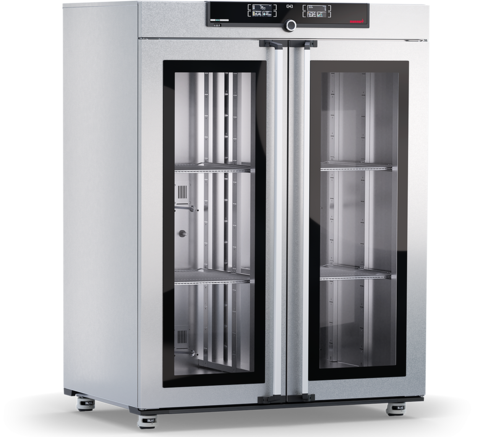
Climate Chamber
Airflow Inside the Climate Chamber Can Cause Uneven Aging
When evaluating a Temperature and Humidity Test Chamber, users often focus mainly on temperature range or thermal uniformity. However, in long-term aging tests, internal airflow distribution can directly affect how quickly materials degrade.
Samples placed near air outlets typically experience stronger heat and moisture exchange. Their surfaces heat up faster, while condensation and evaporation cycles occur more aggressively than in other chamber locations.
This effect is especially noticeable in high-power PCBs, LED modules, lithium batteries, and devices with large metal heat sinks.
During high-power LED module testing, two samples positioned differently inside the same chamber may show significantly different aging behavior. A sample located near the airflow outlet may experience faster yellowing of reflective surfaces, clouding of LED encapsulation silicone, or fine cracks forming in optical adhesives around the lens edges. Meanwhile, a sample positioned closer to the chamber center may still appear nearly unchanged.
This is one reason why many reliability laboratories now evaluate chamber uniformity under actual load conditions rather than testing the chamber empty.
Many Failures Begin During Temperature Transition Phases
When the climate chamber heats up rapidly in a high-humidity environment, the surface temperature of components sometimes doesn't have time to equalize with the surrounding air. This creates an extremely thin layer of condensation on the metal surface. This moisture layer is usually very difficult to see with the naked eye. However, under oblique lighting or a macro camera, a hazy, mist-like sheen may appear on the PCB surface, tiny reflective spots may be visible at the connection edges, or a thin layer of water vapor may form on the sensor glass that quickly disappears. Even such a small amount of moisture is enough to create leakage currents in high-voltage circuits or accelerate corrosion at component pins.
With RF devices, high-density sensors, or control boards, faults sometimes don't manifest as complete failure but rather as gradually increasing noise signals, erratic measurement errors, or intermittent device operation based on temperature cycles.