Repairing 3-axis machine is still capable of meeting large orders
In the early stages of production, many factories remained loyal to the 3-axis machine because of its moderate investment cost, familiar operation and ability to handle small orders well. When producing tanks with diameters of only about one to two meters, everything seemed to go smoothly. But when customers began to place orders for large pressure tanks, increasing heights and expanding diameters, the limitations of the 3-axis machine gradually became apparent..
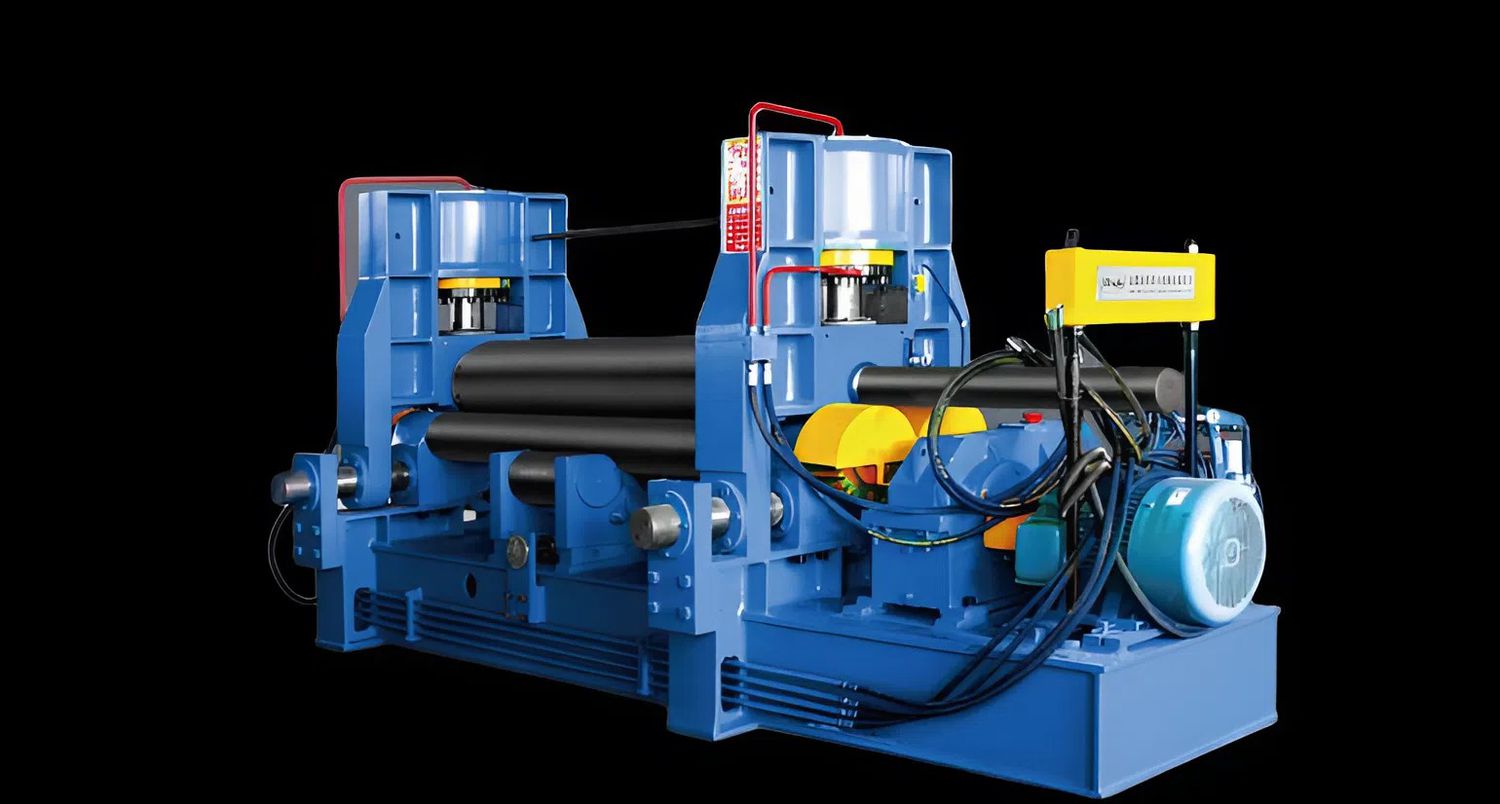
The edges of the sheet metal are often misaligned during bending, no matter how experienced the worker is. A slight slippage is enough to prevent the two edges from fitting together when welding, forcing the worker to make many adjustments. The diameter error is only a few millimeters, but in tank manufacturing, each small detail determines the joint of the entire structure. As a result, the progress is prolonged, the cost is increased, and the worker spends a lot of time testing, measuring and adjusting.
Seemingly small error but has big consequences
Many factory owners have complained that the cost loss is not due to slow machines but lies in small errors in the bending process. A thick steel plate, several meters long, just a few millimeters off, cannot be fitted with other details. Forcing workers to cut, adjust or start over. Materials are discarded, workers have to work overtime and the risk of contract delays is quite high.
When making chemical tanks or pressure tanks, the tightness requirement is even more stringent. Even a small gap can cause the entire product to be judged substandard. Some factories have had to compensate tens of millions of dong each month just because of the amount of scrap and repair time that arises. If calculated in the long term, this figure even exceeds the investment difference between a 3-axis and 4-axis machine.
So how can the 4-roller bending machine overcome those weaknesses?
It is these recurring problems that have prompted many businesses to switch to 4-roll machines in recent years. The machine's strongest point lies in the dual-side clamping system that holds the edge of the sheet tightly from the start. As a result, the steel sheet no longer shifts during the rolling process, the edges are tighter and the worker has to adjust less.
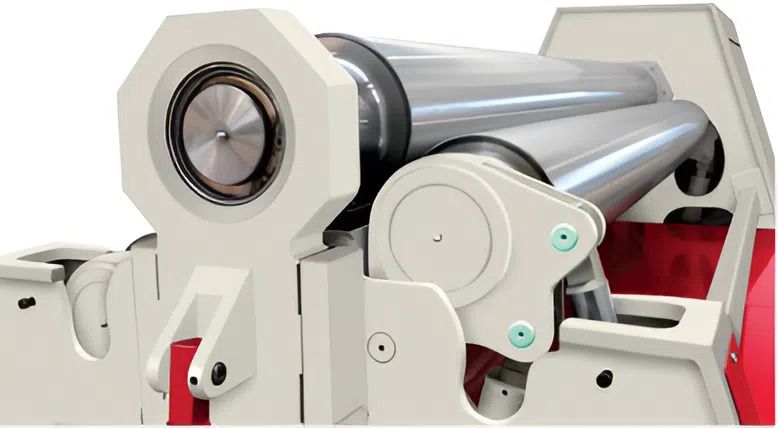
The four-axis configuration allows for much more flexibility than the three-axis. The operator can control the bending force and diameter in stages without having to try again and again. When special shapes such as ellipses or cones need to be created, the four-axis machine can do it in one pass instead of having to divide it into several stages.
Another notable point is the ability to bend the edges before bending the entire sheet. This is an important operation to ensure that the two ends of the sheet are completely sealed when welding. With a three-axis machine, this step is usually done manually or divided into a separate step, while a four-axis machine can be integrated right into the process.
Benefits shown in numbers
A tank manufacturing factory in the South once shared that in the past, they had to reject more than a dozen steel plates each month due to edge defects and diameter errors. The total loss, including materials, labor, and time, was about thirty or forty million VND. After investing in a 4-axis machine, the number of plates that had to be rejected dropped to just a few plates each month, and the order progress was significantly shortened. They calculated that within just half a year, the savings had largely offset the cost of buying a new machine.
This equipment also helps the factory reduce its dependence on the skills of experienced workers. Young workers with a few weeks of training can operate smoothly, thanks to the automatic control system and the ability to maintain stability throughout the bending process. This is a great advantage when the business wants to expand without being limited by experienced human resources.
Refer to the article: What is a sheet metal bending machine? How can it be used in practice?
When to keep a 3 axis machine and when to invest in a 4 axis machine
In fact, there are still cases where 3-axis machines are good. If you only process small tanks, simple shapes and low output, continuing to use 3-axis machines will help save costs. But once you want to receive orders for large diameter tanks, low error requirements, high volume and urgent progress, then 4-axis machines are almost a mandatory choice.
You know, the important thing is not speed or productivity, but in minimizing errors and maintaining stability for long-term production. The higher initial investment will quickly be offset by the money you save on scrap, labor costs and reputation with customers.
Conclude:
The shift from 3-axis to 4-axis machines in the industrial tank manufacturing industry is not simply a trend. It stems from real problems that any factory has experienced: misaligned edges, errors, scrap and progress. The 4-axis machine with its optimal design has solved most of those pain points, bringing stability and clear production efficiency.