For full functionality of this site it is necessary to enable JavaScript.
EMIN.CO.ID
0

What is a hydraulic press used for? Applications in modern manufacturing

08/19/2025 15:01:39

When it comes to hydraulic presses, many people immediately imagine giant blocks of steel being compressed neatly in just a few seconds. In fact, behind it is a familiar physical principle: Pascal's law. A small force when acting on a closed liquid can multiply many times at the output. It is this simple sounding principle that has turned the hydraulic press into one of the most important devices in modern industry today.

Do you know what a hydraulic press is used for?

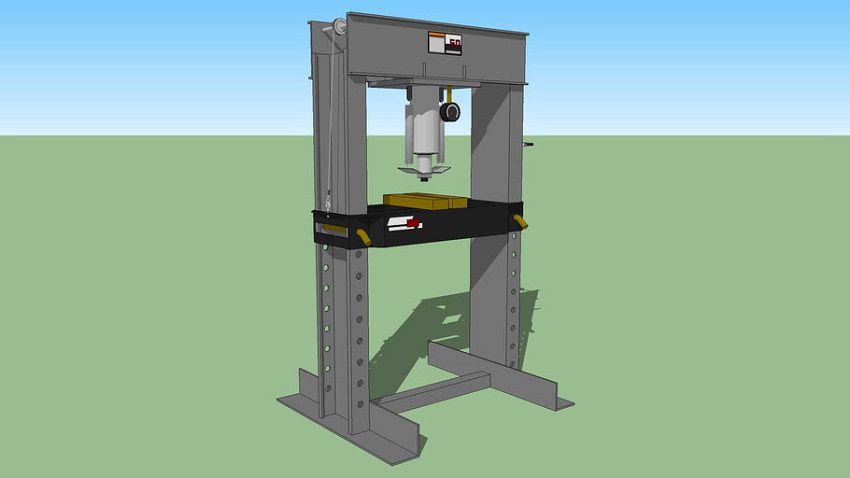
In metalworking, few machines are as powerful as a hydraulic press. Imagine the process of manufacturing a car: the body, hood, or brake parts all require enormous pressure to shape. Even in small mechanical workshops, hydraulic presses are a great help for removing bearings, straightening bent iron bars, or pressing rusty parts. A medium-sized machine like the KOCU TY12001 with a pressing force of 12 tons can handle seemingly impossible workloads.

When hydraulic presses are applied in the recycling field

When it comes to the environment, hydraulic presses have another role: turning bulky materials into neat blocks. End-of-life cars, aluminum cans, scrap iron and steel… can all be compressed to save space and reduce transportation costs. 
Thanks to this, the recycling process becomes more efficient. Not stopping at scrap, in many manufacturing plants, powdered materials such as pharmaceuticals or cosmetics are also compressed into tablets with high compactness and uniformity, thanks to hydraulic technology.

Applications in laboratory, production line?

In research labs, you’re probably familiar with its role: testing the strength of materials, compressing pellets for chemical analysis, or creating prototypes for the construction industry. Thanks to its stability and repeatability, hydraulic presses help researchers obtain reliable data, leading to the development of new, stronger, lighter materials.

Is it really safe to use a hydraulic press?

One of the common concerns is whether using a hydraulic press is dangerous. The truth is, with tens of tons of pressing force, this equipment is potentially risky if operated incorrectly. However, modern machines have been integrated with many protective features such as safety valves, emergency stop buttons and protective frames. When following the correct procedures, operators can use it with complete peace of mind. In places such as laboratories or small mechanical workshops, choosing the right machine capacity and regular maintenance are also important factors to ensure absolute safety.


Related News

What Is a VLF Very Low Frequency AC Voltage Tester ?
08/26/2026 11:02:45

A VLF very low frequency AC voltage tester is used to assess the insulation condition of cables, transformers, and certain high-voltage electrical equipment. The equipment generates AC test voltage at a very low frequency, typically in the range of 0.05 Hz to 0.1 Hz as referenced in technical sources. This method is particularly useful for testing capacitive loads, such as power cables and certain high-voltage equipment.

Insulation Oil Quality Testing for Electrical Equipment
08/26/2026 10:59:41

Insulation oil testing helps detect changes associated with aging, moisture, and contaminants in the oil. Combining a suitable insulation oil tester with careful sampling procedures and regular data monitoring supports proactive maintenance of electrical equipment and helps maintain the required insulation condition during operation.

Insulation Resistance Tester: Procedures and Safety Precautions
08/25/2026 09:05:54

A megohmmeter must be used according to the proper procedure to ensure operator safety and reliable measurement results. This article covers its operating principle, testing procedure, influencing factors, and essential safety precautions.

How to Measure Ground Resistance Effectively
08/25/2026 09:02:07

A ground resistance tester is used to measure the resistance of a grounding system or ground electrode. Using the correct measurement method gives operators a better basis for identifying changes in the system over time and taking appropriate inspection or corrective measures.

Stay Updated with Offers

Get exclusive volume discounts, bulk pricing updates, and new product alerts delivered directly to your inbox.

By subscribing, you agree to our Terms of Service and Privacy Policy.

Quick Support

Direct access to our certified experts