Combine SMU & PSU in the same modular chassis
The MP5000 Series is different in its modularity. Instead of investing in multiple bulky systems, engineers can flexibly use both SMU (Source Measure Unit) and PSU (Power Supply Unit) in a compact 1U chassis. With just the MP5103 mainframe, you can mount up to 3 modules, expand to 6 independent channels, and if you need more, freely pair up to 32 chassis to run high-speed multi-site tests.
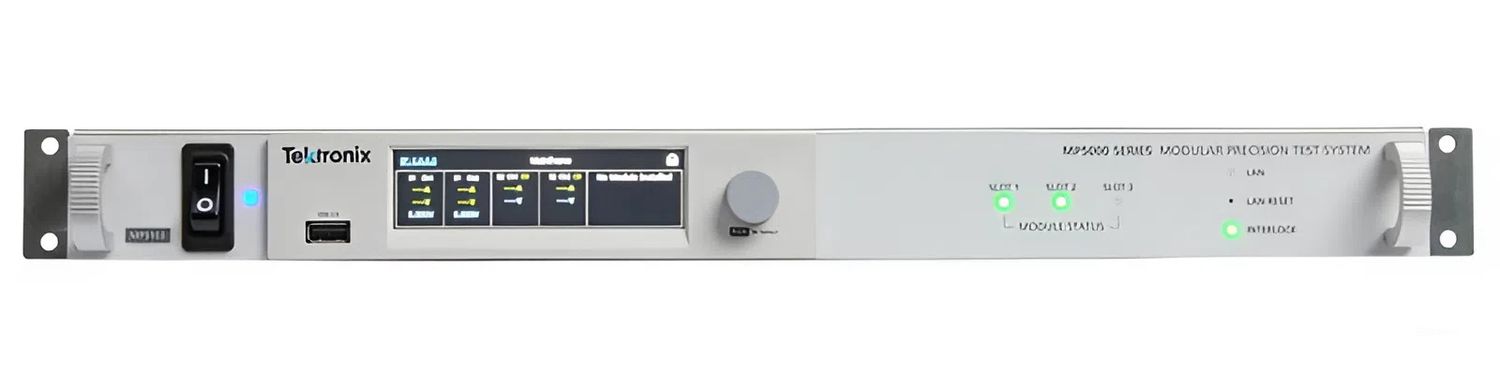
In particular, the modules are designed to be replaced in minutes. Want to upgrade or maintain? Just pull out and plug in, no need to worry about system downtime. This is the kind of flexibility that modern labs need.
Equipped with top performance:
- SMU module with resolution up to 100 fA, sampling rate 1 MSa/s, extremely useful for tests requiring high accuracy.
- PSU module with power 50 W/channel, bipolar output and integrated advanced protection.
All packed in a 1U design that saves rack space, but provides channel density and speed far beyond many traditional systems.
Next-gen automation
Another impressive point is that Tektronix has integrated the Test Script Processor (TSP). Thanks to that, the synchronization between racks is handled at the micro-second level, eliminating the delay between PC and device. You can write scripts directly, or easily integrate with Python, LabVIEW, IVI driver. In other words: ready for any automation workflow that R&D or production teams need.
Ready for the present, open for the future
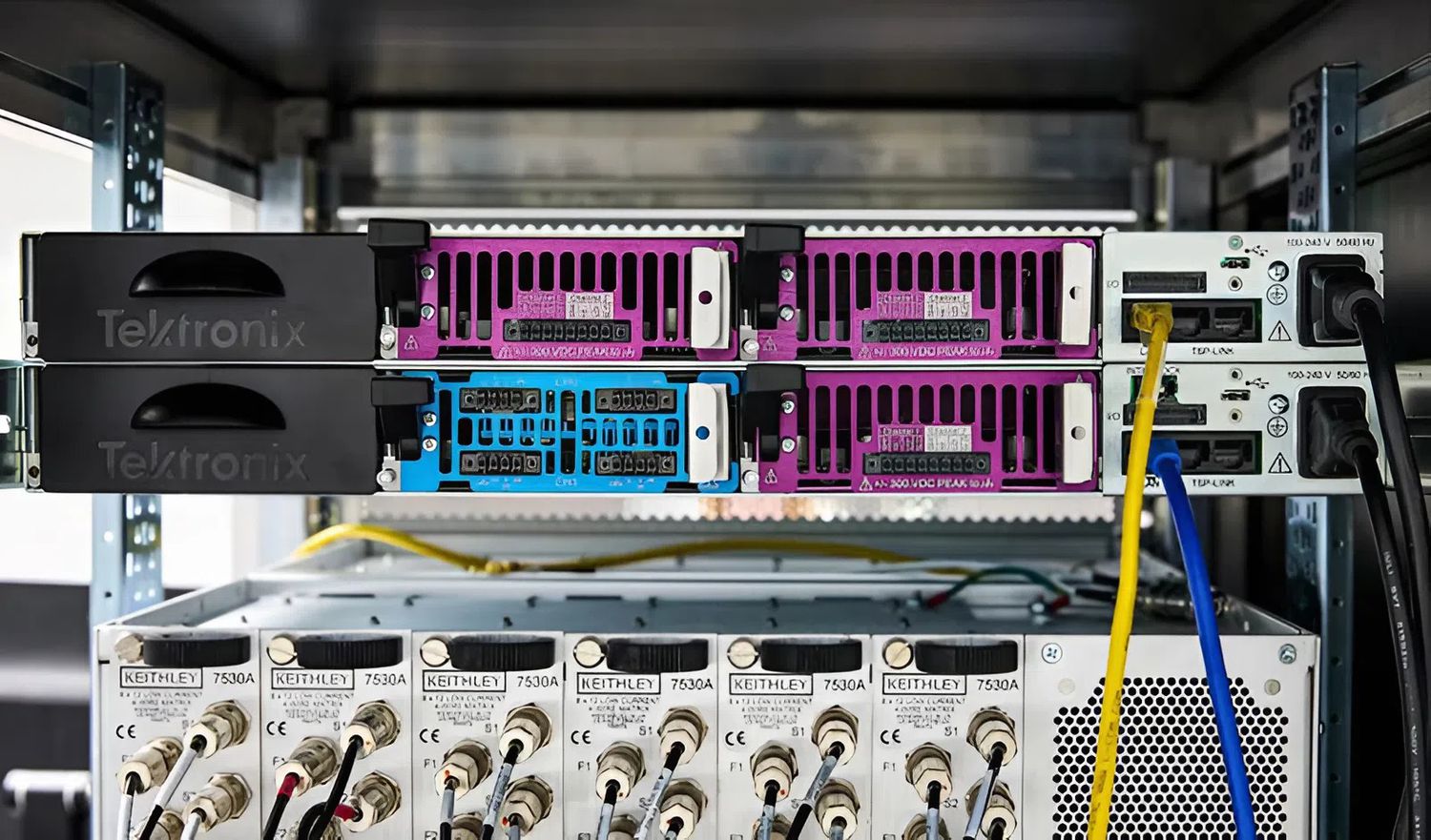
Upon launch, the MP5000 had a full "combo" set including:
- MP5103: 3-Slot Modular Chassis.
- MSMU60-2 SMU module: dual-channel, 60V.
- MPSU50-2ST PSU module: Dual-channel power supply, 50 W/channel.
And Tektronix isn’t stopping there. It’s expected that in early 2026, the company will launch a 200V SMU module with high pulsing capabilities, aimed directly at semiconductor and optoelectronic applications. That means the system you invest in today will continue to “grow” with your needs in the future.
Conclusion:
The MP5000 Series is more than just a test system. Engineers can fully configure and expand, customize to their own workflow. Less racks, less downtime, but more channels, more automation.