In this article, EMIN will help you learn specifically about dB, how to calculate and control sound to make it safer and more comfortable during use.
What is dB? What does dB stand for?
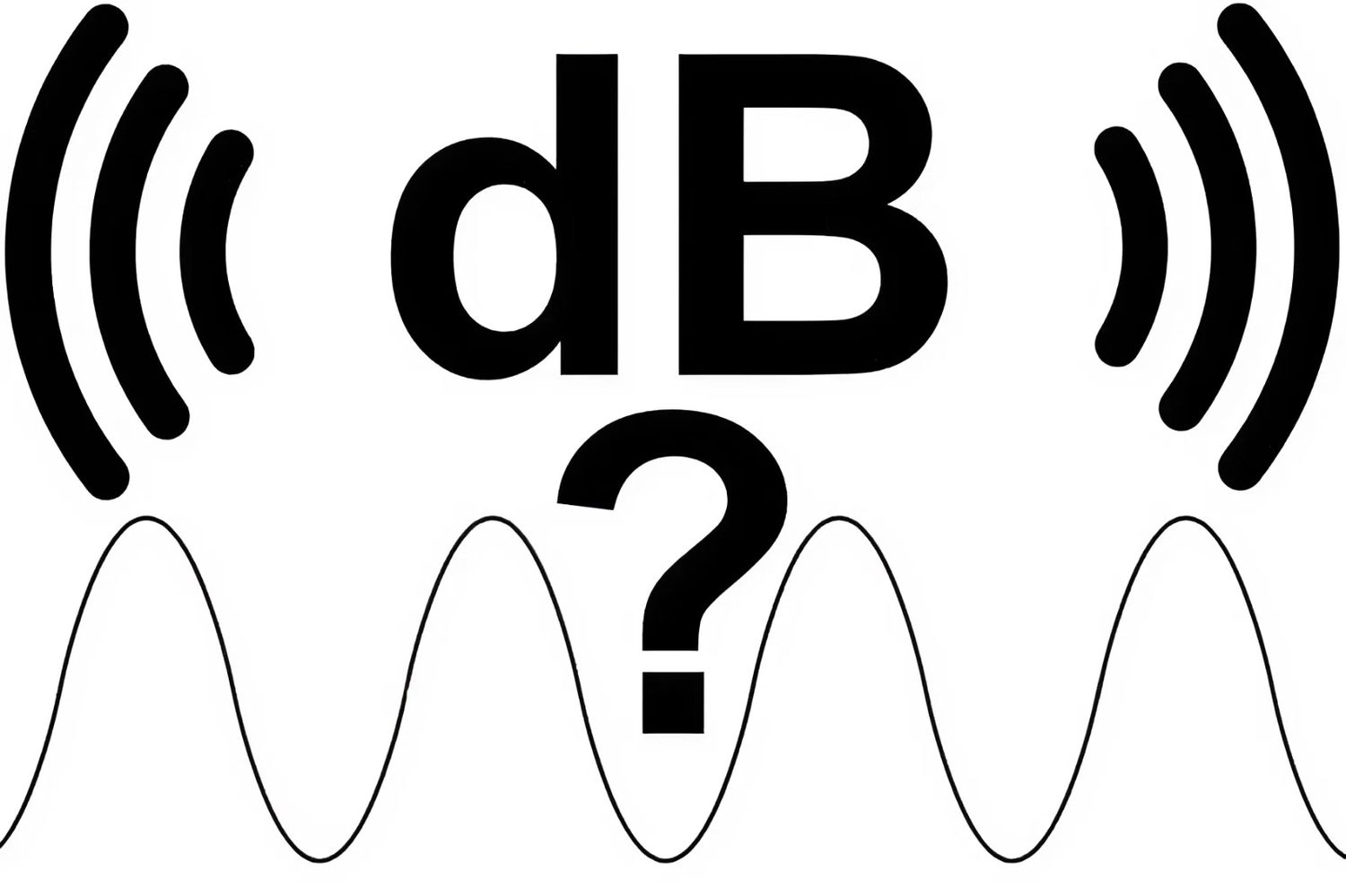
What is dB?
dB stands for decibel, a unit used to express sound levels or compare intensity ratios in various fields such as acoustics, electronics, and communications. It's a familiar scale for assessing noise or signal levels in technical systems.
Meaning of decibel in measurement
Decibels are a relative unit, operating on a logarithmic scale. This means that instead of a direct measurement, dB tells us the difference or increase/decrease between two values.
In audio, dB is often used to express sound pressure level (SPL), which describes how loud or soft a sound is perceived by the human ear.
In electronics and telecommunications, dB represents the signal level, attenuation, or gain during transmission.
Thanks to its logarithmic nature, dB makes measurement easier to understand when working with very large or very small values.
Examples of sound levels in dB.
Some familiar reference points:
0 dB | The lowest hearing threshold for the human ear
30 dB | A quiet space like a library
60 dB | The sound level of a normal conversation
90 dB | Heavy traffic noise, which can be irritating to listen to for extended periods
120 dB | Jet engine noise, this level can cause ear pain
Appropriate sound intensity level
Safe and easily audible sound levels vary depending on the degree of hearing loss, especially for those with hearing impairments or who use hearing aids. Below are some reference levels.
Hearing impaired people
Compared to the hearing threshold of a normal person, the hearing of a hearing-impaired individual is classified based on the dB level they can perceive:
0 - 25 dB: Normal hearing
25 - 40 dB: Mild hearing loss (difficulty hearing low sounds, such as whispers)
40 - 70 dB: Moderate hearing loss (difficulty hearing everyday conversations)
70 - 90 dB: Severe hearing loss (requires hearing aids to hear speech)
Above 90 dB: Profound hearing loss (hearing aids may not be sufficient, often requiring a cochlear implant).
People who are using hearing aids
Hearing aids typically amplify sound in the 50-85 dB range, suitable for people with moderate to severe hearing loss. The device allows for adjustment to individual needs to avoid sound that is too loud or too soft.
Appropriate sound levels when using a hearing aid:
Normal conversation: 60 - 70 dB
Watching TV / listening to radio: 70 - 85 dB
Telephone conversation: 65 - 80 dB
Important note: Sounds exceeding 85 dB can cause discomfort or negatively impact hearing, even for those with hearing loss. Therefore, modern hearing aid models that can filter out noise, reduce excessively loud sounds, and only amplify essential sounds should be prioritized.
Common ways to measure noise level dB
Measuring noise levels helps control sound levels in living and working environments, thereby preventing hearing problems. Currently, the two most commonly used methods are: dedicated noise meters and sound measurement apps on smartphones. Each method is suitable for different purposes.
Measure sound using a mobile app.
Besides dedicated measuring devices, users can now measure noise levels directly on their smartphones through decibel measurement apps. These apps utilize the phone's microphone to record sound, then process and display the corresponding noise level in dB.
- Advantages
Easy to use, quick operation.
Convenient in situations requiring immediate measurement.
Most applications are free or only charge for advanced features.
- Disadvantages
Accuracy is not as high as with dedicated measuring instruments.
Results may be inaccurate depending on the microphone quality of each device.
Not suitable for measurements requiring technical standards.
Some applications are widely used.
Decibel X: Easy-to-read interface, fast and fairly stable measurements.
Sound Meter: Suitable for those needing to measure basic noise levels in rooms, offices, or neighborhoods.
SPL Meter: Simulates an analog meter interface, simple to operate.
Noise levels are measured using specialized equipment.
Sound Level Meter is a device designed specifically for measuring sound pressure levels in the environment. The device uses a high-sensitivity microphone to record sound, then convert it into a signal and display it on the screen in dB units.
Appearance:
Compact handheld sound level meter, easy to carry when surveying the environment.
- Advantages
Accurate measurements in various conditions: factories, offices, residential areas, hospitals, etc.
Meets technical standards in industry, environment, and workplace noise assessment.
- Disadvantages
Higher investment cost compared to mobile phone applications.
Larger size, less flexible than apps in situations requiring quick measurements.
Some commonly used devices.
Benetech GM1356 Sound Level Meter
Extech 407730 Digital Sound Level Meter
These devices are suitable for technicians, testing agencies, or businesses that need accurate results for reporting.
Additionally, you can read more articles related to noise levels:
Improve your sleep quality with ideal bedroom noise levels
Top 5 best-selling noise meters at EMIN that you can't miss
What is noise level? What are the permissible noise levels that won't result in fines?