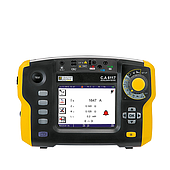
One noticeable advantage is that multiple measurement tools are allowed to operate on the same platform, making the circuit testing process more seamless and reducing the need to switch between different measurement instruments.
Are the measurement results affected by noise and environmental factors?
In real-world operating conditions, electrical signals are rarely perfectly stable. Noise, temperature, and circuit characteristics can all cause results to fluctuate. The 34465A series is designed to mitigate these effects, helping to maintain stable measurement data during long-term monitoring.
This is particularly useful when measuring low-level DC voltages or when comparing data between measurements taken hours apart.
Is it suitable for low-power circuits?
The answer is Yes. This model supports measuring very low current levels, suitable for battery-powered circuits, sensors, or IoT systems. This allows users to monitor power consumption in standby mode or when the circuit switches operating modes.
The information obtained helps detect early anomalies related to energy consumption that conventional meters often struggle to identify.
What are the benefits of a display screen when monitoring data?
Instead of just displaying instantaneous numbers, the graphical display allows observation of the signal's changing trends. Users can easily identify stability, fluctuations, or deviations from the normal state during the measurement process.
The ability to record data also supports reviewing results after the measurement is complete, suitable for long tests or those requiring multiple comparisons.
You might also be interested in: Tips for measuring 220V current with a multimeter that not everyone knows.
Is it suitable for automated testing systems?
The Keysight 34465A is widely used in automated testing systems due to its flexible connectivity with computers and control software. Integration typically does not require major changes to the existing system architecture.
For labs currently using older generations of Keysight benchtop multimeters, the transition to this model is relatively smooth.
The 34465A is suitable for circuit development engineers, research labs, quality control, and environments that rely on measurement data to evaluate components or systems. It's not a choice for simple, quick measurements, but rather for situations requiring serious and in-depth signal monitoring.