What is the advantage of moisture balance drying over traditional oven drying method?
Compared to the traditional oven drying method, users have to go through many steps: weighing the sample with a regular scale, putting it in the oven to dry, then taking it out to weigh again and finally calculating the mass difference. This process is both time-consuming and prone to errors.
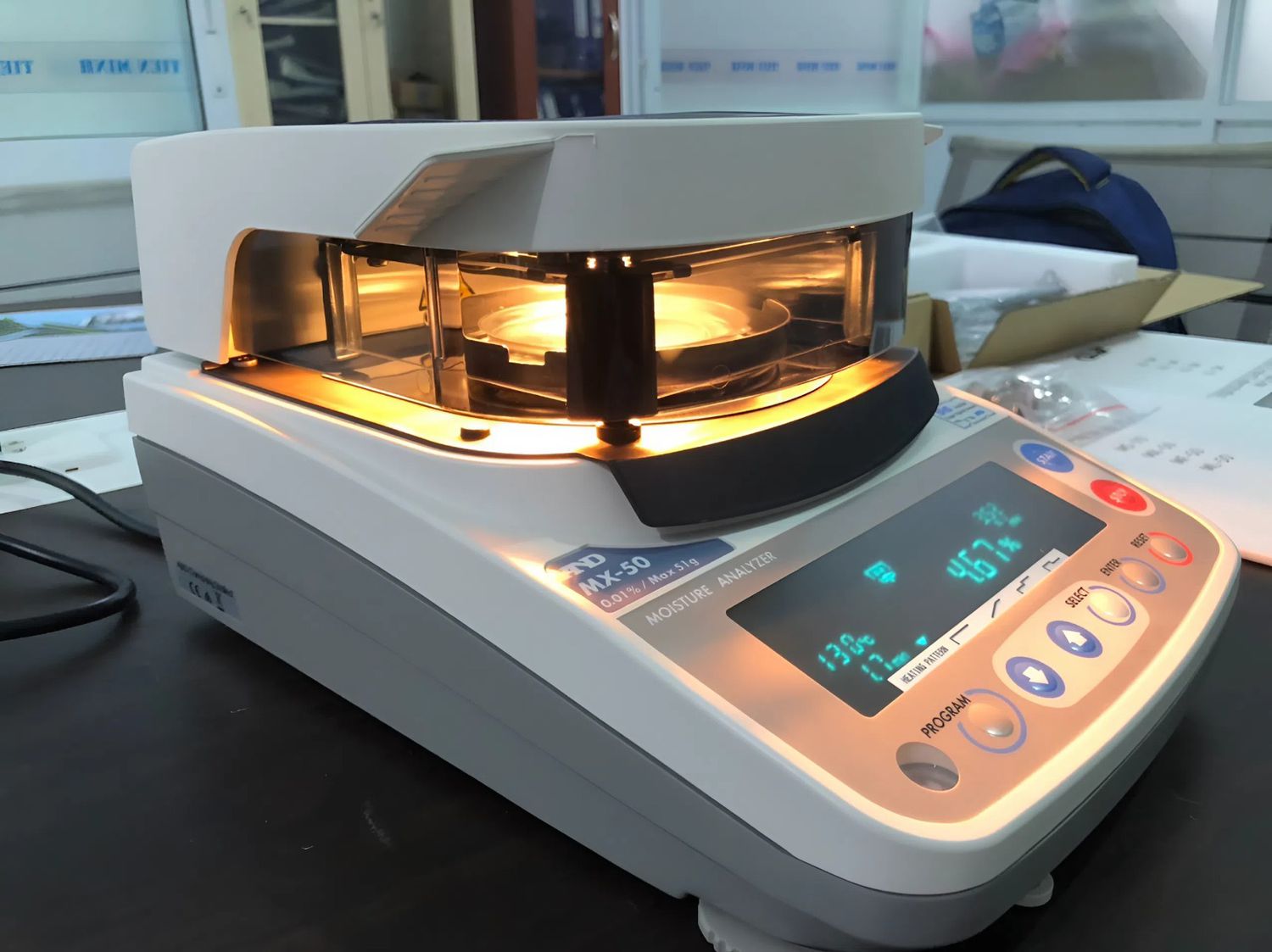
Meanwhile, the moisture analyzer has integrated all of the above steps into the same device. With just a few steps, you have quick results and can also connect directly to a computer or printer to store data.
Moisture analyzer with compact design, easy to carry
Drying ovens are often bulky, heavy and must be fixed in one place, so mobility is quite limited. In contrast, moisture analyzers (moisture analyzers) are designed to be compact and easy to move to many different working positions. Therefore, this device is especially suitable for laboratories or small spaces where flexibility and convenience are required.
Moisture balance in food and pharmaceutical
In the food industry, humidity is a factor that directly affects the quality and shelf life of the product. If coffee beans are kept moist for too long, they will easily become moldy, and if they are too dry, they will lose their characteristic flavor. With flour or milk powder, excess humidity can cause the product to clump and spoil quickly. Moisture balances help manufacturers quickly check on the spot instead of spending hours in the lab. Just take a sample, put it on the scale and wait for the results, the whole process is shortened to one operation.
In the pharmaceutical industry, the requirements are much more stringent. If a tablet has too much moisture, it will easily become moldy or lose its compressibility. If it is too dry, it will break, affecting the quality of the drug batch. Therefore, moisture balances are used to check each batch of raw materials before putting them into production. Thanks to that, the factory ensures that the drugs on the market are always stable, without deviations between batches.
How businesses change when using moisture balances
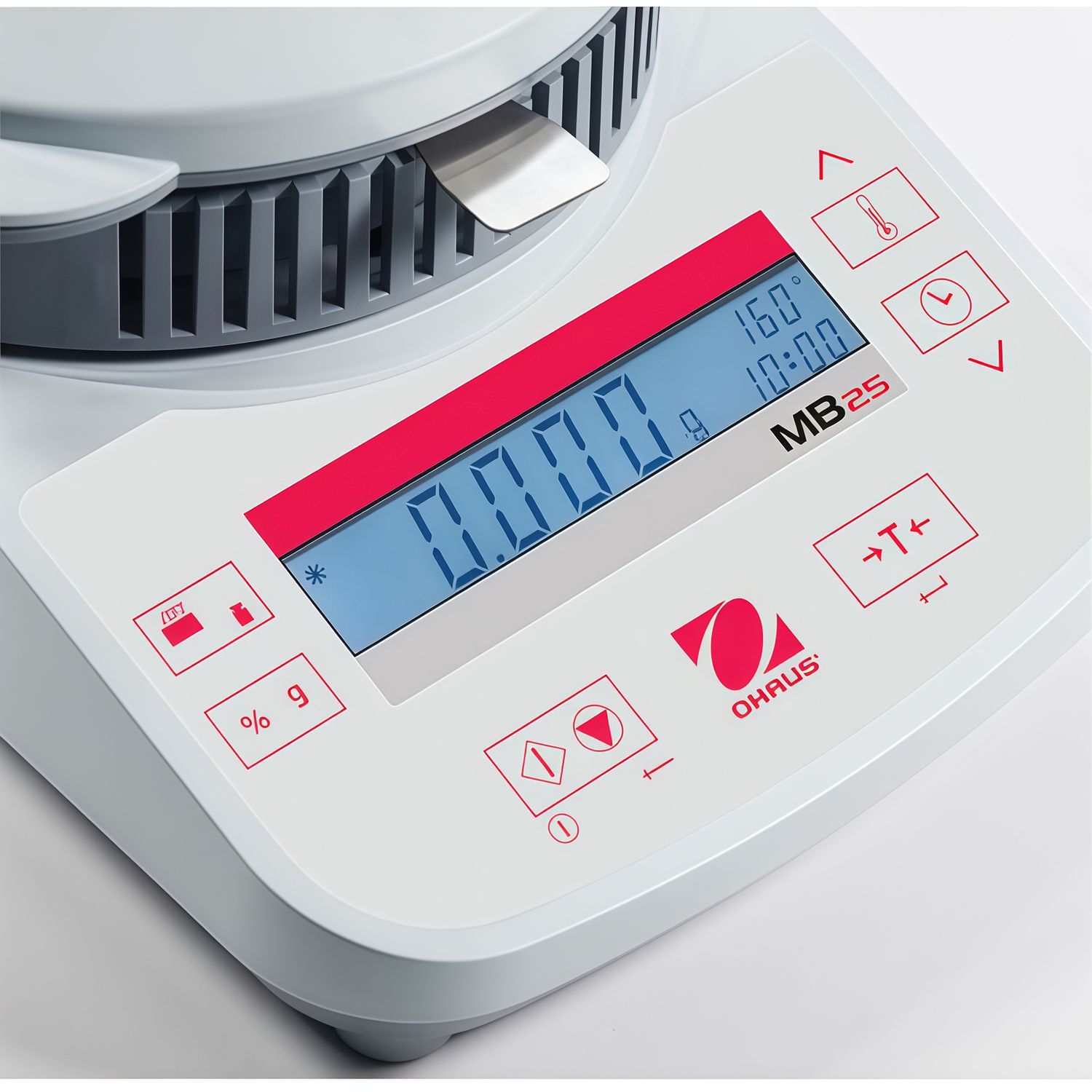
A practical example shows that a coffee roasting facility in the Central Highlands previously had to wait up to eight hours for results when testing with a drying oven. After investing in an OHAUS MB25 moisture analyzer from EMIN in Hanoi, the process was shortened to only about twenty minutes. The device can dry samples of up to 110g with high sensitivity (0.005g) to detect small deviations, helping manufacturers control the moisture content of each batch of coffee on the same day, avoiding the risk of returning goods due to excess moisture.
In addition, at a pharmaceutical factory, each production shift used to have different results when measured manually. Since using the moisture balance, the data has been standardized and stored directly on the computer. The management board no longer needs to copy by hand or compare books, but can check the data directly on the system. This helps them to quickly obtain GMP certification and sign export contracts to the European market.
New trends in moisture balance
Moisture analyzers were once only used in laboratories or factories. Now, they are becoming more compact and portable. Farms and agricultural purchasing facilities can also equip them on-site for quick testing. For example, when buying coffee beans or grains from farmers, just a few minutes of direct measurement will tell you whether the batch meets the standards or not.
Many new scales are designed to automatically recognize the sample type and suggest the appropriate drying mode. Users do not need to have deep technical knowledge to operate. In addition, the machine can connect to a computer to export data, send reports or store all test results. This helps businesses build a strict monitoring process without much extra effort.
Conclude:
The above are the clear differences and benefits when businesses apply moisture balances to their production and testing processes. This device not only helps to process samples quickly but also opens up flexible working methods, suitable for the increasingly high demands of the market. If you are using the oven drying method and want to save time, reduce the risk of errors and meet international standards, this is the right time to consider gradually switching to moisture balances.