
Safety Light Curtains
In machine safety, reliable guarding is not only about stopping access to hazardous motion; it is also about maintaining productivity, visibility, and operator workflow. Safety light curtains are widely used where physical barriers may be too restrictive, especially around automated stations, packaging lines, assembly equipment, and material handling systems. They help create a protected sensing field that can trigger a stop signal when a person or object enters a defined zone.
For engineering teams, maintenance departments, and OEM buyers, this category supports the selection of components used in light curtain systems and related safety installations. It is particularly relevant when building or maintaining guarded access points that need dependable detection without sacrificing machine accessibility.
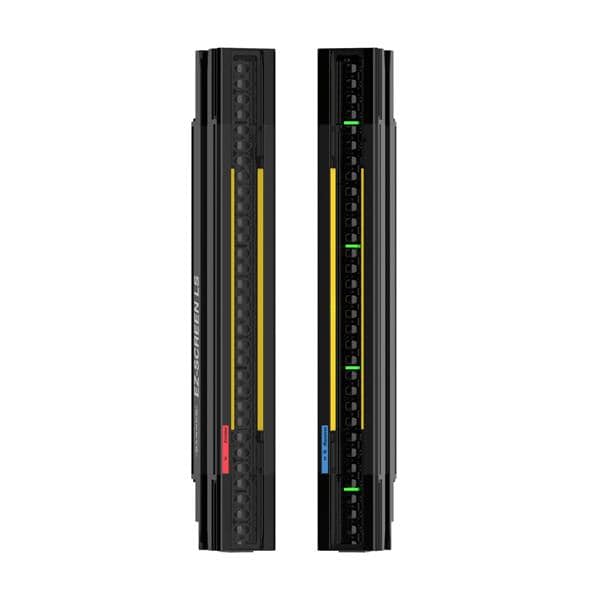
Where safety light curtains fit in industrial safety systems
A light curtain is typically applied at points where operators need regular access to a machine, such as loading areas, pick-and-place stations, inspection zones, or pallet transfer points. Instead of relying only on a fixed guard, the system monitors a sensing area and reacts when that area is interrupted. This makes it suitable for applications where both protection and efficient access are important.
In many installations, light curtains are part of a broader machine safety architecture that may also include emergency stops, interlocks, and safety relay logic. The overall objective is to help the machine move to a safe state when intrusion is detected, while keeping the system practical for everyday production use.
Why accessories matter as much as the sensor pair
When users search this category, they are often not only looking for the emitter and receiver themselves. In real projects, accessories for safety light curtains are essential for installation, alignment, cable routing, mounting stability, replacement, and long-term maintenance. A well-selected accessory can reduce commissioning time and help preserve sensing performance over time.
This is especially important in demanding environments where vibration, repeated cleaning, mechanical impact, or frequent maintenance can affect protective devices. Parts such as brackets, protective elements, connection-related items, and replacement hardware support the full system lifecycle rather than serving as optional add-ons.
Representative products in this category
Several products in this category illustrate the practical ecosystem around guarded sensing solutions from OMRON. Examples include the OMRON F39-HJ0905, OMRON F39-HJ0950, OMRON F39-JD3B-L, and OMRON F39-HGA0520, all positioned as accessories for area or safety sensor applications. These types of components are commonly used to support configuration, mounting, protection, or replacement needs within a light curtain installation.
There are also optical sensor accessories such as OMRON E39-P11, OMRON E39-RS5, and OMRON E39-RS4. While accessory roles vary by model, the key point for buyers is that a safety sensing installation often depends on correctly matched supporting parts. Choosing from the right family can simplify fitment and reduce compatibility uncertainty during maintenance or upgrades.
How to choose the right components for your application
Selection should start with the actual guarding task. Consider where the hazardous motion is located, how operators interact with the machine, and whether the sensing field is intended for finger, hand, or body access protection. The operating environment also matters, especially if the installation is exposed to dust, coolant, washdown, impact, or repeated mechanical adjustment.
From there, review the supporting hardware required for a complete implementation. This may include mounting orientation, cable exit direction, replacement convenience, and physical protection around the sensing area. If your project involves a new installation, it can also be useful to review related industrial safety components that complement guarded access points and help create a more complete protection strategy.
Common use cases across production environments
Machine guarding with light curtains is common in automated manufacturing cells where operators need repeated access to load parts or clear minor stoppages. They are also used in conveyors, robotic work areas, and semi-automatic machinery where maintaining throughput is important. In these situations, the sensing field acts as a practical protective boundary without the visual obstruction of a full physical enclosure.
Another frequent use case is modernization of older equipment. When an existing machine needs improved safeguarding, adding or updating a light curtain system with suitable accessories can support retrofits more efficiently than redesigning all guarding hardware. This approach is often paired with updated control logic, warning identification, or supplementary devices such as industrial warning signs where clearer risk communication is needed.
Working with trusted manufacturers
This category includes solutions associated with established industrial automation and sensing brands. Alongside OMRON, broader market context may involve manufacturers such as Banner Engineering, Autonics, Panasonic Industrial Automation, and Telemecanique, depending on the application and system design preference. For many buyers, manufacturer choice is influenced by installed base, service familiarity, and compatibility with existing safety architecture.
That said, product family consistency often matters more than brand count. In replacement or expansion projects, staying within the same platform can make installation and maintenance more straightforward. If your site already uses Banner Engineering or comparable safety sensing products, reviewing accessory and integration requirements early can help avoid delays during commissioning.
Procurement and maintenance considerations
For B2B purchasing teams, light curtain accessories are often ordered during new machine builds, line expansions, or planned maintenance windows. Because these parts may be small relative to the overall system cost, they can be overlooked until installation begins. Identifying them early helps prevent downtime caused by missing mounting hardware or mismatched replacement items.
Lifecycle support is another important factor. In production settings, having access to the correct accessory or replacement component can shorten service time and maintain the integrity of the safety setup. This is especially relevant for facilities that standardize on a particular series and need repeatable spare-parts planning across multiple machines.
Final considerations before you buy
The right light curtain setup depends on more than the sensing device alone. Mechanical fit, maintenance access, environment, and system-level safety integration all influence long-term performance. Looking closely at accessory compatibility is often what turns a basic parts list into a reliable machine safety solution.
Whether you are specifying components for a new line or replacing items in an existing installation, this category is designed to support practical selection for industrial safety applications. Reviewing the intended guarding function, installation conditions, and supporting hardware requirements will help you narrow down the most suitable products with greater confidence.
Get exclusive volume discounts, bulk pricing updates, and new product alerts delivered directly to your inbox.
By subscribing, you agree to our Terms of Service and Privacy Policy.
Direct access to our certified experts