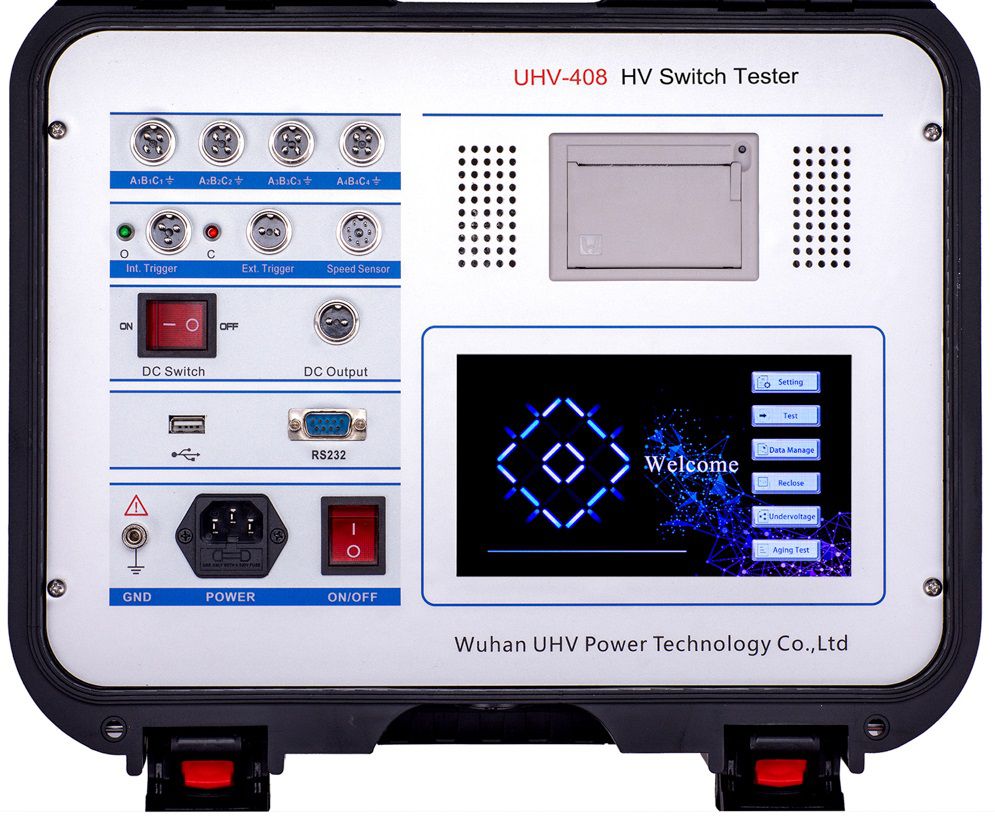
High-voltage switches perform essential opening and closing actions within power systems. Their operating condition can influence the continuity and safety of power transmission. A high-voltage switch dynamic characteristic tester helps technicians examine how a switch mechanism moves during operation, creating a factual basis for condition assessment and maintenance planning.
What Is a High-Voltage Switch Dynamic Characteristic Tester?
A high-voltage switch dynamic characteristic tester is an instrument used to measure dynamic operating parameters of high-voltage switches. The measurements commonly include contact movement speed, operating time, and travel or stroke.
These values describe how the switch behaves while opening or closing. Rather than considering a switch only as open or closed, dynamic testing looks at the motion between those two states. This information can help maintenance personnel evaluate whether the mechanism is operating consistently with its expected behavior.
Why Dynamic Characteristics Matter
Switch motion is closely connected to reliable operation. If closing movement is slow and contact time is prolonged, arcing may become more severe and may damage contacts. Conversely, overly fast opening movement can create unnecessary impact because of operating-mechanism inertia.
For this reason, timing, speed, and travel should be considered together. A single value may identify an observation, but a group of related measurements offers a clearer view of the switch’s mechanical operation. Dynamic characteristic testing is therefore an important part of equipment condition monitoring and preventive maintenance.
Key Parameters Evaluated During Testing
Operating Time
Operating time records the duration of an opening or closing action. This measurement helps show whether the switch completes its operation within the required timing expectations for the equipment and system.
Contact Movement Speed
Contact speed indicates how quickly the moving contact travels during the switching operation. It is relevant because speed can affect arcing behavior, contact stress, and the mechanical response of the operating mechanism.
Travel or Stroke
Travel describes the movement distance of the contact or associated mechanism. Reviewing travel alongside time and speed provides additional context for the condition of moving parts and the transmission path.
Factors That Can Influence Test Results
Dynamic characteristics are influenced by several interconnected conditions. The operating mechanism is a major consideration. Spring force in an energy-storage mechanism, wear in transmission components, and lubrication condition can all affect movement.
The control circuit also matters. Control-coil impedance and the stability of the power supply voltage may influence the action of the mechanism. In addition, the switch design itself, including the contact system and damping arrangement, contributes to the resulting motion.
Environmental conditions should not be overlooked. Temperature and humidity can affect mechanical components, so test results should be interpreted with awareness of the actual inspection conditions.
Using Test Data Effectively
Dynamic test results are most useful when they are documented and compared over time. A historical record can reveal changing trends that may not be evident from one isolated measurement. For example, a gradual change in operating time, speed, or travel can prompt closer inspection before a more serious issue develops.
Technicians should also interpret readings in the context of the switch’s actual operating condition. Combining measured data with practical knowledge of the equipment, its mechanism, and its service environment supports more informed maintenance decisions.
Recommended Testing Approach
- Perform regular, comprehensive checks: Evaluate multiple dynamic parameters instead of relying on one measurement alone.
- Follow established procedures: Testing should be performed by personnel with appropriate technical knowledge and operating skills.
- Review historical records: Compare current results with prior data to identify meaningful changes and potential anomalies.
- Consider field conditions: Record relevant operating and environmental conditions that may influence mechanical behavior.
- Plan maintenanc: Use the test results from Circuit breaker analyzer and trend analysis to support timely inspection and maintenance actions.
Frequently Asked Questions
Why is regular dynamic testing useful?
Regular testing can help identify changes in switch behavior, support fault prevention, and provide data for maintenance planning.
Can environmental conditions affect dynamic characteristics?
Yes. Temperature and humidity can affect mechanical components and may influence the operating behavior recorded during testing.
Why should test data be trended over time?
Trend analysis helps technicians recognize gradual changes that may be less clear when reviewing a single test result on its own.
What does a high-voltage switch dynamic characteristic tester measure?
High voltage switch tester measures dynamic parameters associated with switch operation, including contact movement speed, operating time, and travel or stroke.