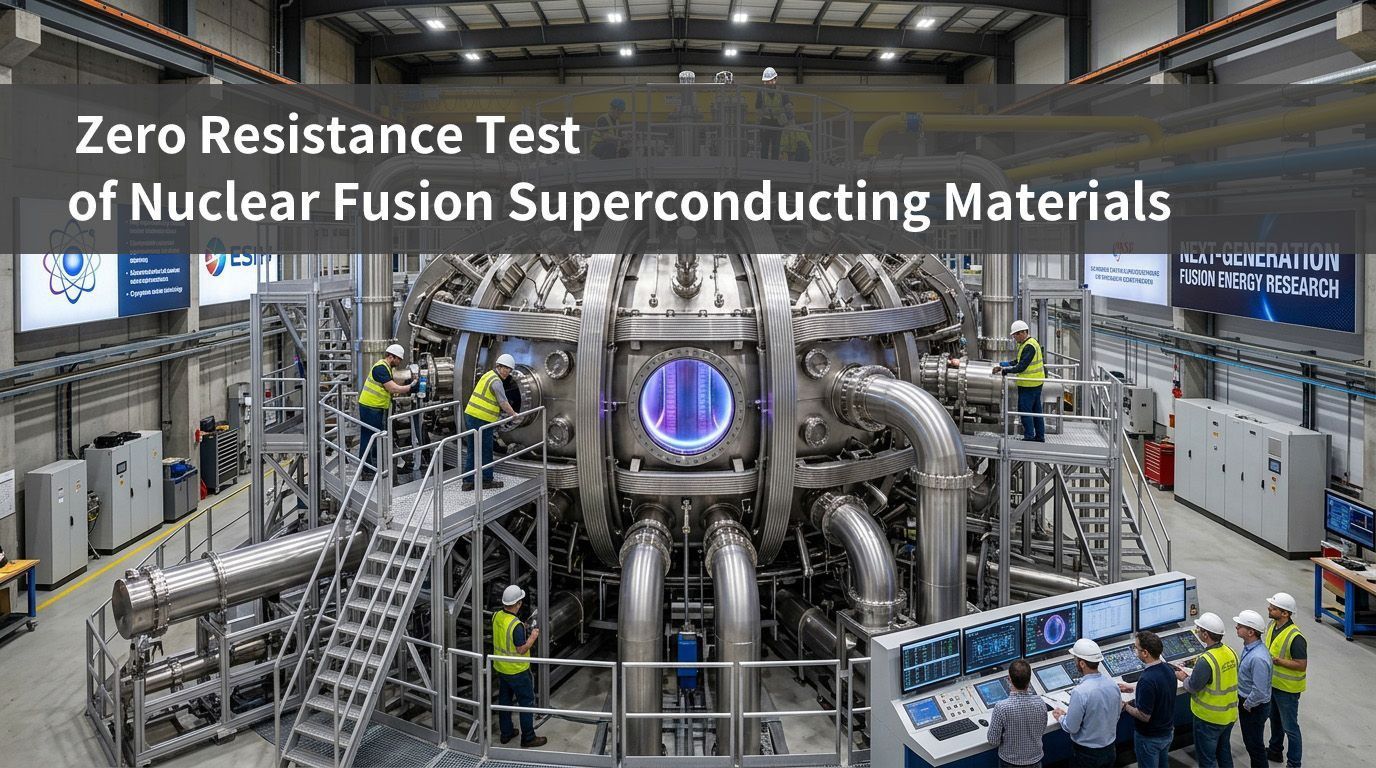
In the electronic testing, high-current DC power supplies are an important component when evaluating superconducting materials. These measurements help determine the current-carrying capability of materials under demanding conditions while supporting research into systems that require strong magnetic fields, such as magnetic plasma confinement devices.
The Advanced Superconducting Tokamak (EAST) in Hefei, China, is a fusion research device that uses strong magnetic fields to generate energy from nuclear fusion reactions, similar to the process that powers the Sun. In systems of this type, high-temperature superconducting materials play an important role in generating magnetic fields to confine high-temperature plasma and limit its contact with the reactor chamber wall. These include:
Toroidal-field superconducting magnets
High-temperature superconducting (HTS) central solenoid coils
Why Does Superconductor Testing Require a High-Current DC Power Supply ?
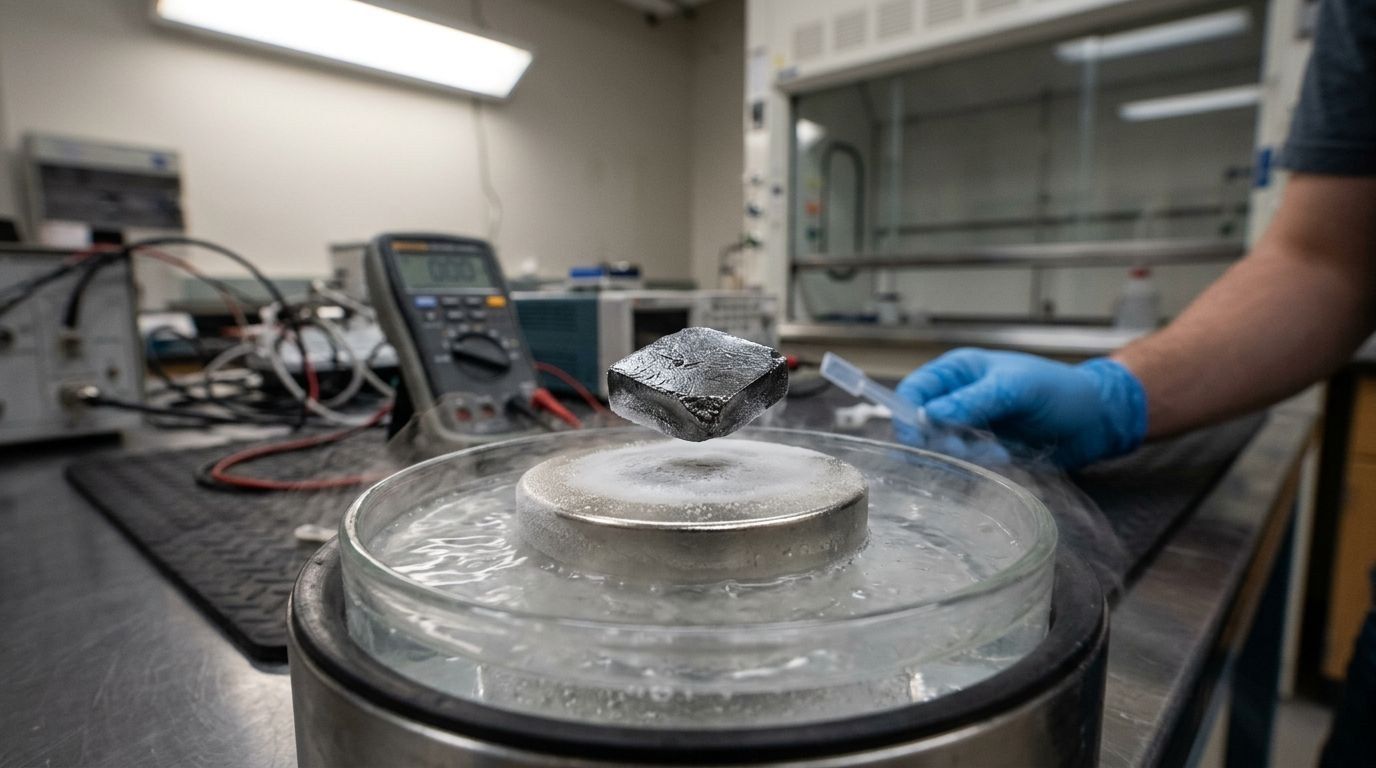
One of the key properties of superconducting materials is their zero-resistance state. When current flows through a material under suitable conditions, electrical losses can be eliminated. However, this state cannot be maintained at all current levels. Critical current testing is therefore performed to determine the maximum current that a material can carry before energy dissipation begins to occur.
Critical current tests for superconducting materials may require DC currents ranging from 10,000 A to 20,000 A. At these levels, the DC power supply must provide sufficient output power while maintaining stable operation throughout the measurement process. Even a small fluctuation in current can affect the measurement data and, consequently, the evaluation of the material sample.
Key Technical Requirements for Critical Current Measurements
A high-power supply system for superconducting material testing needs to be evaluated according to the actual conditions of the measurement process rather than simply by its maximum current rating. Three key requirements include:
High output current: The power supply must provide a current level suitable for the testing range of the sample and measurement system.
Accuracy and stability: Precise control of voltage and current helps ensure consistent measurement data when comparing different test conditions.
Dynamic response: The power supply must respond quickly to changes in the test procedure, particularly during current or voltage transitions.
In addition, the source article notes that these tests are often conducted at extremely low temperatures, close to absolute zero, in combination with strong magnetic fields. These environmental conditions increase the complexity of the entire testing system, from the cooling equipment and magnets to the power supply and data acquisition system.
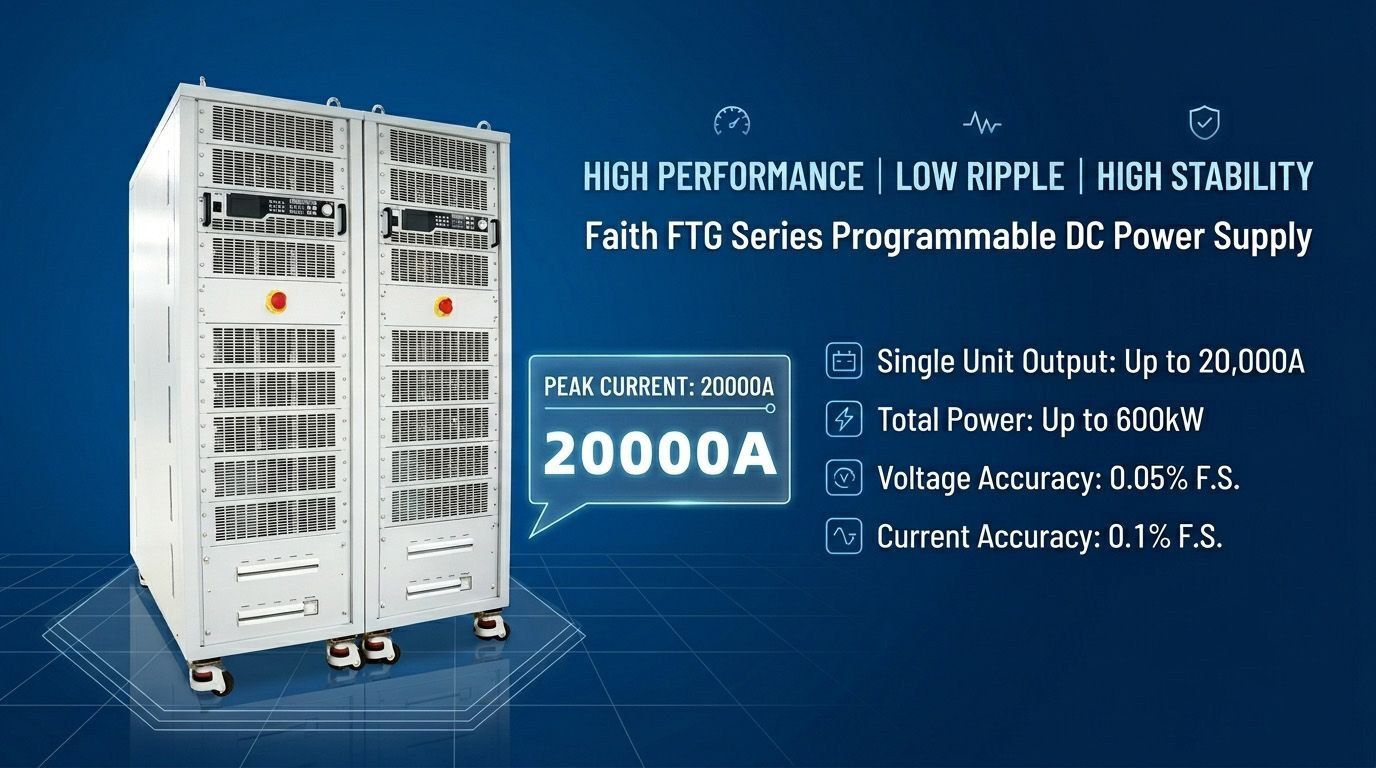
The FaithTech FTG high-current DC power supply is designed for high-intensity testing applications, with a maximum output current of 20,000 A and maximum power of 600 kW. These specifications correspond to the current range mentioned for superconducting material testing.
In terms of control performance, the manufacturer states a voltage accuracy of 0.05% of full scale (F.S.) and current accuracy of 0.1% of full scale (F.S.). The FTG is also described as providing fast dynamic response for supplying current or voltage according to the requirements of the test procedure. These specifications should be evaluated against the specific system configuration and actual operating conditions.
Reducing the Complexity of Test System Design
When the required current exceeds the capacity of a single power supply, a conventional system may require multiple power supplies connected in parallel. This approach introduces additional requirements for current sharing and synchronized response between the units. According to the source article, the FTG's single-unit output of 20,000 A can reduce the need for parallel connection in suitable applications, thereby simplifying the test system architecture.
The source data also indicates that the FTG supports multiple remote communication interfaces and protocols. Operators can program output parameters such as current, waveform, and timing sequences to suit different test scenarios. This can be particularly useful when testing superconducting magnets or materials involves multiple stages and requires automated operation.
When selecting a high-power DC power supply, companies should clearly define the required current range, power level, accuracy requirements, operating sequence, and control integration method. For superconducting material research, the power supply must not only reach the target current but also provide stable measurement data under demanding test conditions.