What is the reasonable TDS index for an aquarium?
One of the common questions when setting up an aquarium is what level the TDS should be. In fact, experts often recommend keeping it between 150 and 250 ppm. This is considered a safe threshold, because many people maintain this level and see that fish, shrimp, and prawns all grow steadily, with few health problems.
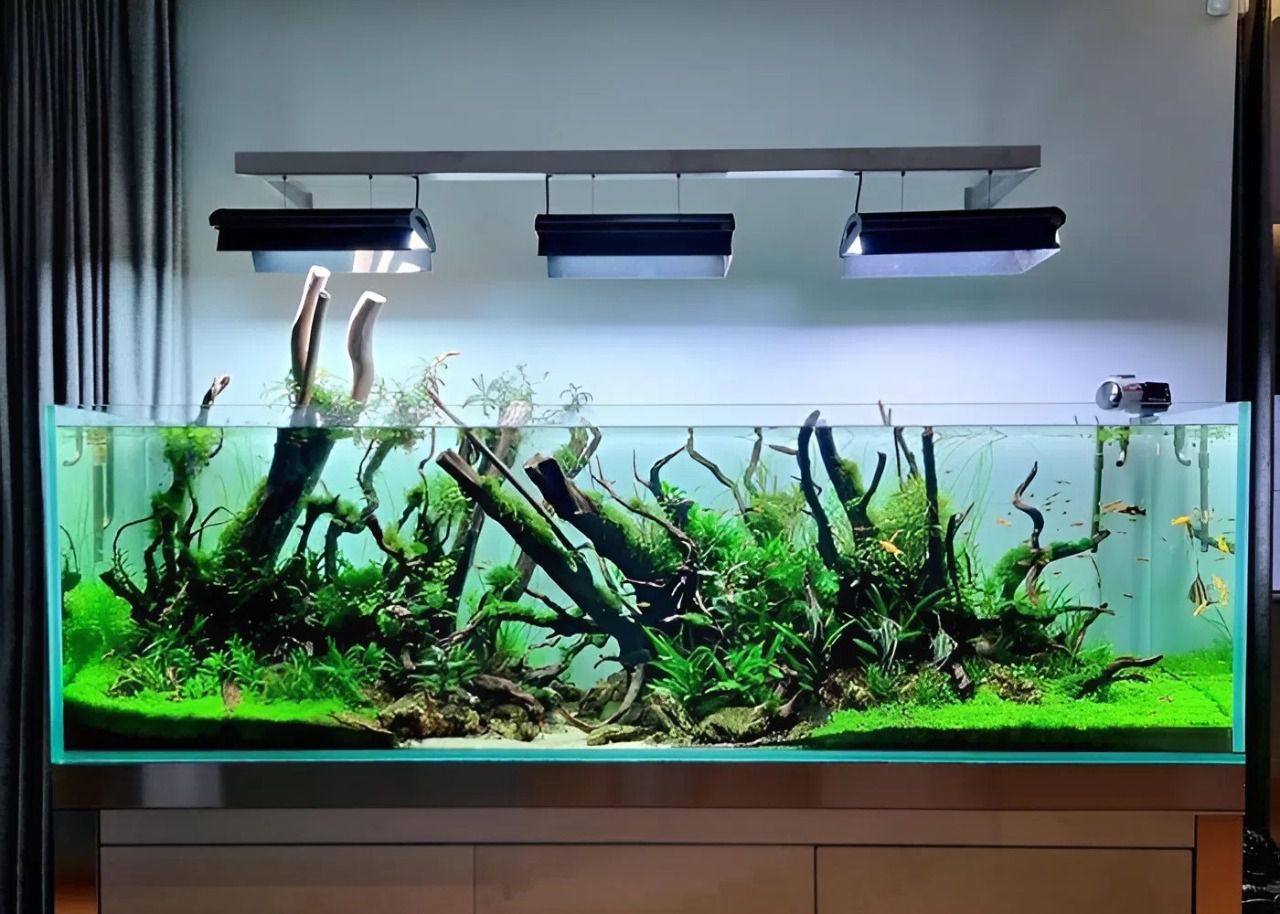
TDS increases or decreases are often due to many factors. High density tanks, overfeeding, poor tank cleaning and filtration, adding salt or chemicals, or an already hard water source can all cause the index to change. On the contrary, if the tank has little nutrients or uses only RO water, the TDS can drop quite low.
To control, you should have a TDS pen. This tool is not expensive, only a few hundred thousand can buy a basic type, enough to monitor water quality every week. There are many different models, from the type that measures TDS alone to the multi-function pen that also measures EC and temperature.
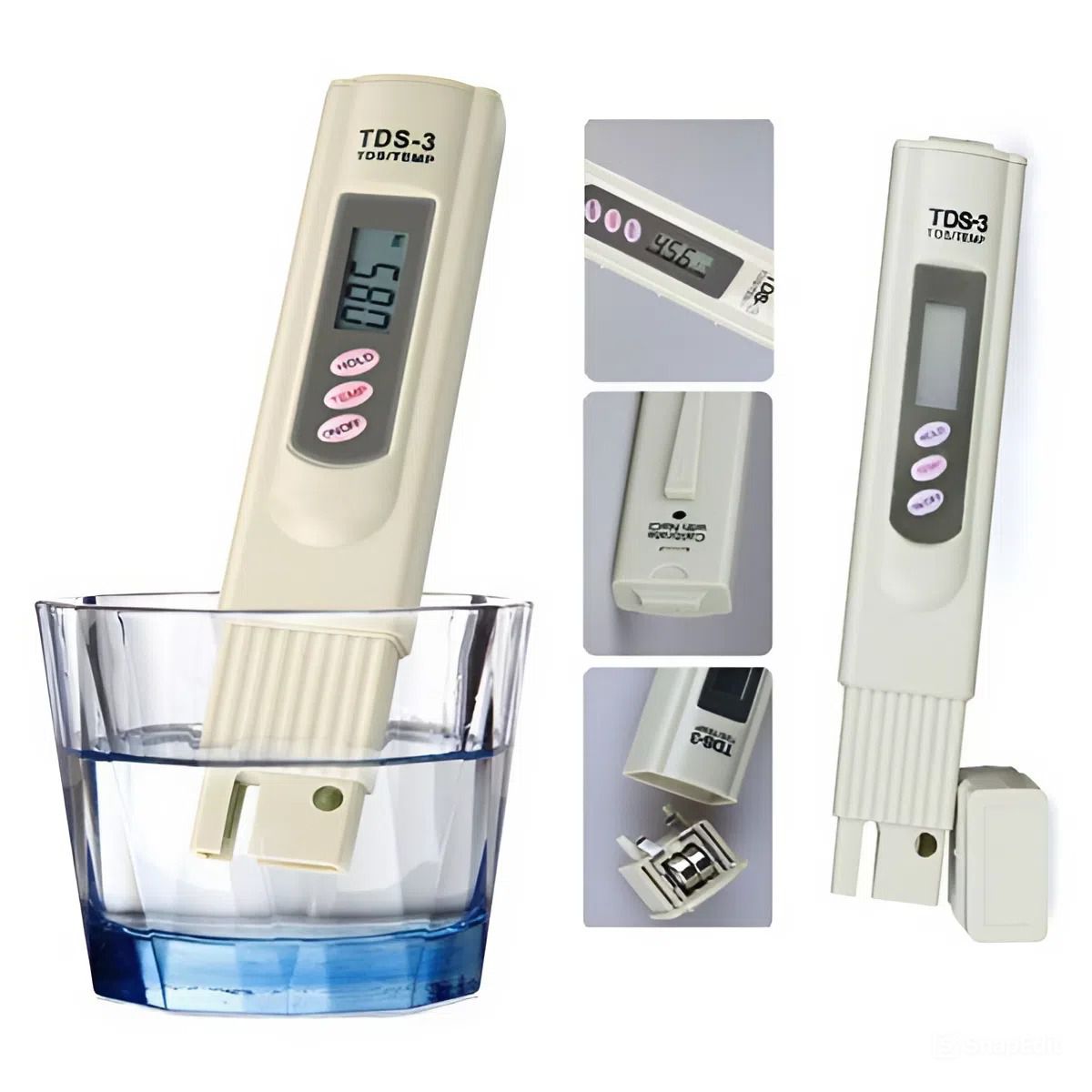
Once you have a measuring device, you will know exactly the input water in the area you live in (tap water, well, rain, etc.) and compare it with the TDS in the lake. From there, it will be easy to assess whether the lake has excess minerals, impurities or lack of nutrients to have a reasonable adjustment direction, both effective and cost-saving.
How to increase TDS in aquarium
Many people who measure TDS and find it lower than the desired level are often quite worried, trying many ways but the index still does not change much. If this situation persists, aquatic plants may grow slowly, leaves will gradually turn yellow, even die, and fish or shrimp will easily weaken.
Through the process of learning and experiencing, I realized that the most effective solution to increase TDS is to add minerals to the tank. There are many types that have been used by the aquatic community for a long time, such as Mosura mineral plus ultra, Salty Shrimp gH+ or Borneowild gH+. These types of products often contain a full range of trace minerals with pre-calibrated ratios, suitable for fish, shrimp, and ornamental shrimp.
The way I usually do it is to periodically add minerals combined with changing the water about once a week, then check again with a TDS meter to see if the index has reached the required level. When TDS is raised slowly and stably, the ecosystem in the tank will adapt well, the plants and creatures inside will be healthier.
A small note is that you should choose minerals that have been trusted and used by many players for many years. Floating goods or products that are too cheap may not guarantee the ingredients, even causing more problems in the tank.
How to lower TDS in aquarium
In the process of raising fish, shrimp or growing aquatic plants, many times you will see the TDS in the tank exceed the threshold of 250 ppm. When encountering this situation, the simplest and most effective solution is to change the water regularly. This helps remove waste, excess food and substances that have accumulated in the tank for a long time.
In addition to changing the water, some small habits also affect TDS. For example, limit overfeeding fish, consider reducing the amount of daily mineral supplements, or clean up excessive algae growth in the tank. These methods all contribute to bringing TDS to a more balanced level.
There are many models on the market that are affordable, only a few hundred thousand is enough to check water quality regularly. Current meters often support a wide measurement range, have a clear display screen and a calibration feature for more stable results. Thanks to that, players can easily know when to change the water, when to adjust, avoiding the situation where the tank exceeds the threshold for too long, causing trouble for the internal ecosystem.
Refer to TDS-2016 Handheld TDS Meter
In the group of low-cost devices, TDS-2016 is a familiar choice for many brothers who play aquatic plants and ornamental fish at home. The main purpose is still to monitor water quality so that fish, shrimp, and aquatic plants have a stable environment, limiting risks when TDS fluctuates.
The convenience of TDS-2016 lies in its compact, easy-to-carry design, and it comes in many different colors, so depending on each person's preferences, they can choose the right one. The device uses a clear LCD screen, with automatic temperature compensation support so that the results are not distorted when the temperature changes. In addition, there is a backlight, so if measuring in low light conditions, the data can still be read easily.
With a popular price, this is a pen line that many beginners can easily access. Most importantly, you can check regularly, from there you know when to change the water or adjust the minerals, helping the tank stay stable.
Above are some experiences I have learned in the process of playing aquatic plants, especially about how to increase and decrease TDS to keep the tank stable. Hopefully this information will help you monitor and manage water quality better, thereby keeping the plants and fish in the tank healthy.