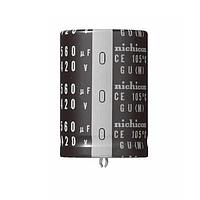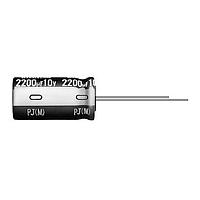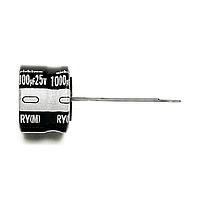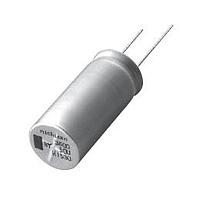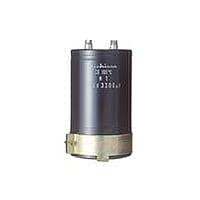
Aluminum Electrolytic Capacitors
Stable power delivery often depends on components that are easy to overlook until performance, lifetime, or board space becomes critical. In many power supply, control, and industrial electronics designs, Aluminum Electrolytic Capacitors remain a practical choice for energy storage, ripple filtering, and DC bus smoothing across a wide range of voltage and capacitance requirements.
This category is relevant for engineers, buyers, and maintenance teams looking for proven capacitor options for commercial, industrial, and embedded applications. From compact chip-style parts for dense PCB layouts to higher-voltage electrolytic devices used in power conversion stages, the range supports both new designs and replacement sourcing.
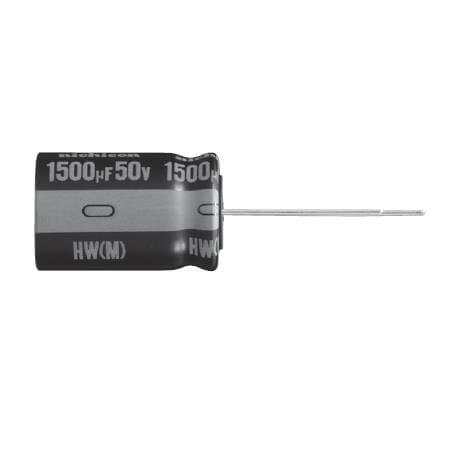
Where aluminum electrolytic capacitors fit in electronic design
These capacitors are commonly selected when a design needs relatively high capacitance in a compact and cost-effective format. They are widely used for input and output filtering, bulk energy storage, smoothing after rectification, and reducing voltage ripple in switching power supplies, motor control boards, inverters, and general-purpose industrial electronics.
Compared with some alternative capacitor technologies, aluminum electrolytic types are often chosen when capacitance value and voltage handling matter more than ultra-low ESR or extreme miniaturization. If your design requires a different balance between ripple performance and size, it may also be useful to compare with aluminum polymer capacitor options or ceramic capacitors for high-frequency decoupling roles.
Typical product profiles in this category
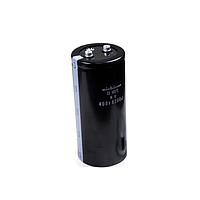
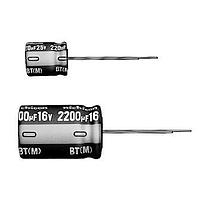
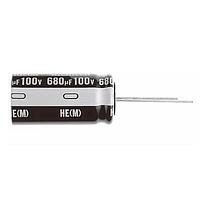
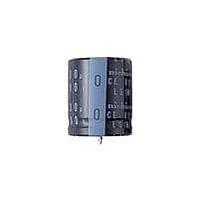
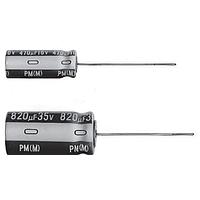
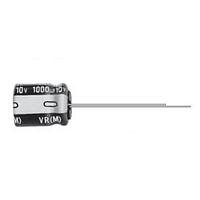
The product mix in this category includes both miniature aluminum electrolytic capacitors and higher-voltage radial or can-style parts. For example, compact SMD-oriented components such as Chemi-Con EMZF6R3ARA331MF90G and Chemi-Con EMZF6R3ARA221MF90G illustrate the type of parts often used where board density and moderate voltage ratings are important.
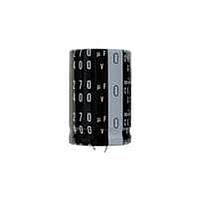
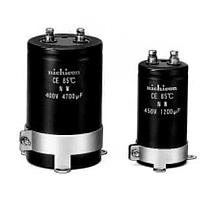
At the other end, products such as Chemi-Con ESMG401ETD220MK25S or Chemi-Con EMKB401ADA4R7MJA0G represent use cases where higher DC voltage capability is more relevant, such as power conversion, input filtering, or industrial supply sections. Some parts in the range also indicate automotive-oriented qualification context, which can be useful when temperature range, endurance, and vibration resistance are part of the selection process.
Key selection factors for engineering and procurement teams
Choosing the right capacitor is rarely about capacitance alone. The most important checks usually include rated voltage, operating temperature range, ripple current capability, endurance life, mounting style, and available space on the PCB or inside the enclosure. A practical rule is to review the actual electrical stress in the application, including startup surge, ambient heat, and expected lifetime.
Ripple current and ESR matter especially in switching power designs because they affect both self-heating and output stability. For instance, compact chip-type parts in this category show different impedance and ripple characteristics than higher-voltage electrolytic parts, so matching the capacitor to the real operating frequency and thermal environment is essential rather than selecting by capacitance alone.
Why temperature and lifetime matter
In industrial environments, capacitor reliability is strongly tied to heat. Many parts in this category are intended for operation up to 105C, while some selected series reach higher temperature classes. That matters in enclosed control cabinets, LED drivers, industrial power modules, and automotive-adjacent electronics where long operating hours can accelerate electrolyte aging.
Endurance life values such as 2000 hours, 3000 hours, or 10000 hours are useful reference points, but they should be interpreted in the context of the specified test temperature and ripple conditions. In practice, lower real operating temperature can extend service life significantly, so thermal design, airflow, and component placement remain important parts of capacitor selection.
Manufacturer context and sourcing considerations
This category includes strong relevance for Chemi-Con, which is also represented by several featured products across compact and higher-voltage aluminum electrolytic ranges. Depending on project requirements, buyers may also compare sourcing strategies across recognized capacitor manufacturers such as Nichicon, KEMET, or EPCOS when approved vendor lists or lifecycle planning are involved.
For purchasing teams, it is often helpful to align electrical requirements with packaging style, installation constraints, and expected service interval. In maintenance and MRO scenarios, replacing an electrolytic capacitor should involve checking capacitance, voltage margin, temperature rating, form factor, and application stress rather than matching only the nominal value printed on the original part.
Common application areas
Aluminum electrolytic capacitors are widely found in AC-DC and DC-DC power supplies, industrial control boards, PLC-related electronics, motor drives, communication equipment, and embedded systems. They are also used in filtering stages where transient load support and bulk capacitance are needed, particularly when a design must balance performance with practical BOM cost.
In mixed-technology designs, these capacitors often work alongside other capacitor families rather than replacing them completely. Designers may combine electrolytic parts for bulk storage with other capacitor technologies for timing, snubbing, or specialty functions, depending on the circuit architecture.
When to choose this category over alternatives
This category makes sense when the application needs high capacitance density with established performance in power filtering and energy buffering. It is especially relevant for designs where voltage ratings extend beyond the typical range of many small ceramic solutions, or where bulk capacitance requirements would make other technologies less practical.
If the design priority is ultra-low ESR, very high ripple performance in compact dimensions, or strong high-frequency behavior, a review of adjacent capacitor categories may be worthwhile. Still, for many industrial and commercial electronics platforms, aluminum electrolytic capacitors remain a dependable and widely specified solution because they address everyday power conditioning needs effectively.
Finding the right part for your project
Within this category, the best choice depends on the electrical role the capacitor will serve: bulk reservoir, output smoothing, local energy support, or general-purpose filtering. Reviewing voltage headroom, capacitance target, available footprint, ripple load, and operating temperature will usually narrow the shortlist quickly.
For compact PCB assemblies, miniature series such as the featured EMZF and EMZA examples may be appropriate. For higher-voltage sections, parts like the ESMG or EMKB examples may better match the application profile. Taking a structured approach to selection helps reduce field failures, avoid overspecification, and support more reliable procurement decisions over the product lifecycle.
For engineers and sourcing teams working with power electronics, control systems, and embedded hardware, this category provides a practical base for selecting aluminum electrolytic capacitors with the right balance of capacitance, voltage capability, thermal endurance, and package style. A careful review of operating conditions and application priorities will lead to a more suitable part than choosing by nominal value alone.
Get exclusive volume discounts, bulk pricing updates, and new product alerts delivered directly to your inbox.
By subscribing, you agree to our Terms of Service and Privacy Policy.
Direct access to our certified experts