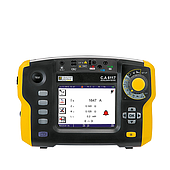
What is a soft starter circuit?
A soft starter is an electrical device that reduces the starting current and torque when the motor starts running. Instead of immediately supplying the rated voltage, the soft starter gradually increases the voltage, allowing the motor to start smoothly, limiting mechanical shock and reducing stress on the electrical system as well as mechanical equipment.
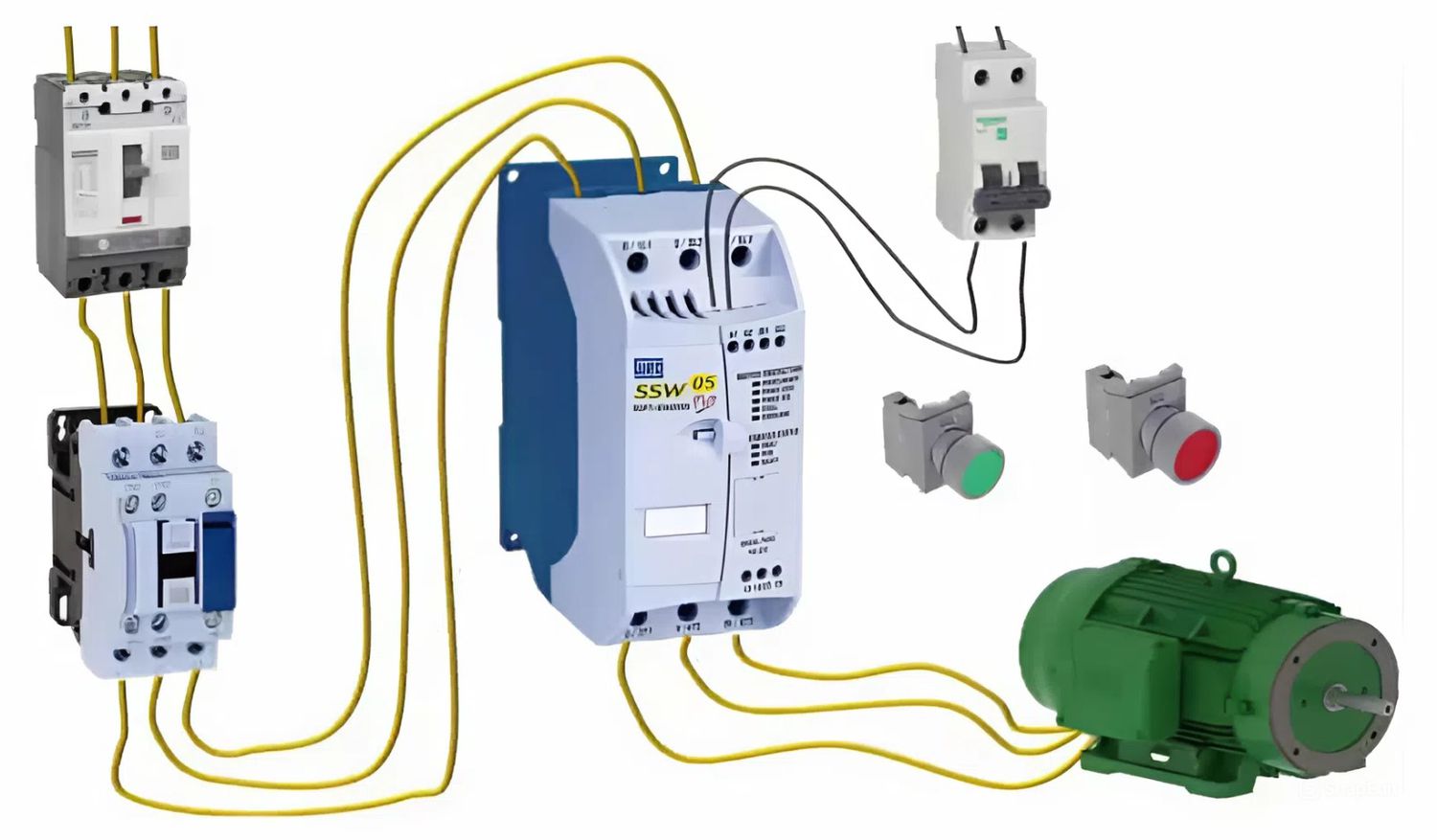
If the plant does not use a soft starter circuit
- High starting current: Direct-start motors can generate currents 6-8 times higher than the rated current, causing overload of the electrical system, easily tripping the circuit breaker or causing power outages.
- Mechanical shock, equipment damage: Sudden starting causes strong impacts on the transmission system (conveyor belt, pump, etc.), leading to slipping, misalignment of the conveyor belt or rapid damage to bearings.
- High maintenance costs: Equipment wears out quickly, requires frequent repairs, causing high costs.
- Production interruptions: Mechanical and electrical failures can cause sudden machine stops, affecting production progress.
When the factory uses soft starter circuit
- Reduce starting current: Can cut up to 60% compared to direct starting, avoiding overloading the electrical system.
- Protect the motor and mechanics: Limit impact, reduce sudden torque, prolong the life of the motor and transmission equipment.
- Save maintenance costs: Reduce wear and tear → reduce repairs → increase continuous operating time.
- Stabilize the power grid: Avoid voltage fluctuations that affect the entire system.
- Increase operating efficiency: Smooth start, low noise, ensure safety and improve production efficiency.
For example, at EMIN, ATS22C17Q Soft start circuits are often chosen by businesses thanks to their ability to reduce starting current by up to 60%, while integrating many motor protection modes.
See more in category: Soft starter
Popular types of soft starter circuits
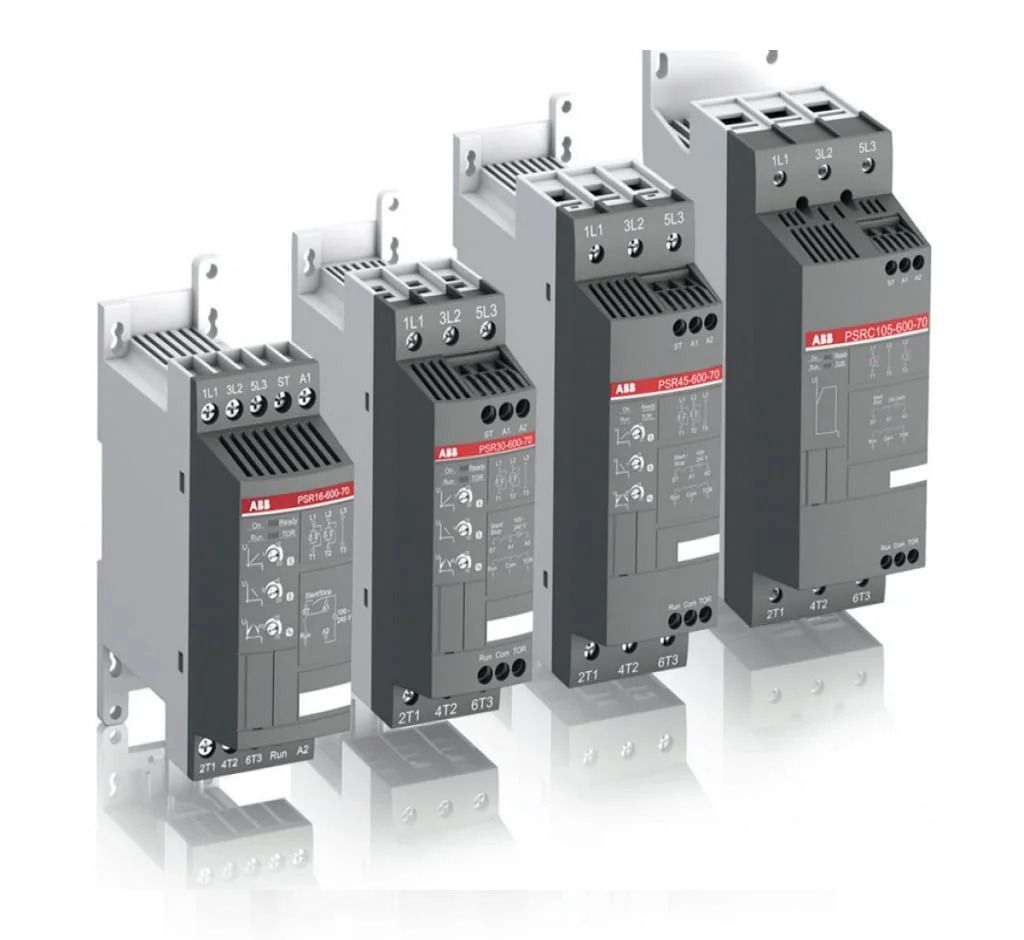
- Depending on the type of motor and operating requirements, businesses can choose one of the following solutions:
- Impedance type soft starter circuit: Uses resistors to limit the current at startup. Suitable for light-duty motors such as pumps and fans.
- Autotransformer type soft starter circuit: Regulates voltage through a transformer, suitable for large-capacity three-phase motors that require high starting torque.
- Partial winding type soft starter circuit: Used for motors with special structures, effectively reducing starting current but more complicated to install.
- Semiconductor soft starter circuit: The most popular today, using thyristors to control voltage flexibly. The advantage is easy to program, integrating many motor protection features.
Refer to the article: What is soft starter? Practical application of starter software
Conclusion: Does your plant need a soft starter circuit?
For factories using many large capacity motors, conveyors, pumps or rotating equipment that need to start frequently, soft starter circuits are almost a mandatory choice. It helps the system operate more safely, limits damage and significantly reduces maintenance costs.
On the contrary, small factories with lightly loaded motors and few starts may not need to invest immediately. But in the long run, soft starter circuits are still a wise investment, like insurance to help factories avoid risks and save costs when expanding production.