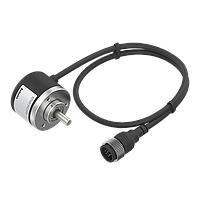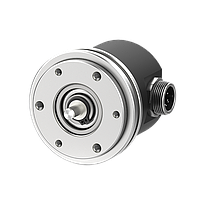
Rotary Encoders
Accurate position and speed feedback is essential anywhere rotating motion needs to be monitored, counted, or synchronized. In industrial automation, Rotary Encoders are widely used to convert shaft movement into electrical signals that controllers, counters, HMIs, and drive systems can interpret for reliable motion control and process monitoring.
On this page, you can explore encoder options suited to manual operation interfaces and motion-related applications where repeatable pulse output, stable signal transmission, and practical installation matter. The range shown here is especially relevant for equipment builders, panel integrators, maintenance teams, and engineers selecting feedback devices for machines or operator-controlled positioning systems.
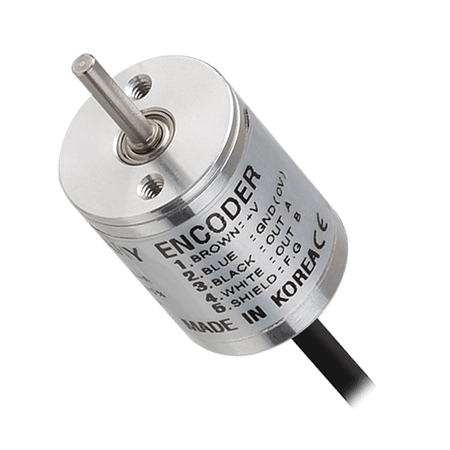
Where rotary encoders fit in industrial systems
A rotary encoder tracks angular movement and generates pulse signals as the shaft or handle rotates. These signals can be used for speed indication, position tracking, direction detection, step input, and manual axis control, depending on the controller architecture and the required level of resolution.
In practice, rotary encoders are often selected alongside other motion-related components such as motion and position sensors when a system needs broader feedback coverage. They are also relevant in machine retrofits, operator stations, indexing setups, and equipment where controlled manual input must be translated into repeatable electronic pulses.
Manual handle type incremental encoders for controlled input
A notable portion of this category includes manual handle type incremental encoders, which are commonly used where an operator needs to jog, index, or adjust movement by hand. Instead of serving only as passive shaft feedback devices, these units can function as a practical human-machine input component for precision movement tasks.
Examples from Autonics include the ENHP and ENH series, with models such as ENHP-100-1-T-24, ENHP-100-2-L-5, ENH-100-2-V-5, and ENH-25-1-T-5. These examples illustrate how selection may vary by power supply, output type, connection style, and resolution, allowing engineers to match the encoder to the electrical interface and operating environment of the target machine.
Key selection points before choosing a model
For many projects, the first consideration is resolution, since pulses per revolution directly affect how much movement information the controller receives. In the products listed here, 25P/R and 100P/R options appear, which can support different needs ranging from coarser manual indexing to finer control input.
The next step is checking signal compatibility. Output configurations in this category include Totem pole, Line Driver, and Voltage types. This matters because the receiving device, whether a PLC, motion controller, counter, or interface board, must be able to read the encoder output correctly and maintain signal integrity over the required wiring distance.
Power requirements and physical connection details are also important. Available examples include 5VDC and 12-24VDC supply versions, along with D-SUB connector and terminal block styles. These details influence panel design, cable routing, replacement planning, and how easily the encoder can be integrated into existing control hardware.
Understanding output and interface differences
Incremental encoders typically provide pulse trains that represent movement rather than an absolute position value after power loss. For many machine control tasks, this is a practical and efficient approach, especially when the system already performs homing, resetting, or relative position control as part of normal operation.
Line Driver outputs are often considered where signal robustness is important, while Totem pole and Voltage outputs may be suitable depending on the input characteristics of the connected controller. Engineers should also confirm whether the application requires standard A/B phase feedback, simple counting, or a specific interface expectation from the receiving device.
Environmental and mechanical considerations
Encoder performance is not only about electrical specifications. Mechanical feel, allowable rotational speed, starting torque, and protective structure all influence day-to-day usability. In the listed products, some portable manual handle models feature IP67 protection, while other manual handle variants are shown with IP50, which may guide selection depending on dust exposure, splash risk, and installation location.
Click stopper position options such as normal “H” and normal “L” are also relevant in operator-driven applications. These characteristics can affect tactile response and user preference during manual input. For systems that combine rotary feedback with powered movement, it may also be useful to review related categories such as actuators and positioners or AC and DC motors to ensure the full motion chain is matched correctly.
Representative products in this category
The available range demonstrates practical variation without overcomplicating selection. For example, the Autonics ENHP-100-1-T-24 and ENHP-100-2-T-24 are portable manual handle type incremental encoders with 100P/R resolution and 12-24VDC supply, making them relevant where higher supply flexibility and connector-based installation are preferred.
For 5VDC systems, options such as ENHP-100-1-T-5, ENHP-100-1-L-5, and ENHP-100-2-L-5 provide alternatives based on output type and stopper position. The ENH series, including ENH-25-2-T-5 and ENH-100-1-T-5, offers additional manual handle configurations with terminal block connection, which may be useful in control panels or machine assemblies where direct field wiring is more practical than connectorized installation.
Typical applications and buying logic
Rotary encoders in this category are relevant for machine adjustment stations, manual pulse generators, indexing controls, operator-assisted positioning, and retrofit projects that need dependable incremental feedback. They can support maintenance workflows, setup tasks, and semi-automatic equipment where an operator must issue controlled motion commands through a rotating handle.
When comparing models, a sensible workflow is to define the control voltage first, then confirm the required output type, resolution, and wiring method. After that, check the protection level and mechanical handling preference. If the application involves related linear measurement tasks, browsing displacement transducers may also help identify whether rotary or linear feedback is the better fit for the job.
Choosing the right encoder for long-term reliability
The right encoder is usually the one that integrates cleanly with the control system, matches the operator or machine workflow, and provides enough signal quality for the required level of precision. In many cases, that means balancing resolution, output interface, environmental protection, and installation practicality rather than focusing on a single specification alone.
This Rotary Encoders category is designed to support that evaluation process with practical manual handle and portable manual handle options from Autonics. By comparing electrical compatibility, mechanical format, and intended use, buyers can narrow down the most suitable model for stable motion feedback and dependable industrial operation.
Get exclusive volume discounts, bulk pricing updates, and new product alerts delivered directly to your inbox.
By subscribing, you agree to our Terms of Service and Privacy Policy.
Direct access to our certified experts