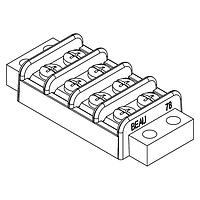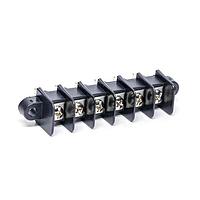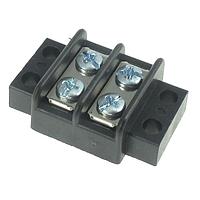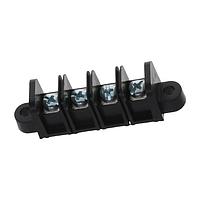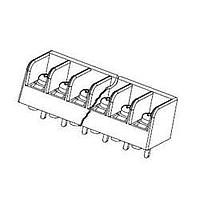
Barrier Terminal Blocks
Reliable field wiring often depends on a small component that is easy to overlook until maintenance, troubleshooting, or panel assembly begins. Barrier Terminal Blocks remain a practical choice wherever circuits need clear separation, secure conductor termination, and straightforward access for inspection or replacement.
In industrial control panels, power interfaces, instrumentation assemblies, and general equipment wiring, this style of terminal block helps organize connections while reducing the chance of accidental contact between adjacent positions. For engineers, buyers, and panel builders, the main value is not just connection density, but a combination of mechanical stability, serviceability, and compatibility with common wire sizes and mounting approaches.
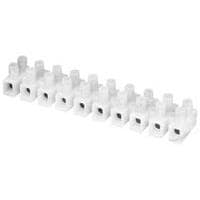
Where barrier terminal blocks fit in electrical and control systems
A barrier-style terminal block uses insulating partitions between poles to separate connection points physically. That simple structure is useful in applications where technicians need a clear visual layout and where wiring may be exposed to vibration, repeated service access, or mixed circuit routing inside a panel or equipment enclosure.
Compared with some other connection formats, barrier designs are often selected when terminal separation and easy point-to-point wiring matter more than ultra-compact packaging. They are commonly found in power entry sections, machine control wiring, interface assemblies, HVAC equipment, test fixtures, and legacy systems that still rely on screw or solder terminations.
Common configurations and termination styles
This category includes both panel-mount and through-hole versions, with screw-termination and solder-termination options represented by products from Eaton, Amphenol, and Molex. In practice, the right format depends on whether the connection is being made directly by field wiring, integrated onto a PCB, or used as part of a compact subassembly.
For example, screw-type panel-mount parts such as Eaton TB200-20SP Barrier Terminal Blocks or Eaton A480304 Barrier Terminal Blocks are suited to applications that benefit from straightforward conductor landing and rework. Through-hole soldered parts such as Molex 0387307505 or Molex 0387207507 are more relevant when the barrier strip is part of a board-level design but still needs the accessibility and spacing associated with barrier-style connections.
Pitch, number of positions, body size, and housing material all influence selection. Wider pitch can make installation easier and support higher-current layouts or larger wire handling, while more compact pitch may help conserve panel or board space without changing the overall wiring concept.
How to choose the right part for your application
The first step is to define the electrical and mechanical environment. Wire size range, mounting method, available space, service access, and expected operating temperature should all be reviewed before narrowing down part numbers. If technicians will regularly tighten, replace, or inspect wires in the field, ease of access may be just as important as the nominal electrical rating.
A second consideration is the termination method. Screw termination is often preferred for serviceable field wiring and panel work, while solder versions are commonly used where the terminal block is permanently integrated with a PCB. The intended assembly process also matters: some projects prioritize quick bench assembly, while others focus on long-term maintenance in installed equipment.
It is also worth checking whether the broader system would benefit more from other terminal block styles. In some assemblies, DIN rail terminal blocks offer faster modular expansion, while in more direct PCB interconnect designs, wire-to-board terminal blocks may be a better fit.
Representative products in this category
Several listed parts illustrate the range available within barrier terminal blocks. Eaton TB200-20SP shows a multi-position panel-mount format with screw termination, suitable for organized field wiring in control or distribution sections. Eaton A202213-B3 represents another panel-oriented option where spacing, accessibility, and straightforward conductor landing are important design priorities.
On the PCB side, Molex 0387307505 and Molex 0387207507 highlight through-hole solder styles that retain the familiar barrier-strip form factor. For sourcing teams comparing alternatives, Amphenol YK3010223000G, Amphenol YK5162833000G, and Amphenol YK6143003000G demonstrate that this category also includes multiple configuration choices across position count and installation needs.
These examples should be viewed as reference points for format and use case rather than as interchangeable parts. Even within the same category, differences in pitch, dimensions, conductor accommodation, and mounting style can affect fit, assembly workflow, and long-term maintenance convenience.
When barrier terminal blocks are preferred over other terminal block families
Barrier styles are often chosen when users want a robust and familiar connection method with visible pole separation. This can be especially useful in equipment exposed to regular servicing, in mixed-voltage sections that benefit from physical clarity, or in retrofit work where an existing wiring method must be maintained for consistency.
They may also be a practical choice when ring or spade lug style terminations are part of the assembly approach, or when the design team wants a simple terminal strip layout without moving to a more modular rail-based system. By contrast, applications centered on compact distribution layouts may align better with power distribution terminal blocks, while general-purpose fixed PCB connections may point toward fixed terminal blocks.
Key evaluation points for procurement and engineering teams
For B2B buyers, selecting the correct barrier terminal block is usually a cross-functional decision involving design, production, and maintenance teams. Beyond the basic electrical fit, it is helpful to review installation orientation, enclosure access, termination tooling, and replacement expectations over the product lifecycle.
From a sourcing perspective, consistency matters. Standardizing on a manageable set of pitches, mounting styles, and approved manufacturers can simplify inventory planning and reduce substitution risk. Brands appearing in this category, including Eaton, Amphenol, and Molex, are often considered when projects require dependable availability across common industrial and electronic interconnect needs.
It is also wise to verify whether the application expects frequent wire changes, fixed factory assembly, or mixed use across multiple product variants. That context often determines whether a simple screw-mounted barrier strip or a board-mounted solder style is the more efficient long-term choice.
Practical selection summary
Barrier terminal blocks continue to be relevant because they solve a real wiring problem in a straightforward way: they provide clear, separated connection points that are easy to install, inspect, and maintain. Whether the requirement is panel-mounted field wiring or a through-hole barrier strip on a PCB, the category covers several practical formats for industrial and equipment-level design.
When comparing options, focus on the connection method, pitch, mounting style, wire accommodation, and maintenance environment rather than choosing only by appearance or position count. A well-matched part will support cleaner wiring, better service access, and a more reliable overall assembly.
Get exclusive volume discounts, bulk pricing updates, and new product alerts delivered directly to your inbox.
By subscribing, you agree to our Terms of Service and Privacy Policy.
Direct access to our certified experts