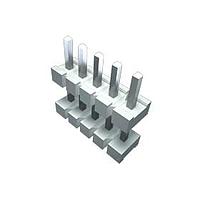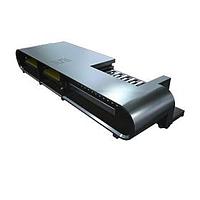
Power to the Board
When a design needs to move reliable power from cable assemblies or backplanes onto a PCB, connector choice quickly becomes a system-level decision. Current capacity, board space, termination style, serviceability, and operating environment all affect long-term performance. This is where Power to the Board connectors matter: they bridge the gap between power distribution and board-level integration in a compact, application-driven format.
Where power-to-board connectors fit in modern equipment
In industrial electronics, embedded systems, communications hardware, power conversion units, and transport equipment, board-mounted power interfaces are used to deliver stable electrical power into control and processing assemblies. Compared with general-purpose signal connectors, these interconnects are typically selected with greater attention to conductor size, contact robustness, mating security, and thermal behavior.
Depending on the architecture, engineers may be evaluating compact cable-mount plugs that terminate onto a board header, edge-style interfaces for higher-density power distribution, or panel-to-board transitions that simplify enclosure layout. For applications that need other form factors, related options such as DC power connectors or AC power connectors may also be relevant.
Typical configurations found in this category
This category can support a wide range of power interconnect approaches rather than a single connector style. Some products are designed for straightforward cable-mount power entry with straight or right-angle orientation, while others are better aligned with panel-mounted or edge-connection requirements in equipment where board stacking, enclosure constraints, or service access play an important role.
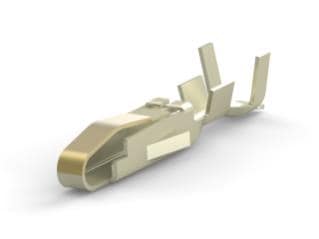
You may also see variation in termination method, including crimp, solder, and IDT-style connections. Each approach serves a different assembly strategy: crimp is often preferred for fieldable cable harnesses, solder suits fixed assemblies, and insulation displacement can help streamline specific production processes where compatible cable construction is used.
Selection factors that matter in real projects
The right connector is usually defined by more than just position count. Engineers and buyers typically start with the electrical load path, then narrow choices based on mounting style, conductor compatibility, orientation, and the mechanical demands of the end product. In board-level power distribution, even small differences in contact design or housing format can influence assembly flow and maintenance access.
It is also important to review the expected operating environment. Temperature range, vibration exposure, ingress risk, and repeated mating requirements all affect connector suitability. For more rugged installations or high-mechanical-stress interfaces, it may also be worth comparing options in heavy duty power connectors, especially when the application extends beyond a protected PCB enclosure.
Examples from leading manufacturers
Amphenol is strongly represented in this space with several connector families suitable for different power distribution needs. Examples include the Amphenol HPG36P14SVT011T, which reflects a board-oriented power edge connection concept, and cable-mounted solutions such as the Amphenol PL28V-301-35, Amphenol PL184Y-41-4, and Amphenol HVSL800062C150 for applications where harness-to-power-interface design is a key requirement.
For lower-profile or alternative assembly styles, the 3M 37104-2124-000 FL Power Connectors model illustrates another approach to compact power connection. Products such as the Amphenol HPT-3-FD panel-mount outlet and the AT06-3S-EC01 or AT06-3S-MM01 housings also show how the broader power connector ecosystem often includes supporting interfaces and accessories that help complete the overall power path, not just the board mating point itself.
How to evaluate mechanical and assembly requirements
Mechanical fit is one of the most common reasons a connector shortlist changes late in a design cycle. Straight versus right-angle orientation, cable exit direction, latch or keying concept, and panel or cable mounting all influence routing and service clearances. In compact systems, connector depth and mating envelope can be just as critical as electrical performance.
Assembly method should also be considered early. A crimp termination may improve repeatability for production harnesses, while solder termination may be practical for controlled manufacturing environments and lower-volume builds. If the application requires simplified replacement or modular wiring, comparing adjacent interconnect families such as barrel connectors can help clarify whether a board-specific solution or a more standardized external interface is the better fit.
Application considerations across industries
Power-to-board interconnects are widely used anywhere electronic assemblies need a dependable transition from external power wiring to internal circuitry. Common use cases include industrial controllers, power supplies, battery-connected subsystems, vehicle electronics, charging-related assemblies, and embedded equipment that combines control logic with localized power conversion.
In these environments, designers often look for a balance between current delivery, compact footprint, connector retention, and ease of integration into the PCB and enclosure. Multi-position and single-position formats can support different distribution strategies, from simple point power entry to more structured board power buses and modular subassemblies.
Choosing a practical solution for sourcing and design teams
For engineering teams, the best starting point is usually the full interconnect path: cable, termination process, mating cycle expectations, and the board or panel interface all need to align. For procurement teams, consistency of manufacturer family, assembly method, and replacement compatibility can be just as important as the initial specification match.
Within this category, you can compare options from recognized suppliers such as 3M and Amphenol while focusing on the criteria that actually influence deployment: mounting style, orientation, contact count, and connection method. A careful review of these factors helps narrow down a connector that fits both the electrical design and the realities of production and maintenance.
Choosing a power-to-board connector is ultimately about building a reliable power path into the heart of the assembly. By evaluating termination style, mechanical layout, environmental demands, and the broader connector ecosystem, it becomes easier to identify the right fit for board-level power integration without overcomplicating the design.
Get exclusive volume discounts, bulk pricing updates, and new product alerts delivered directly to your inbox.
By subscribing, you agree to our Terms of Service and Privacy Policy.
Direct access to our certified experts